Letters are welcome via email to letters@economist.com Find out more about how we process your letter
欢迎来信至 letters@economist.com。了解更多关于我们如何处理您的信件的信息。
Dealmaking in geopolitics
地缘政治中的交易艺术
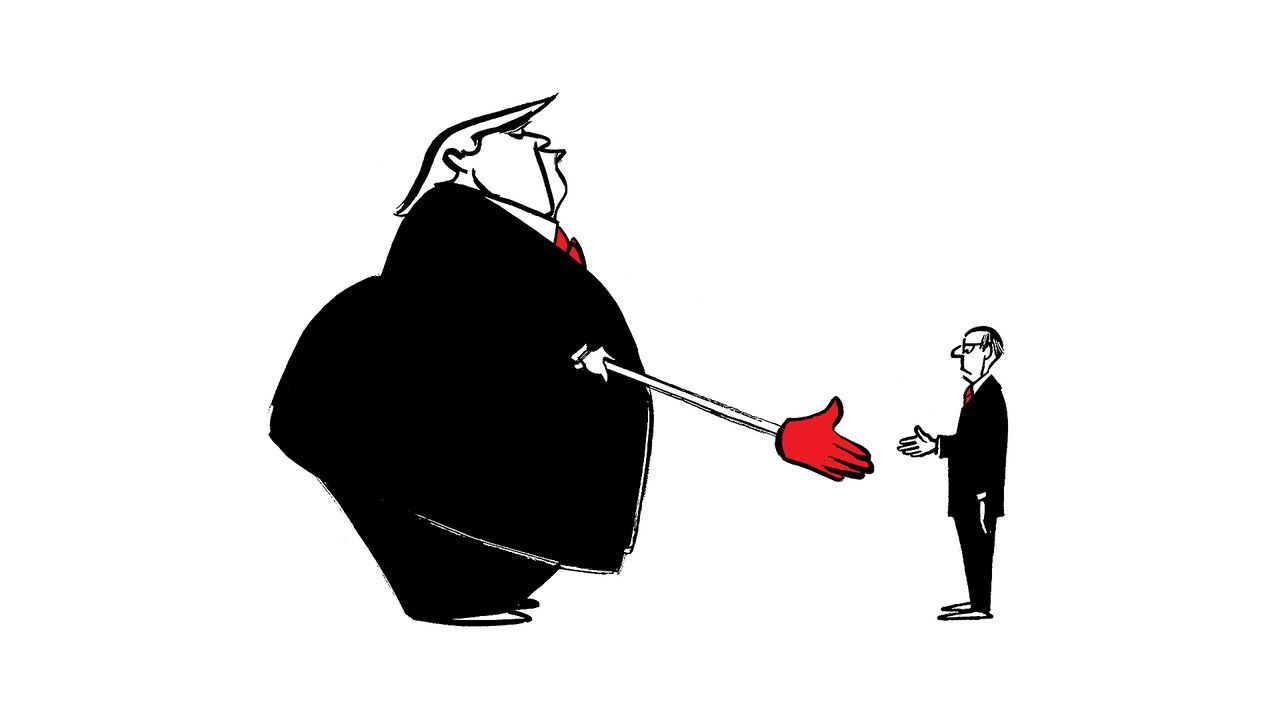
Your sweeping analysis of “The Wrecking-ball revolution” (July 4th) in geopolitics initiated by Donald Trump concluded by contemplating a new balance-of-power regime that nevertheless remains grounded in the principles established by the peace of Westphalia in 1648.(您对特朗普发动的地缘政治“破坏球革命”的全面分析,最终思考了一种新的权力平衡机制,但它依然扎根于1648年威斯特伐利亚和约确立的原则。) Those treaties recognised the sovereign state as “the fundamental notion on which geopolitics is founded”, you said.
您对唐纳德·特朗普发起的地缘政治“破坏球革命”(7月4日)的全面分析,最终思考了一种新的权力平衡机制,但它仍然扎根于1648年威斯特伐利亚和约确立的原则。您说,这些条约承认主权国家是“地缘政治所基于的基本概念”。
Otto von Bismarck and Henry Kissinger were the masters of balancing power. Both assessed(评估,评价) national interests on a truly grand strategic scale. Mr Trump has replaced that with the art of the deal(交易的艺术). A good example of this is the Abraham accords(亚伯拉罕协议(2020年以色列与阿联酋等国的关系正常化协议)) between Israel and the United Arab Emirates. The accords bring parties together to negotiate an agreement that serves their mutual interests. Although no overarching(总体的,支配一切的) geopolitical blueprint may be guiding the process, the parties must still consider the wider consequences that any agreement may have within their respective spheres of influence(势力范围) and among their partners.
奥托·冯·俾斯麦和亨利·基辛格是平衡权力的大师。两人都在真正宏大的战略尺度上评估国家利益。特朗普先生则用交易的艺术取而代之。一个很好的例子是以色列与阿拉伯联合酋长国之间的《亚伯拉罕协议》。这些协议将各方聚集在一起,谈判一项服务于共同利益的协议。尽管没有总体的地缘政治蓝图指导这一进程,但各方仍必须考虑任何协议在其各自势力范围和伙伴中可能产生的更广泛后果。
Cold water
泼冷水
More and more homelessness
无家可归者越来越多
On the road with Ike
与艾克同路
What goes down can go up
下跌的也可能上涨