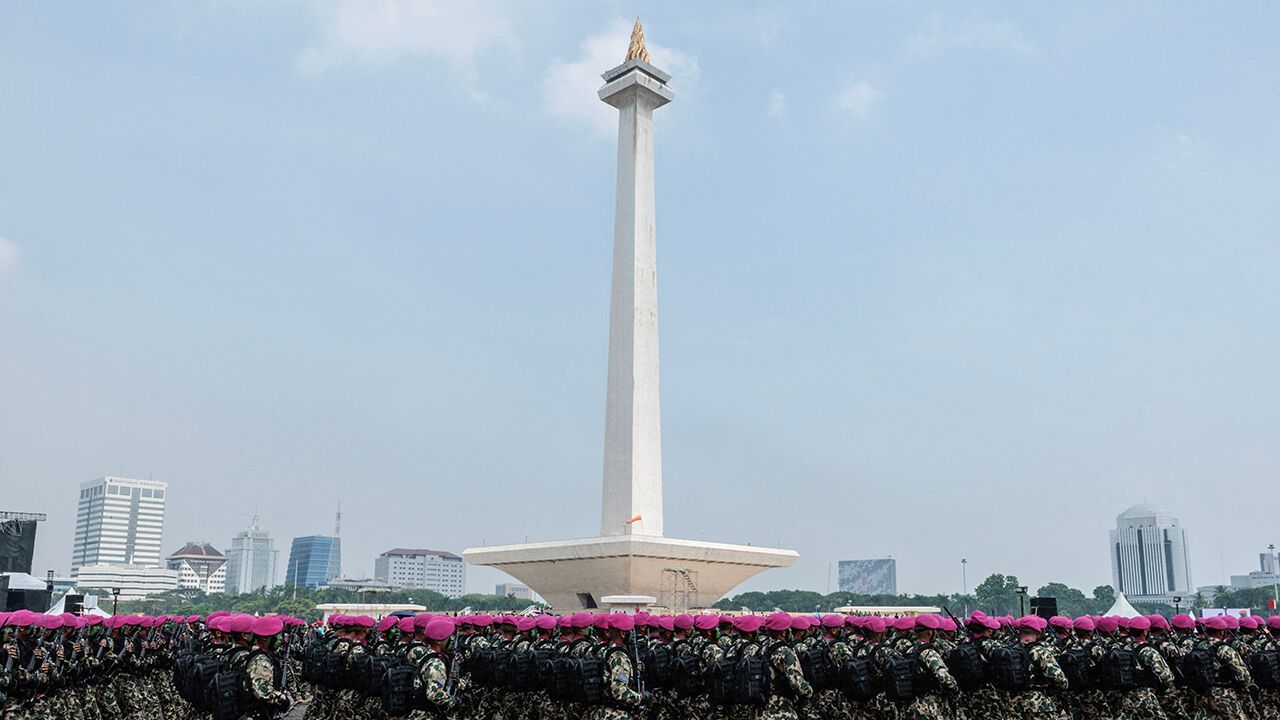
THE GOLD coating the flame that sits on top of an obelisk known as the National Monument in the centre of Jakarta, the Indonesian capital, is said to weigh an impressive 50kg. So it came as a shock to Indonesians, not so much to learn that gold bars had been found stashed in seven suitcases at the swish home of Febrie Adriansyah, then the country’s deputy attorney-general for special crimes, but that they weighed as much as 74kg.(因此,印尼人感到震惊,与其说是得知金条被藏在费布里·阿德里安夏的豪宅里,不如说是这些金条重达74公斤。) Mr Febrie, the country’s most senior anti-corruption prosecutor, admits that the home, in a gated community alongside an upmarket golf course, is his. But he denies that the loot(赃物) (including another $20m in cash), which was seized on July 8th in a police raid, had anything to do with him.
雅加达市中心有一座方尖碑,名为国家纪念碑,其顶端火焰上的镀金据说重达50公斤,令人惊叹。因此,当印尼人得知,在该国时任特别犯罪副检察长费布里·阿德里安夏的豪华住宅中,七个行李箱里藏有金条时,他们感到震惊——但更令人震惊的是,这些金条竟重达74公斤。费布里先生是印尼最高级别的反腐败检察官,他承认那栋位于高档高尔夫球场旁封闭社区内的住宅是他的。但他否认这批赃物(还包括2000万美元现金)与他有关,这些财物是7月8日警方突击搜查时缴获的。
If the police thought they could go after(追查、追究) Mr Febrie, one of the country’s most powerful officials, with impunity(不受惩罚), they were soon disabused(使醒悟) of the idea. At 3am the next morning, several squads of armed soldiers aligned with Mr Febrie appeared outside police headquarters. They subsequently left without incident, but the stand-off(对峙) seems to have alarmed President Prabowo Subianto. That afternoon he summoned the warring factions(敌对派系) in to see him at the tower housing his sovereign wealth fund. A way to defuse(化解) the confrontation was brokered: Mr Febrie has stepped aside(辞职、让位) as deputy attorney-general. But he will be investigated by his own agency rather than by the police.
如果警方以为他们可以肆无忌惮地追查费布里先生——该国最有权势的官员之一——那么他们很快就被打消了这个念头。次日凌晨3点,几队与费布里结盟的武装士兵出现在警察总部外。他们随后和平离开,但这场对峙似乎惊动了总统普拉博沃·苏比安托。当天下午,他召集冲突双方到他的主权财富基金大楼会面。最终达成了一项化解冲突的方案:费布里辞去副检察长职务。但他将由自己的机构调查,而非警方。
To understand why what seems like a straightforward(简单的) corruption investigation should pit the army against the police, it helps to know something of the history of the two institutions. During Suharto’s long dictatorship from 1966 to 1998, the army controlled the police and called them (without affection) the army’s “little brother”. As part of the democratising reforms that followed Suharto’s fall, the police won emancipation(解放) as a rival security force. Since then, the two have competed, sometimes violently, over rents from(从…中获取的利益) illicit(非法的) businesses that both run. Each side has allies in government (the attorney-general’s office is aligned with the army rather than the cops). But rarely have the army and police gone after each other’s leaders.
要理解为什么一起看似简单的腐败调查会引发军队与警察的对抗,有必要了解这两个机构的历史。在苏哈托1966年至1998年的长期独裁统治期间,军队控制着警察,并(不带感情地)称警察为军队的“小兄弟”。作为苏哈托倒台后民主化改革的一部分,警察获得解放,成为一支与之竞争的安全力量。此后,双方为了各自经营的非法生意中的利益而竞争,有时甚至诉诸暴力。每一方在政府中都有盟友(总检察长办公室与军队结盟,而非警察)。但军队和警察很少去追究对方的领导人。