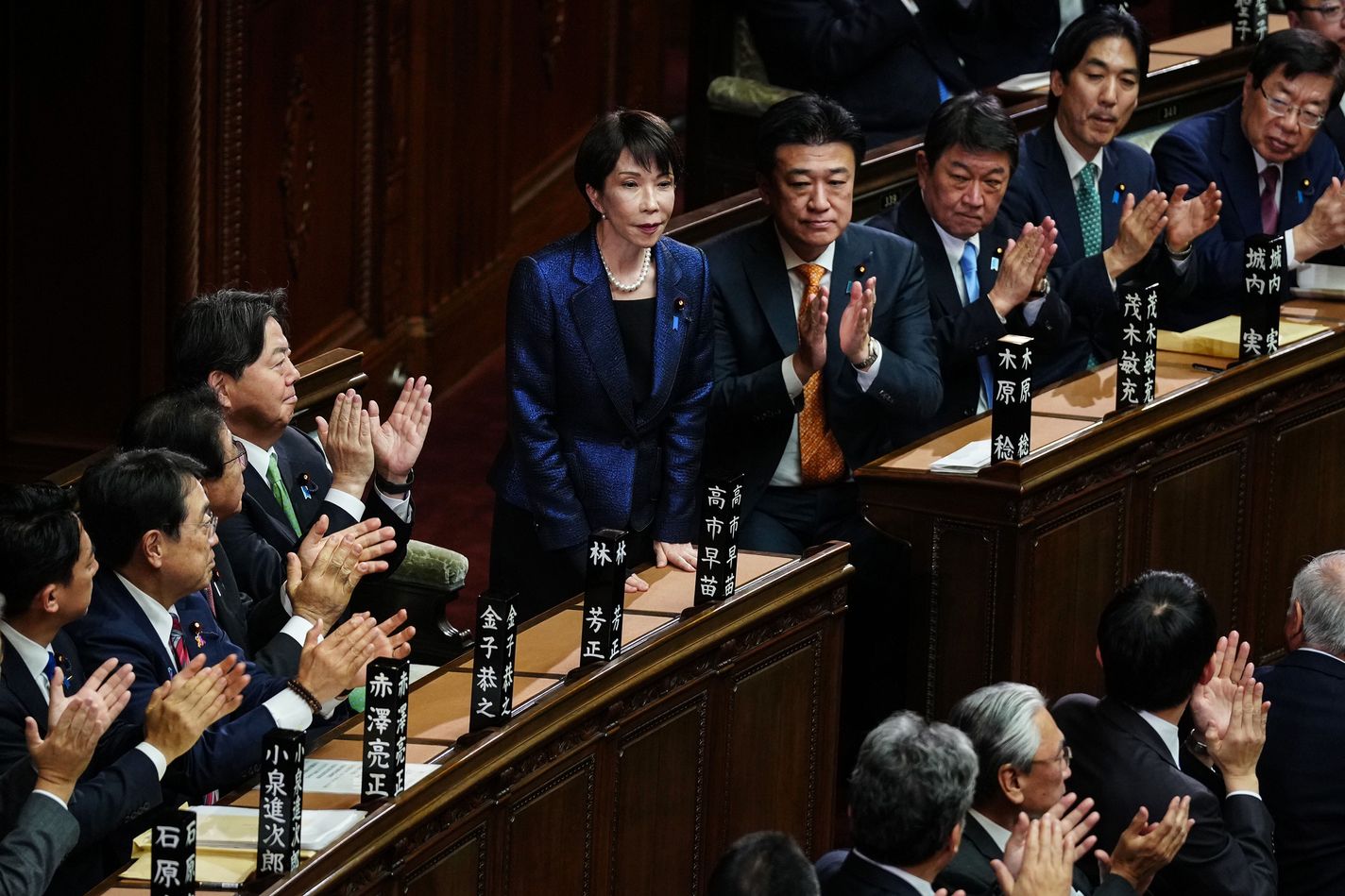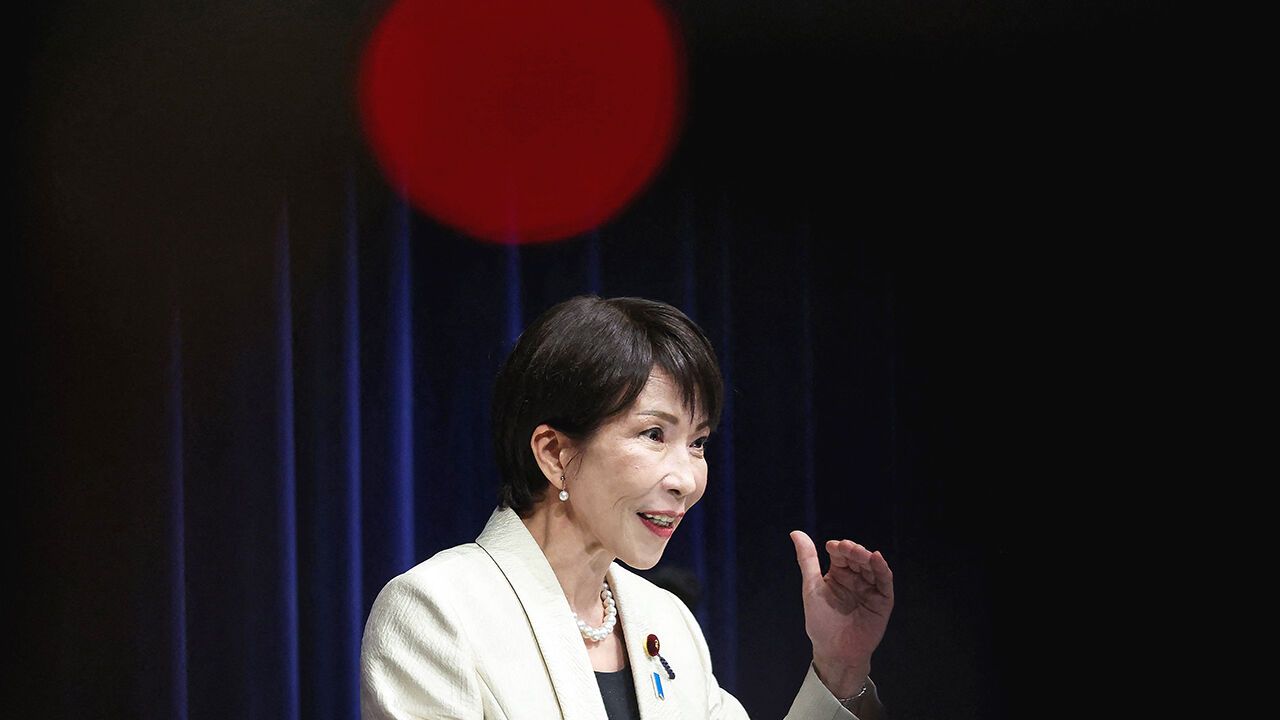
STANDING BEFORE an elaborate array of white flowers, Takaichi Sanae, Japan’s prime minister, delivered a speech at a memorial this month in honour of Abe Shinzo, a former prime minister assassinated four years ago.(站在精心布置的白色花束前,日本首相高市早苗本月出席了一场纪念四年前遇刺的前首相安倍晋三的追悼会并发表讲话。) Ms Takaichi, who positions herself as(将自己定位为) Abe’s political heir, praised her mentor’s fortitude(坚韧;刚毅). “I want to be a politician who fights like Mr Abe,” she said.
站在精心布置的白色花束前,日本首相高市早苗本月出席了一场纪念四年前遇刺的前首相安倍晋三的追悼会并发表讲话。自诩为安倍政治继承人的高市盛赞其导师的坚韧。她说:“我想成为像安倍先生那样战斗的政治家。”
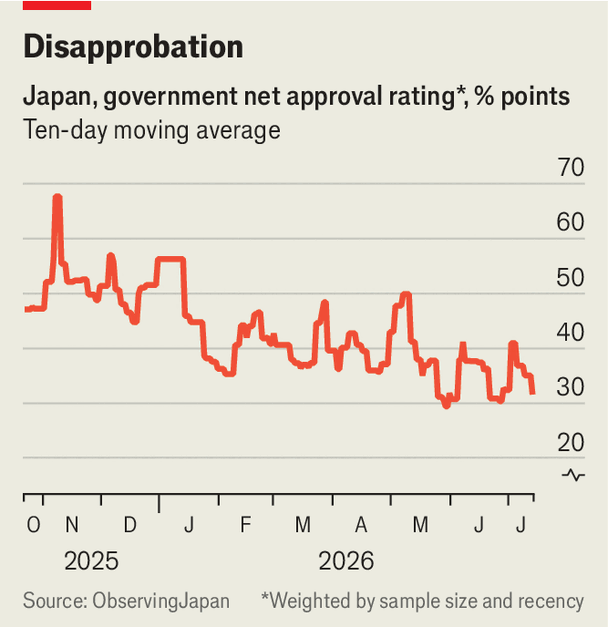
And fight she must. In February Ms Takaichi led her ruling Liberal Democratic Party (LDP) to a historic victory in the election to the powerful lower house of the Diet, amassing a two-thirds supermajority(绝对多数;超级多数). Despite this she has struggled to enact her hawkish, big-spending, socially conservative agenda.(尽管如此,她仍难以推行其鹰派、高支出、社会保守的议程。) The LDP and its allies had to extend the latest Diet session by one week, until July 25th, in order to finish their legislative business; the honebuto(骨太方针(日本年度预算框架)), an annual budget framework, was finalised only on July 21st, much later than expected. Opinion polls show the Takaichi administration’s once-stellar(曾经极佳的;一度辉煌的) approval ratings falling sharply (see chart). “She’s powerful, but not all-powerful,” says Tobias Harris of Japan Foresight, a consultancy.
而她必须战斗。今年2月,高市率领执政的自民党在强大的国会下院选举中取得历史性胜利,获得了三分之二的绝对多数席位。尽管如此,她仍难以推行其鹰派、高支出、社会保守的议程。自民党及其盟友不得不将最近的国会会期延长一周至7月25日,以完成立法事务;年度预算框架“骨太方针”直到7月21日才最终敲定,比预期晚得多。民调显示,高市内阁曾经极高的支持率正在急剧下降(见图表)。“她权力很大,但并非无所不能,”咨询公司Japan Foresight的托比亚斯·哈里斯表示。
During the Diet session after the election, Ms Takaichi advanced on several fronts. She has made the most progress in her pledge to strengthen Japan’s defences, in both hard security and economic security. Reforms to create a new investment-screening body, modelled on CFIUS, America’s equivalent committee, sailed through parliament; the Japan Foreign Investment Committee was launched last month.(仿照美国外国投资委员会(CFIUS)设立新投资审查机构的改革在议会顺利通过;日本外国投资委员会于上月成立。) The Diet also passed a bill to reform Japan’s fragmented, underwhelming(不尽如人意的;平庸的) intelligence capabilities and create a more powerful centralised intelligence apparatus(机构;装置;组织) for the first time since 1945. The first new bodies, an intelligence bureau and a council, will be established this month.
在选举后的国会会期期间,高市在多个方面取得了进展。她在加强日本国防(包括硬安全和经济安全)的承诺上取得了最大进展。仿照美国外国投资委员会(CFIUS)设立新投资审查机构的改革在议会顺利通过;日本外国投资委员会于上月成立。国会还通过了一项法案,改革日本分散且不尽如人意的情报能力,并自1945年以来首次建立更强大的中央情报机构。首批新机构——一个情报局和一个委员会——将于本月成立。