
Labour MPs hope that by picking the former mayor of Greater Manchester to replace Sir Keir Starmer they can clean the slate(从头开始,既往不咎) after two troubled(充满问题的,动荡的) years in power. Opinion polls suggest they may be right—at least for now.
工党议员们希望,通过选择大曼彻斯特前市长来取代基尔·斯塔默爵士,他们可以在执政两年后重新开始。民调显示他们可能是对的——至少目前如此。
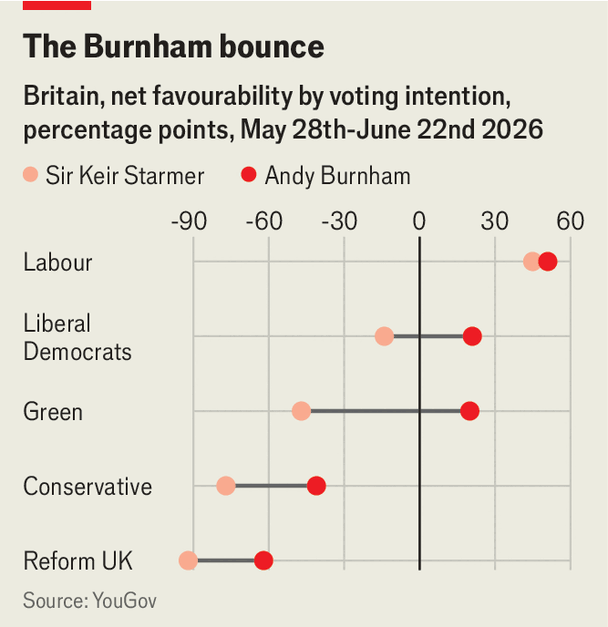
Andy Burnham is more popular than Sir Keir (a low bar), but he also has better ratings than the now-departed prime minister had two years ago, when he came to power. Sir Keir squandered(挥霍,浪费) the political capital he had at astonishing speed with a series of u-turns(180度大转弯,政策逆转) and reinventions(重新包装,重塑) that voters hated. Though Mr Burnham’s popularity may be equally short-lived, the data suggest that the new Labour leader could build a more enduring electoral base by uniting Britain’s fragmented(分裂的,碎片化的) centre-left voters.
安迪·伯纳姆比基尔爵士更受欢迎(门槛很低),而且他的支持率也高于两年前刚上任时现已离任的首相。基尔爵士以惊人的速度挥霍了他拥有的政治资本,实施了一系列选民厌恶的180度大转弯和重新包装。尽管伯纳姆的人气可能同样短暂,但数据表明,这位新工党领袖可以通过团结英国分裂的中左翼选民,建立一个更持久的选举基础。
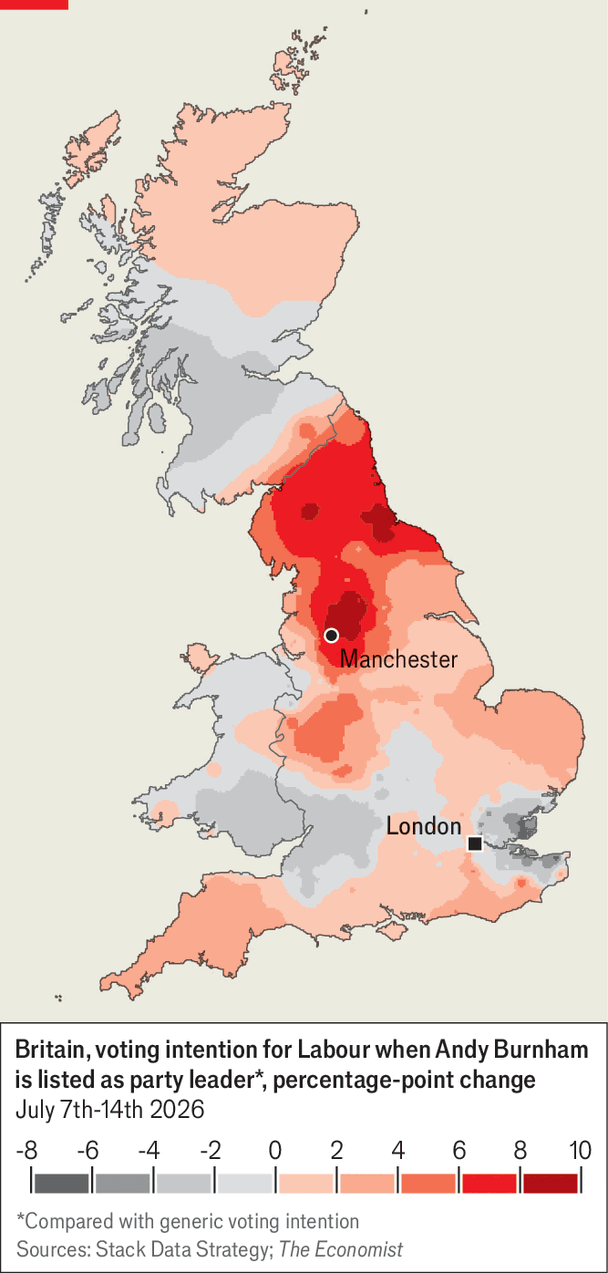
To dig into(深入探究,挖掘) Mr Burnham’s base of support, The Economist analysed a survey of 5,070 Britons conducted by Stack Data Strategy, a polling firm, between July 7th and 14th. The pollster asked respondents which party they would vote for if an election were held tomorrow.(民调机构询问受访者如果明天举行大选他们会投哪个党。) It then repeated the question, asking respondents to consider how they would vote if Mr Burnham were leader of the Labour Party as well as prime minister. The effect was to add 2.1 percentage points to Labour’s vote share—a small but meaningful(有意义的,重要的) improvement (see map).
为了深入探究伯纳姆的支持基础,《经济学人》分析了Stack Data Strategy民调公司在7月7日至14日对5070名英国人进行的一项调查。民调机构询问受访者,如果明天举行大选,他们会投票给哪个政党。然后重复这个问题,要求受访者考虑如果伯纳姆既是工党领袖又是首相,他们会如何投票。结果是工党的得票率增加了2.1个百分点——一个微小但有意义的改善(见图)。
Manchester prism
曼彻斯特棱镜