Rome’s Age of Revolution(革命时代). By Tim Whitmarsh. Bodley Head; 336 pages; £25. To be published in America by Knopf in November; $32
《罗马的革命时代》,蒂姆·惠特马什著。博德利·海德出版社;336页;25英镑。将于11月由克诺夫出版社在美国出版;32美元。
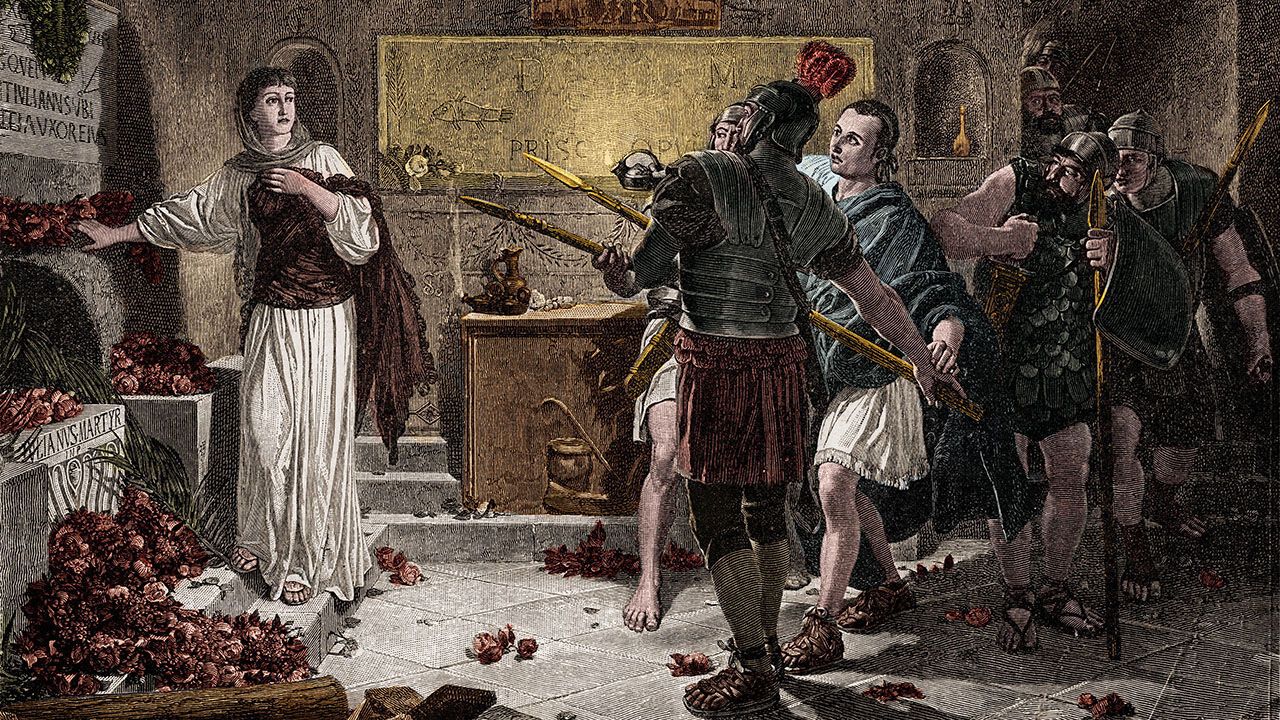
People who know little about ancient history are still familiar with the fact that Romans persecuted(迫害) Christ and Christians. In films the Romans are sometimes brutal (“Ben-Hur”, “The Passion of the Christ”), sometimes daft(愚蠢的) (“Life of Brian(《万世魔星》)”), but always culturally distant from the new religion and clueless about(对…一无所知) it.
对古代史知之甚少的人仍然熟悉罗马人迫害基督和基督徒这一事实。在电影中,罗马人有时残暴(《宾虚》《基督受难记》),有时愚蠢(《万世魔星》),但始终在文化上与这种新宗教格格不入,对其一无所知。
Much of this is a myth(迷思,错误观念), argues Tim Whitmarsh, a professor of Greek at Cambridge University, in a thoroughly(彻底地,非常) entertaining book. “Rome’s Age of Revolution” shows that Christianity was in many ways a product of the Roman empire and the Greek and Jewish cultures it absorbed as it expanded eastward. Christianity might have become a global religion without Rome, but it would not be the same religion.(没有罗马,基督教或许也能成为全球性宗教,但不会是现在这个样子。) Despite lots of scholarly hedging(回避,保留), Mr Whitmarsh’s argument is striking. Some may find it enraging(令人愤怒的).
剑桥大学希腊语教授蒂姆·惠特马什在一本极其有趣的新书中指出,这种看法很大程度上是一个迷思。《罗马的革命时代》表明,基督教在很多方面是罗马帝国及其向东扩张时吸收的希腊和犹太文化的产物。没有罗马,基督教或许也能成为全球性宗教,但不会是现在这个样子。尽管学术界多有保留,惠特马什的论点仍然引人注目。有些人可能会觉得它令人恼火。