Letters are welcome via email to letters@economist.com
Find out more about how we process your letter
欢迎通过电子邮件将来信发送至 letters@economist.com
了解更多关于我们如何处理您的来信的信息
Russia today
今日俄罗斯
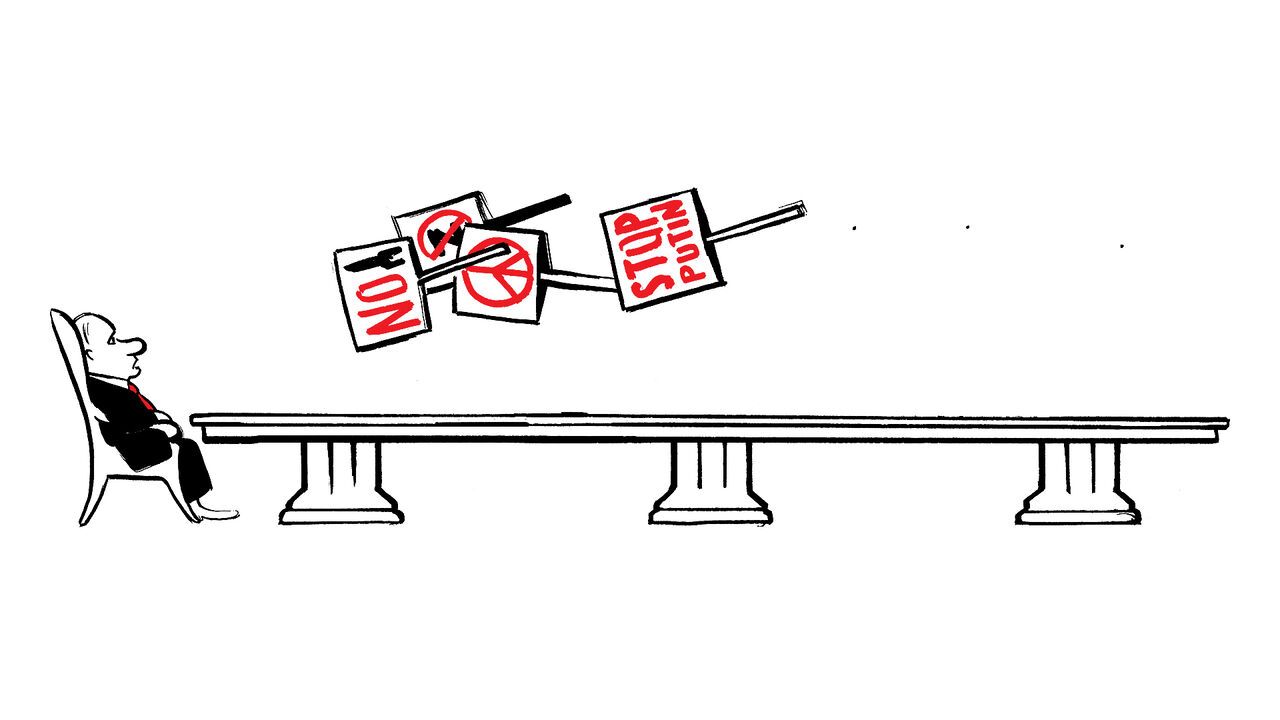
You devoted a cover leader, interview and By Invitation essay to Andrey Melnichenko, a Russian oligarch(寡头;寡头政治家) whom you described as “The man who would change Russia” (July 11th). In 2022, after Vladimir Putin’s ill-fated full-scale invasion(注定失败的大规模入侵) of Ukraine, thousands of Russians took to the streets in protest. They were arrested en masse(全体地;一起) as they expressed their dissent(异议;不同意见).
你们用一篇封面文章、一篇专访和一篇《邀请函》专栏来报道安德烈·梅尔尼琴科——一位被你们称为“将改变俄罗斯的人”的俄罗斯寡头(7月11日)。2022年,在弗拉基米尔·普京对乌克兰发动注定失败的大规模入侵之后,成千上万的俄罗斯人走上街头抗议。他们在表达异议时被集体逮捕。
While these brave Russians protested Mr Melnichenko expanded his wealth in Mr Putin’s war economy. In his essay, he conveniently(方便地;合宜地(含讽刺)) never mentioned the hundreds of thousands of war dead or the Russians who tried to prevent the catastrophe(灾难;大祸) and paid with their freedom. There are more political prisoners(政治犯) in Russia today than at any point since the Stalin era. Unlike Mr Melnichenko, they stood against(反对;抵抗) Mr Putin’s aggression.
当这些勇敢的俄罗斯人抗议时,梅尔尼琴科先生却在普京的战争经济中扩大了自己的财富。在他的文章中,他 conveniently 从未提及数十万战争死难者,以及那些试图阻止这场灾难却付出了自由代价的俄罗斯人。如今俄罗斯的政治犯数量比斯大林时代以来的任何时候都多。与梅尔尼琴科不同,他们反对普京的侵略。
Housing effects
住房影响

Working out
锻炼
Ancient games
古老游戏
Sister tech hubs
姐妹科技中心
Battle of the condiments
调味品之战