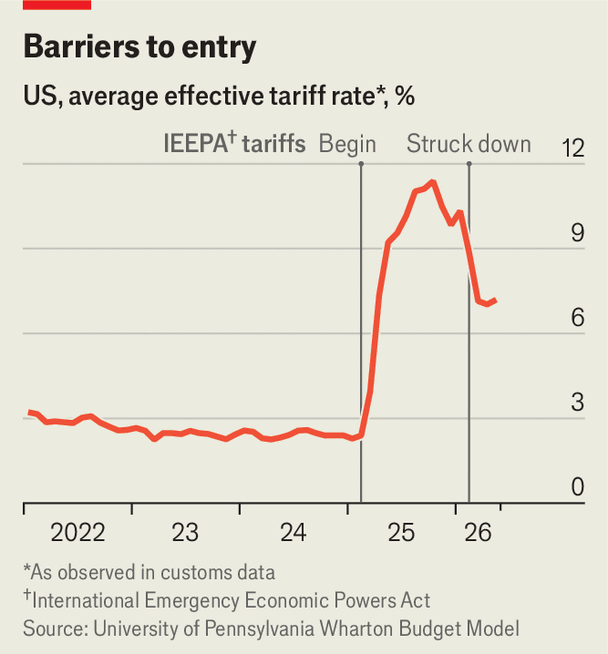
Donald Trump’s tariffs have the persistence(持久性;顽强) of a hydra. The Supreme Court struck down their main legal foundation in February, anxious markets have forced repeated retreats, and frustrated voters—two-thirds of whom say tariffs have raised consumer prices—have prompted exemptions for certain foods.(最高法院推翻了关税的主要法律基础,焦虑的市场迫使多次让步,沮丧的选民促使某些食品获得豁免。) Each setback forced Mr Trump to adjust tariffs. Yet they always returned.
唐纳德·特朗普的关税像九头蛇一样顽强。最高法院在二月份推翻了其主要法律基础,焦虑的市场迫使多次让步,沮丧的选民——其中三分之二表示关税提高了消费品价格——促使某些食品获得豁免。每一次挫折都迫使特朗普调整关税,但它们总是卷土重来。
Now America’s tariff regime is being revived by a brew of(混合;一系列) old statutes(法规;法令). On July 15th the administration imposed(施加;征收) 25% duties on selected Brazilian goods under Section 301 of the Trade Act of 1974. It cited various offences(违规行为;冒犯), from favouring a home-grown payments system to illegal deforestation. As it happens(碰巧;巧合的是), the action coincides with a broader feud(长期争斗;世仇) with Brazil’s president, Luiz Inácio Lula da Silva.
如今,美国的关税制度正通过一系列旧法规的组合得以复活。7月15日,美国政府根据1974年贸易法第301条,对选定的巴西商品征收25%的关税。它列举了多项违规行为,从偏袒本土支付系统到非法砍伐森林。巧合的是,此举恰逢与巴西总统路易斯·伊纳西奥·卢拉·达席尔瓦的更大范围争端。
Five days later Mr Trump invoked(援引;启用) a dormant(休眠的;暂停使用的) provision of 1930’s Smoot-Hawley Tariff Act(1930年美国关税法) to impose 50% levies on a selection of Canadian goods, ostensibly(表面上;貌似) to punish America’s neighbour for discriminating(歧视;区别对待) against its cars, alcohol and dairy products. The duties will cover nearly $20bn of imports, including goods normally exempt under the United States-Mexico-Canada Agreement (USMCA), which Mr Trump negotiated in his first term. However the new tariffs will not take effect until August 19th—a delay that will increase the president’s leverage(杠杆;影响力) in stalled talks(陷入僵局的谈判) over USMCA’s renewal.
五天后,特朗普援引1930年《斯穆特-霍利关税法》中一项休眠条款,对部分加拿大商品征收50%的关税,表面上是为了惩罚这个邻国歧视美国的汽车、酒精和乳制品。这些关税将涵盖近200亿美元的进口商品,包括通常根据《美墨加协定》(USMCA)豁免的商品——该协定是特朗普在第一任期谈判达成的。然而,新关税要到8月19日才生效——这一延迟将增加总统在停滞的USMCA续约谈判中的筹码。