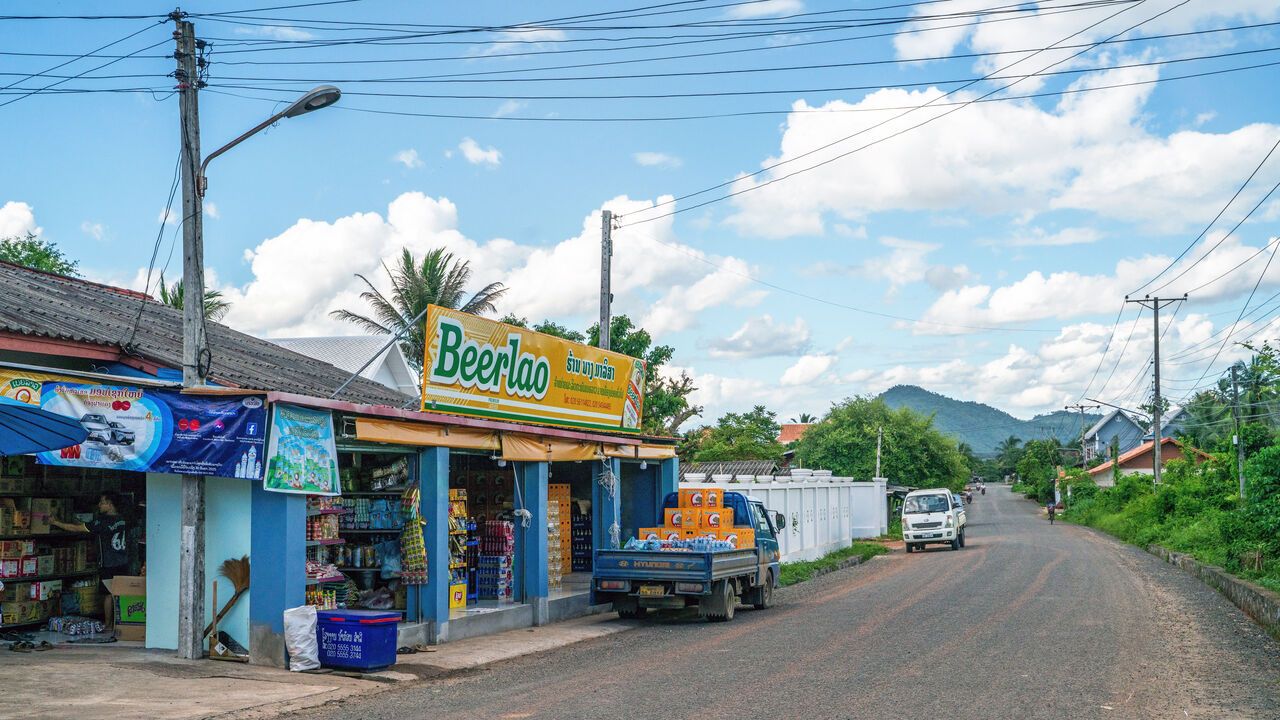
BUT FOR(要不是,除了……之外) a few crumbling(破败的,崩塌的) villas, little French influence survives in Laos nearly 73 years after the end of colonial rule. It is China that shapes the fortunes of its poor and landlocked southern neighbour. But one French legacy lingers(继续存留,缓慢消失). In 1973 French and Lao businessmen founded a joint venture(合资企业), Brasseries et Glacières du Laos. Now called the Lao Brewery Company (LBC), it sits in a different joint venture, between the state and Carlsberg(嘉士伯,丹麦啤酒巨头), a Danish giant. Its signature product, Beerlao, probably matters more to its home country than any other beer in the world.(其标志性产品Beerlao对其祖国的重要性,可能超过世界上任何其他啤酒。)
除了几栋破败的别墅,法国殖民统治结束近73年后,老挝几乎看不到法国的影响。如今,决定这个贫穷内陆邻国命运的是中国。但有一项法国遗产留存至今。1973年,法国和老挝商人共同创立了一家合资企业——老挝啤酒与冰品公司。如今它更名为老挝啤酒公司(LBC),隶属于另一家合资企业,由老挝政府和丹麦巨头嘉士伯共同持有。其标志性产品Beerlao对其祖国的重要性,可能超过世界上任何其他啤酒。
Beerlao is everywhere in Laos. Its branding is emblazoned(醒目地印有,装饰) on T-shirts and billboards. A marketing campaign fusing(融合,结合) the drink with national identity (“Be Lao”) has helped, as has Laotians’ prodigious(巨大的,惊人的) thirst for beer. Kirin, a Japanese brewer(啤酒酿造商), puts this at(估计为,认为……是) 55 litres per person a year, more than in any other Asian country. Nearly 90% of that is Beerlao, says Carlsberg, for which Laos, with just 7.9m people, is the second-biggest(第二大) Asian market after China.
Beerlao在老挝无处不在。其品牌标志印在T恤和广告牌上。一场将饮品与民族身份融合的营销活动(“Be Lao”)起到了推动作用,老挝人对啤酒的巨大需求也是如此。日本啤酒商麒麟估计,老挝人均年啤酒消费量为55升,超过亚洲任何其他国家。嘉士伯表示,其中近90%是Beerlao,对于嘉士伯而言,仅有790万人口的老挝是其仅次于中国的亚洲第二大市场。
Its success is not a mystery. European malt(麦芽) and hops(啤酒花) are combined with locally grown jasmine rice, making a light, faintly(略微地,微弱地) sweet lager (often drunk with ice by locals). It wins international awards, too, and on travel forums backpackers(背包客) swear by(极其信赖,极力推荐) it, loving both the taste and the price—a 640ml bottle costs around 20,000 kip(基普(老挝货币)) ($0.90).
它的成功并不神秘。欧洲麦芽和啤酒花与当地种植的茉莉香米相结合,酿造出一种口感清淡、略带甜味的拉格啤酒(当地人常加冰饮用)。它还屡获国际大奖,在旅游论坛上,背包客们对它赞不绝口,既喜欢它的口感,也喜欢它的价格——一瓶640毫升的啤酒约合20,000基普(0.90美元)。