They Stole a City. By Lauren Collins. Penguin Press; 528 pages; $32
《他们偷了一座城》。劳伦·柯林斯著。企鹅出版社;528页;32美元。
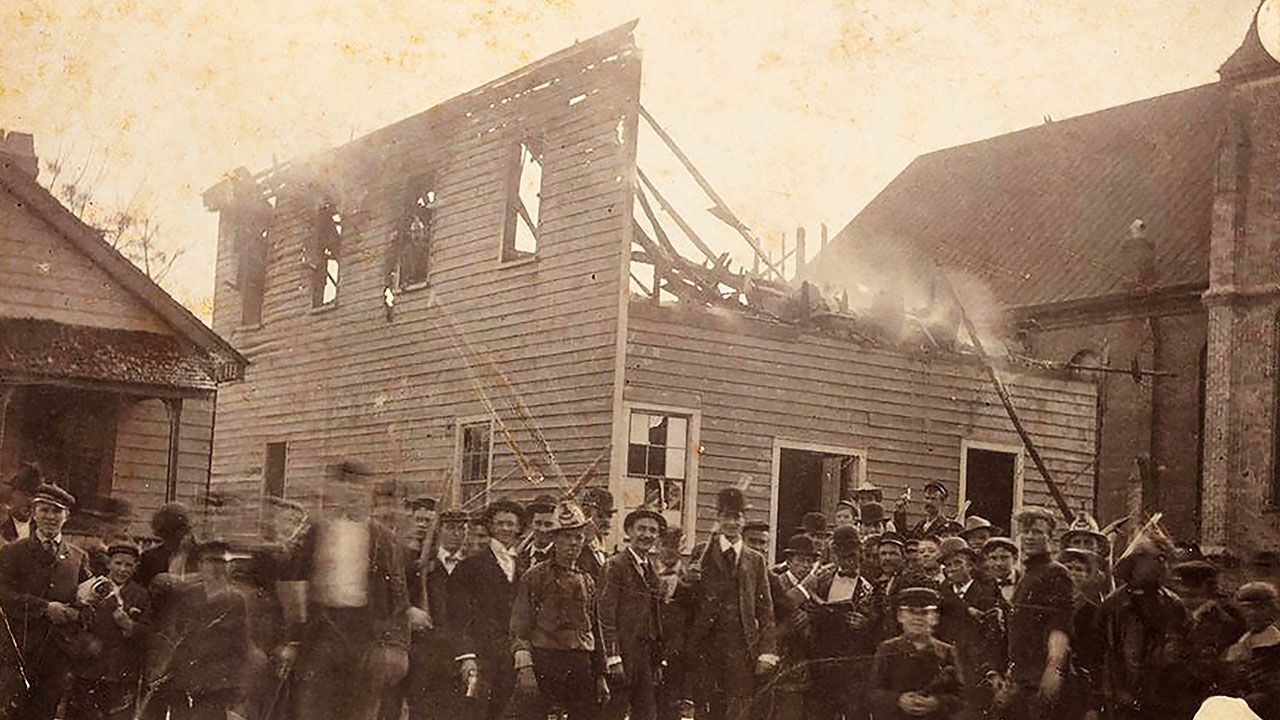
They were confident they wouldn’t be punished—and they were right to be. The paramilitaries who torched the offices of an African-American newspaper in Wilmington, North Carolina, in 1898 posed smilingly for a photograph at the scene, as Southern lynch mobs often did (see picture).(1898年,北卡罗来纳州威尔明顿,烧毁一家非裔美国人报社办公室的准军事组织成员在现场微笑着合影,正如南方私刑暴徒常做的那样。) After the arson(纵火罪) they murdered dozens, perhaps hundreds of the town’s black residents. “We have taken a city”, a white churchman crowed(得意洋洋地说), “as thoroughly, as completely, as if captured in battle.”
他们自信不会受到惩罚——而且他们确实有理由自信。1898年,北卡罗来纳州威尔明顿,烧毁一家非裔美国人报社办公室的准军事组织成员在现场微笑着合影,正如南方私刑暴徒常做的那样(见图)。纵火后,他们杀害了该镇数十名、甚至数百名黑人居民。“我们占领了一座城市,”一位白人牧师得意洋洋地宣称,“彻底地、完全地,就像在战斗中夺取的一样。”
Lauren Collins, a journalist at the New Yorker, grew up in Wilmington. “They Stole a City” is her account of the massacre and the municipal coup d’état(市政政变) that accompanied it. This story has been told before, notably in David Zucchino’s Pulitzer-prizewinning “Wilmington’s Lie”. The new book is distinguished by its deep interest in the origins of the horror and, especially, in its rippling reverberations(涟漪般的回荡影响): the culture of impunity(有罪不罚), trauma, exile and resilience(韧性;恢复力).
劳伦·柯林斯是《纽约客》的记者,在威尔明顿长大。《他们偷了一座城》是她对这场屠杀及其伴随的市政政变的记述。这个故事以前有人讲过,尤其是大卫·祖奇诺获得普利策奖的《威尔明顿的谎言》。这本新书的独特之处在于它对恐怖根源的深入探究,尤其是对其涟漪般回荡的影响:有罪不罚的文化、创伤、流亡和韧性。