A GHOST WRITER is haunting(萦绕,困扰) the English language. The linguistic spectre(幽灵,鬼怪) can turn its hand to(着手做,尝试) prose, poetry, journalese and corporate jargon. It is frightfully(非常,极其) versatile: you can get it to mimic Shakespeare’s sonnets or a schlocky(低劣的,庸俗的) beach read; Ernest Hemingway’s taut(紧凑的,简洁的) prose or the office-printer manual. It is frightfully fast, churning out(大量生产,粗制滥造) thousands of words a minute. (Hemingway rarely produced as many in a day, and required much more booze.) Wordsmiths(文字工作者,作家) are spooked(受惊,吓坏).
一个“幽灵写手”正在英语语言中作祟。这个语言幽灵能驾驭散文、诗歌、新闻体和公司行话。它极其多才多艺:你可以让它模仿莎士比亚的十四行诗或低俗的海滩读物;厄内斯特·海明威的简洁散文或办公室打印机说明书。它速度快得惊人,每分钟能炮制数千词。(海明威一天都写不了这么多,而且需要多得多的酒。)文字工作者们吓坏了。
AI writing is everywhere. It is in your inbox and on your LinkedIn feed. It is all over the internet, drafting more than a third of new websites by one count. Large language models (LLMs) are helping students write essays and probably helping scientists write papers. Some allege(声称,断言) AI-generated prose won the Commonwealth Short Story prize(英联邦短篇小说奖) this year, with judges praising its “quiet authority(安静的权威)”. (The Commonwealth Foundation denied the claim.)
AI写作无处不在。它在你的收件箱里,在你的领英信息流里。它遍布互联网,据一项统计,超过三分之一的新网站是由它起草的。大型语言模型正在帮助学生写论文,也可能在帮助科学家写论文。有人声称AI生成的散文赢得了今年的英联邦短篇小说奖,评委称赞其“安静的权威”。(英联邦基金会否认了这一说法。)
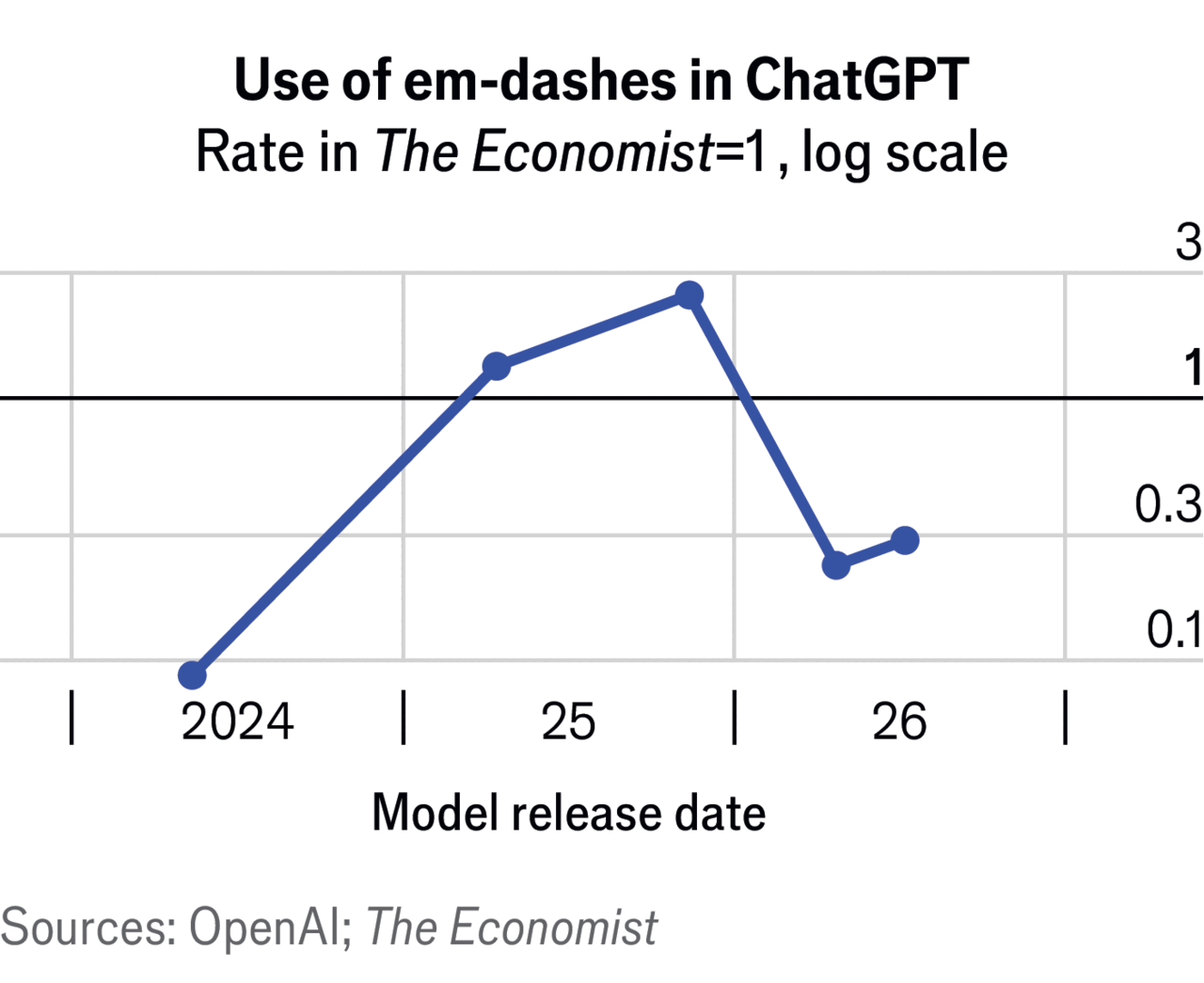
LLMs have stylistic quirks(怪癖,奇特之处). They are thought to maximise(最大化) the use of long em-dashes—and the use of words like “maximise”. They like to “deep dive(深入探讨,深度分析)” (and, better yet, “delve(钻研,探究)”) into the “rich tapestry(丰富的画卷,多彩的图景)” of the world. AI writing is not about a single word or phrase, but a rich tapestry of things.
LLM有风格上的怪癖。人们认为它们会最大化使用长破折号——以及像“最大化”这样的词。它们喜欢“深入探讨”(更好的是“钻研”)世界的“丰富画卷”。AI写作不在于单个词或短语,而在于事物的丰富画卷。