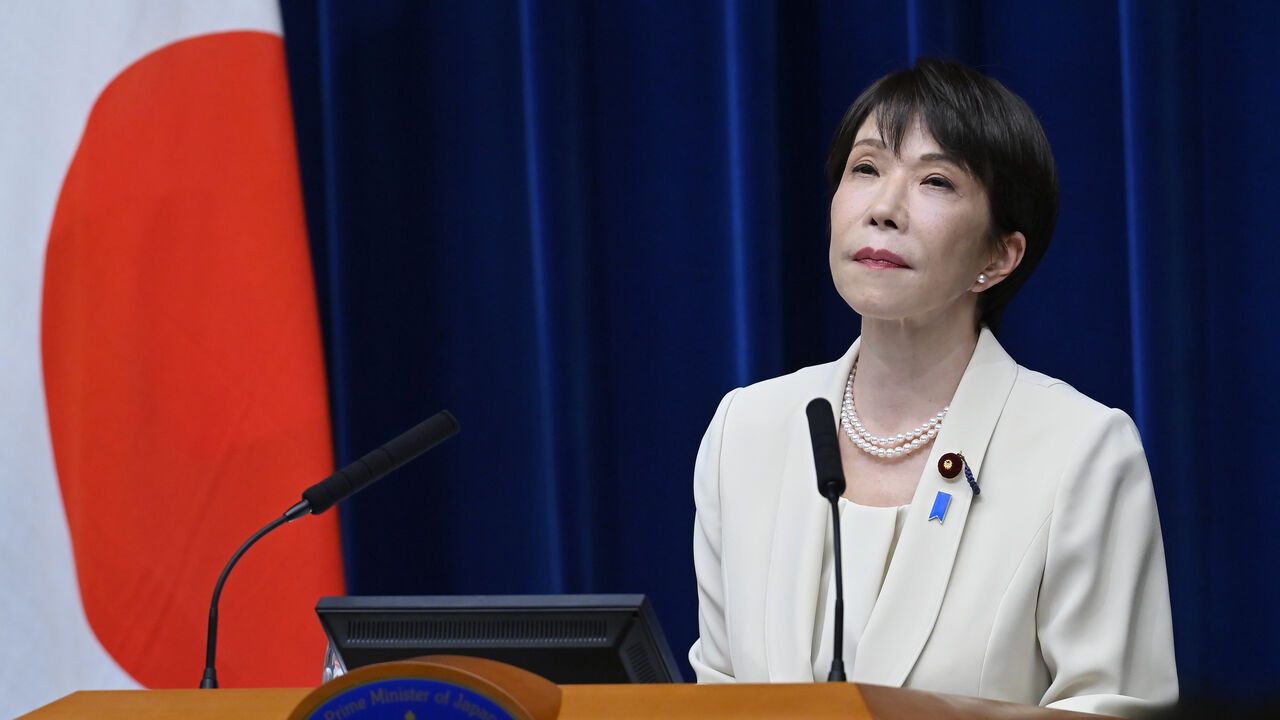
Takaichi Sanae, Japan’s prime minister since October, positions herself as heir(继承人) to the late Abe Shinzo, the country’s longest-serving leader. Many expected her to revive his “Abenomics” agenda, with its “three arrows(三支箭(安倍经济学政策))” of loose money, expansionary fiscal policy and structural reform. Two plans published this month instead signal a departure.(本月发布的两项计划却标志着一种背离。)
自去年10月起担任日本首相的高市早苗,将自己定位为已故的安倍晋三——日本任职时间最长的领导人——的继承人。许多人曾期待她重振安倍的“安倍经济学”议程,即“三支箭”:宽松货币、扩张性财政政策和结构性改革。然而,本月发布的两项计划却标志着一种背离。
Whereas Abenomics sought to relegate(使降级;把……归入) Japan’s deflationary decades to history, Sanaenomics aims to steel(使坚强;使准备好) Japan for geopolitical conflict. The honebuto, an annual economic blueprint, declares that Japan must keep pace with a global “Copernican revolution(哥白尼革命(范式转变))” in industrial policy. A new growth-strategy paper calls for ¥120trn ($733bn, or 18% of last year’s GDP) in new public investment by 2040, to catalyse(催化;促进) ¥250trn in private capital. Cash is to be spread across 17 sectors and 62 products, from ships to chips. For good measure Ms Takaichi wants a cut in sales tax on food, too.
如果说安倍经济学试图将日本的通缩年代扫入历史,那么高市经济学则旨在让日本为地缘政治冲突做好准备。《骨太方针》——一份年度经济蓝图——宣称,日本必须跟上全球产业政策领域的“哥白尼革命”。一份新的增长战略文件呼吁,到2040年新增120万亿日元(合7330亿美元,占去年GDP的18%)的公共投资,以撬动250万亿日元的私人资本。资金将分布在17个行业和62种产品中,从船舶到芯片。此外,高市还希望降低食品消费税。
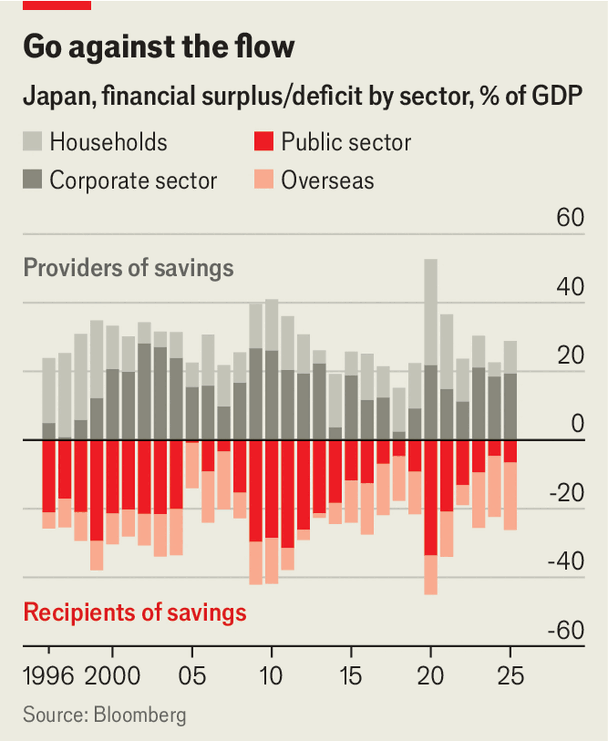
Of Abenomics’ three arrows, Sanaenomics keeps only one, fiscal stimulus. Though Ms Takaichi has pressed the Bank of Japan (BoJ) to keep interest rates low, it has raised them, from 0.5% when she took office to 1%. Political appetite(欲望;胃口) for structural reform, such as boosting immigration and improving corporate governance, has waned(减弱;衰退). Yet it is an odd time for big-bang spending(大规模支出(大爆炸式)). Japan no longer faces a demand shortfall(不足;缺口), as it did during the Abe years. Inflation has largely stayed above 2% since 2022, though it has dipped recently. The BoJ estimates that Japan has a positive “output gap(产出缺口)” of 0.5%, implying that the economy is running slightly hot.
在安倍经济学的三支箭中,高市经济学只保留了一支:财政刺激。尽管高市早苗曾施压日本央行(BoJ)维持低利率,但央行已将利率从她就职时的0.5%上调至1%。对结构性改革(如促进移民和改善公司治理)的政治意愿已经减弱。然而,现在并非推行大规模支出计划的合适时机。日本不再像安倍时代那样面临需求不足。自2022年以来,通胀率基本保持在2%以上,尽管近期有所回落。日本央行估计,日本存在0.5%的正“产出缺口”,这意味着经济略微过热。