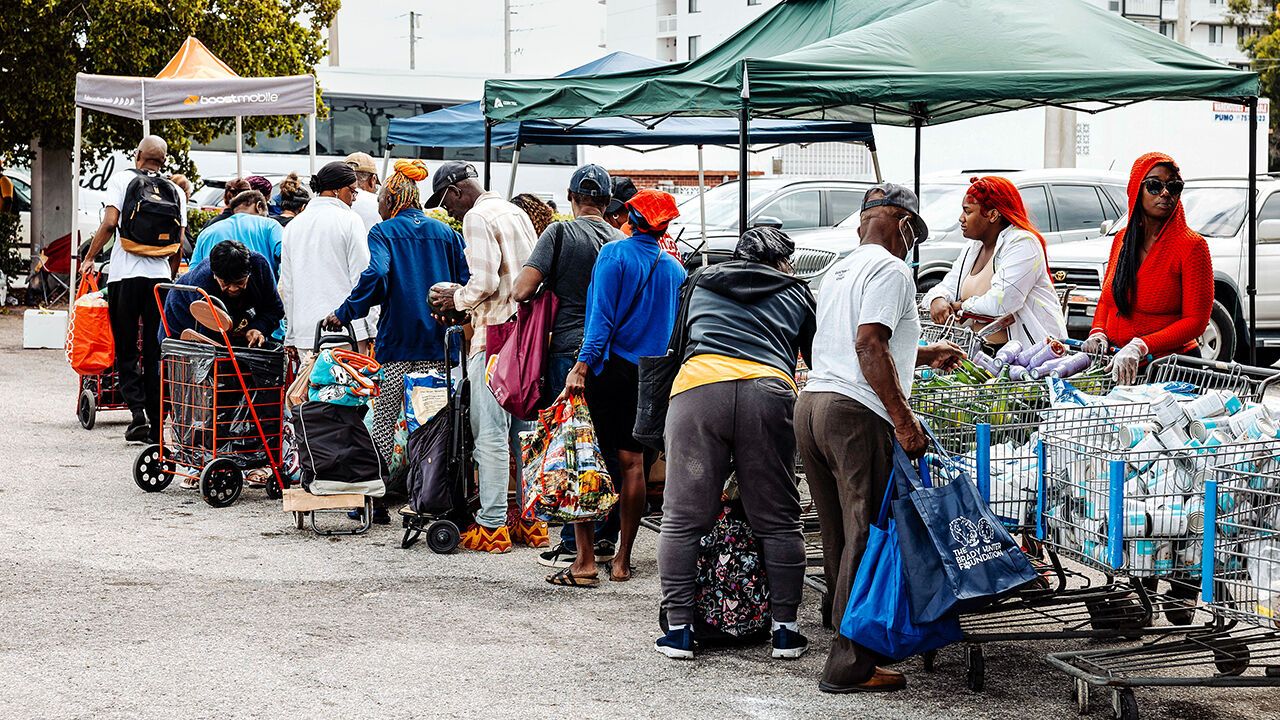
On a recent morning in Tucson, Wayne Zhang pulled his car around the back of(把车开到……后面) a church. His 92-year-old father, Youde, who has dementia(痴呆症), sat beside him. They parked alongside a row of saguaro(仙人掌(巨人柱)) cacti and palo verde(蓝花楹(假紫荆属树木)) trees as volunteers from the Interfaith Community Services(跨信仰社区服务组织) food bank loaded boxes of tuna, peanut butter and rice into their trunk. Youde receives money from the Supplemental Nutrition Assistance Programme(补充营养援助计划) (snap), a federal welfare scheme known as food stamps. But recently his monthly benefits(福利金) were cut from $293 to $161. Adjusting has been difficult(适应起来很困难), says Wayne. “Here we can get my dad a little bit more food.”
最近一个早晨,在图森,Wayne Zhang把车开到一座教堂后面。他92岁的父亲Youde患有痴呆症,坐在他旁边。他们停在一排仙人掌和蓝花楹树旁,来自跨信仰社区服务食品银行的志愿者正在往他们的后备箱里装金枪鱼、花生酱和大米。Youde领取补充营养援助计划(SNAP)的补助金,这是一个被称为食品券的联邦福利计划。但最近他的月度福利从293美元削减到了161美元。Wayne说,适应起来很困难。“在这里我们可以给我父亲多弄点食物。”
Across America, millions of people like Youde are finding life harder. One in nine Americans receives food stamps; around 70% of recipients are pensioners(养老金领取者), children or people with disabilities. But the One Big Beautiful Bill Act(《一项大而美丽的法案》) (obbba), passed last year without a single Democratic vote, is projected(预计) to cut federal spending on snap by about a fifth over the coming decade. Enrolment(注册人数) has already fallen by 12%, or around 5m people.
全美各地,数百万像Youde一样的人发现生活更加艰难。每九个美国人中就有一人领取食品券;约70%的受助者是养老金领取者、儿童或残疾人。但去年在没有一张民主党赞成票的情况下通过的《一项大而美丽的法案》(OBBA),预计将在未来十年内将联邦在SNAP上的支出削减约五分之一。注册人数已经下降了12%,约500万人。
The obbba did more than cut food stamps. It shifted costs to(将成本转嫁给) the states and gave them a powerful incentive(激励;动力) to reduce the number of people receiving benefits. As a result, many are tightening the programme’s administration in ways that may push eligible recipients off the rolls(将符合条件的受助人挤出名单).
OBBA所做的不仅仅是削减食品券。它将成本转嫁给了各州,并给了它们强大的动力来减少领取福利的人数。结果,许多州正在收紧该计划的管理,这可能会将符合条件的受助人挤出名单。