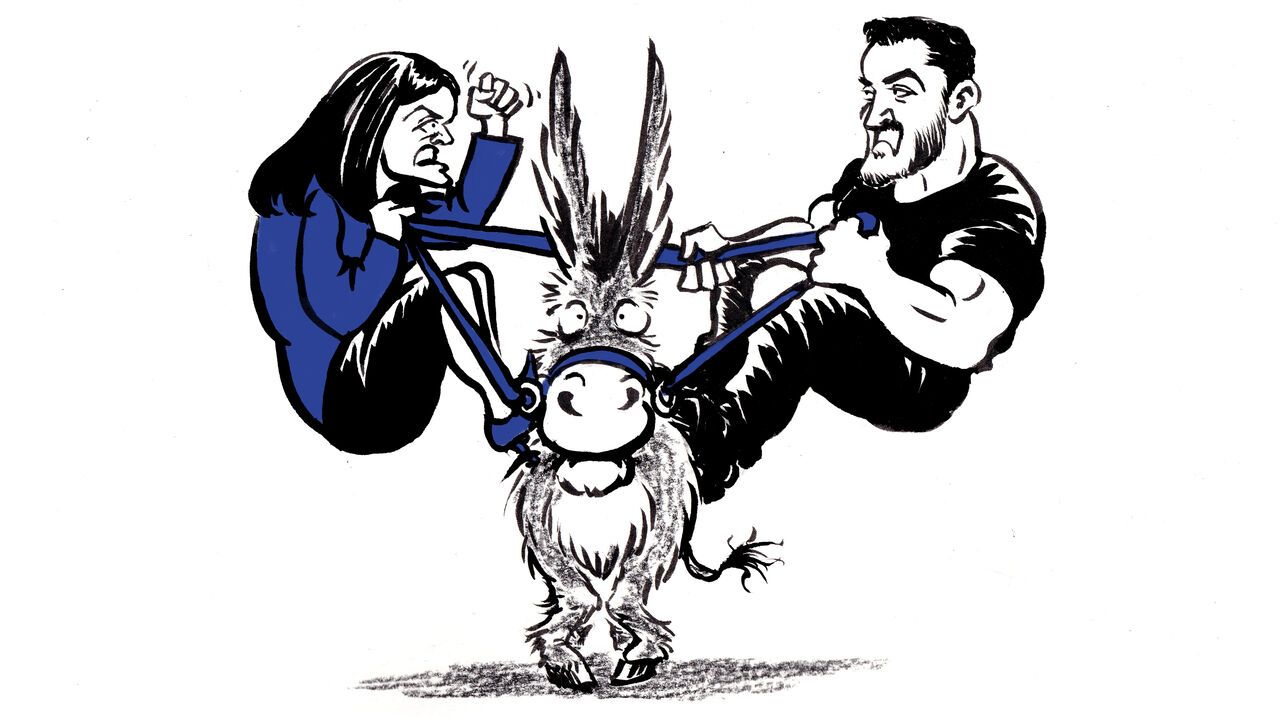
Abdul El-Sayed, the progressive candidate to be the Democratic nominee for the Senate from Michigan, rejects(拒绝) the label “progressive”. He is not sure what people mean by it, he said after rallying with some of the party’s leading progressives on July 25th before a mostly white crowd in Ferndale, a hipster suburb of Detroit. “I choose the word ‘populist(民粹主义者),’” he said, “because I’m for people, and I want people to have more power, versus the elites(对抗精英).”
阿卜杜勒·埃尔-赛义德是密歇根州参议院民主党提名的进步派候选人,但他拒绝“进步派”这个标签。7月25日,他在底特律的时尚郊区芬代尔与党内一些主要进步派人士一起集会,面对以白人为主的听众后表示,他不确定人们所说的“进步派”是什么意思。“我选择‘民粹主义者’这个词,”他说,“因为我支持人民,我希望人民拥有更多权力,而不是精英。”
For her part, Haley Stevens, the moderate in the race, brushes away(不理会,拂去) the adjective “moderate”. She will let other people “do labels”, she said after speaking the next day before a black congregation(会众) at Hartford Memorial Baptist Church in Detroit. Yet moments before, when Lexington asked if she would call herself a populist, she had lit up(变得兴奋/高兴). “Sure,” she said. “I mean, I’d call myself for making a big change for people right now.”
至于哈利·史蒂文斯,这场竞选中的温和派,则对“温和派”这个形容词不屑一顾。第二天,她在底特律哈特福德纪念浸信会教堂面对一群黑人会众发表演讲后表示,她会让别人“去贴标签”。然而就在此前不久,当《列克星敦》专栏问她是否愿意称自己为民粹主义者时,她眼前一亮。“当然,”她说,“我的意思是,我会称自己为现在为人民带来巨大变革的人。”
Each candidate is trying to solve the same tricky(棘手的) political equation: how to add together the party’s college-educated activists and its centrists, the Democrats’ coalition since they alienated(疏远) working-class white voters in Michigan as elsewhere. The winner of the primary, on August 4th, will face Mike Rogers, a former congressman who has converted(转变) from old-school(老派的) Republicanism to Donald Trumpism. The race is vital to Democrats’ hopes of winning a Senate majority. Yet it is hard to shake the suspicion that, for the Democratic leaders passionately backing each candidate, the biggest fear is not that, if nominated, the other one might lose to Mr Rogers. It is instead that he or she might win, tilting the balance of influence in the bitter intraparty struggle.(然而,人们很难摆脱这种怀疑:对于热情支持各自候选人的民主党领导人来说,最大的担忧不是对方如果获得提名可能会输给罗杰斯,而是他或她可能会赢,从而在激烈的党内斗争中打破影响力平衡。)
每位候选人都在试图解决同一个棘手的政治方程式:如何将党内受过大学教育的活动家与中间派——自民主党在密歇根州等地失去白人工人阶级选民支持以来形成的联盟——结合起来。8月4日初选的获胜者将对阵迈克·罗杰斯,一位前国会议员,他已从老派共和党人转变为特朗普主义者。这场竞选对民主党赢得参议院多数席位的希望至关重要。然而,人们很难摆脱这样一种怀疑:对于热情支持各自候选人的民主党领导人来说,最大的担忧不是对方如果获得提名可能会输给罗杰斯,而是他或她可能会赢,从而在激烈的党内斗争中打破影响力平衡。
Ogre indulging
纵容食人魔