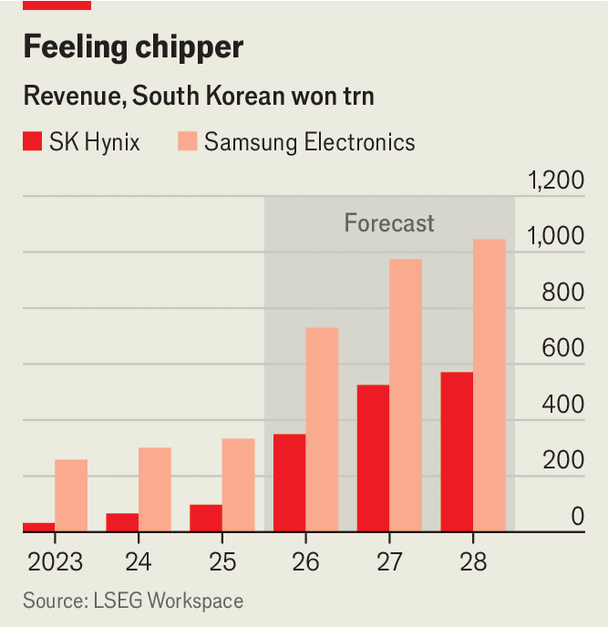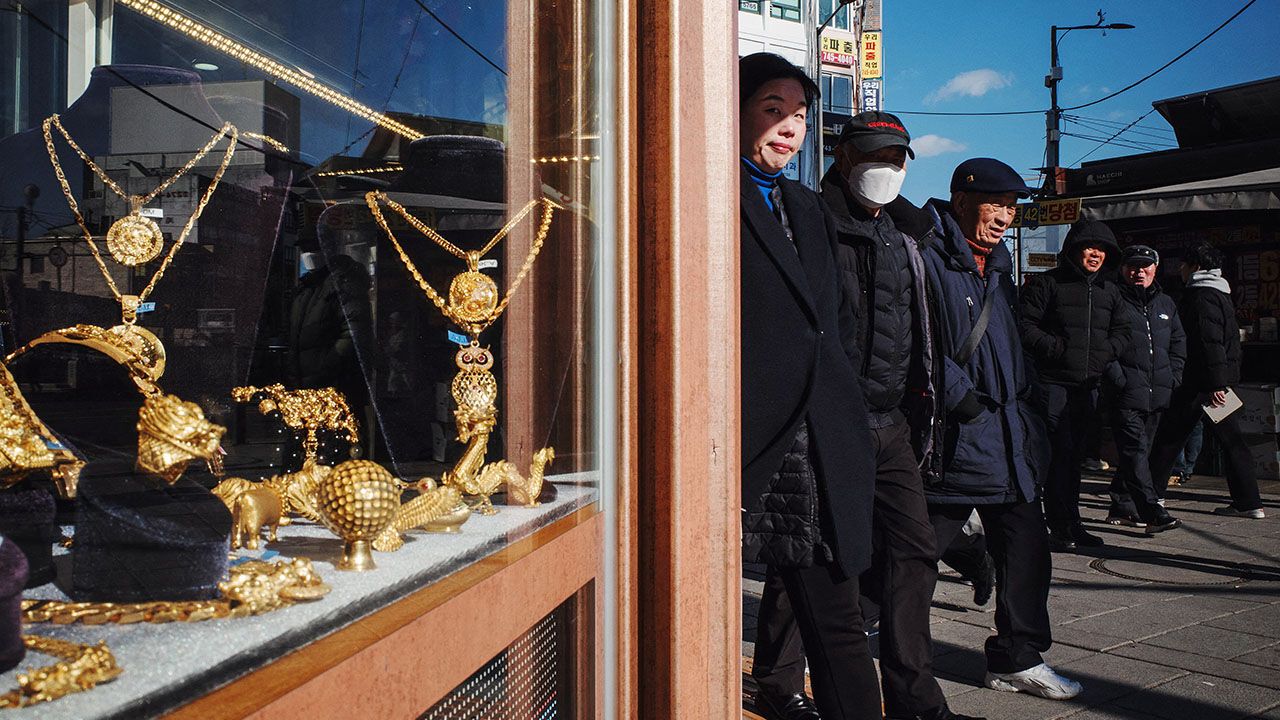
AN UNKEMPT man walks into a pricey(昂贵的) shop. The staff dismiss him(打发走他,不理会他)—until he takes off his jacket and reveals a gilet(背心,马甲) emblazoned(印有,装饰着) with “SK Hynix”, a semiconductor firm known for handing out massive bonuses. This imagined scene—a recent skit on a South Korean comedy show—lampoons(讽刺,嘲讽) real ones unfolding as AI-driven wealth floods the country(涌入全国). Companies that help arrange marriages report a big jump in the desirability of engineers from SK Hynix and Samsung Electronics, another semiconductor-maker. They are now nearly as sought after(受欢迎的,被追捧的) as doctors and lawyers.
一个邋遢的男人走进一家昂贵的商店。店员对他不屑一顾——直到他脱下夹克,露出印有“SK海力士”字样的背心,这家半导体公司以发放巨额奖金而闻名。这个虚构的场景——最近韩国喜剧节目中的一个小品——讽刺了随着AI驱动的财富涌入该国而发生的真实事件。婚介公司报告称,来自SK海力士和另一家半导体制造商三星电子的工程师的受欢迎程度大幅上升。他们现在几乎和医生、律师一样抢手。
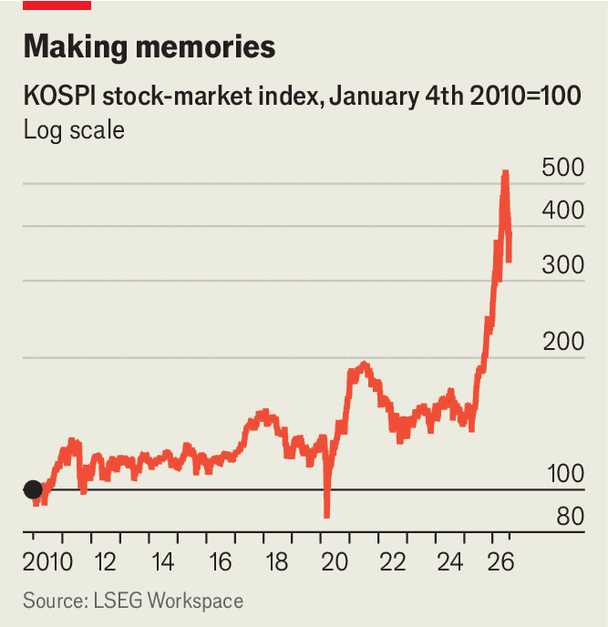
An AI windfall(意外之财,横财) is reshaping South Korean society. Speaking in Silicon Valley on July 25th, Lee Jae Myung, South Korea’s president, compared the AI era to the discovery of fire and called it “a truly new opportunity for Korea”. But the new era also brings risks: South Korea’s benchmark(基准,标准) stock index, KOSPI, has doubled in value in the past year but dipped(下跌,下降) 22% in July. A series of wild swings(剧烈波动) have made it the most volatile(动荡的,不稳定的) stock market in the world.
AI 带来的意外之财正在重塑韩国社会。韩国总统李在明7月25日在硅谷发表讲话时,将AI时代比作火的发现,并称之为“韩国真正的新机遇”。但新时代也带来风险:韩国基准股指 KOSPI 在过去一年里价值翻了一番,但在7月份下跌了22%。一系列剧烈波动使其成为全球最动荡的股市。
Fierce debates rage(辩论激烈) in Seoul over how to ensure that new wealth is shared equitably(公平地) and stewarded(管理,照管) sustainably. “This raises a new policy challenge for us: how should we approach such extraordinary excess profits(超额利润) from a socioeconomic perspective and from the standpoint of national policy?” Mr Lee said during an interview with The Economist in June. The following month his government announced a “Future Response Fund” to invest newfound tax revenue for generations to come. The market gyrations(波动,起伏) and policy debates are a preview of processes likely to play out(发生,展现) elsewhere as AI adoption spreads. “This is an issue that requires broader international discussion,” Mr Lee added.
首尔正在激烈辩论如何确保新财富得到公平分享和可持续管理。李在明在6月接受《经济学人》采访时说:“这给我们带来了新的政策挑战:我们应该如何从社会经济角度和国家政策立场来看待如此非凡的超额利润?”次月,他的政府宣布设立“未来应对基金”,将新获得的税收收入投资于子孙后代。市场波动和政策辩论预示着随着AI应用的普及,其他地方可能也会出现类似的过程。李在明补充说:“这是一个需要更广泛国际讨论的问题。”