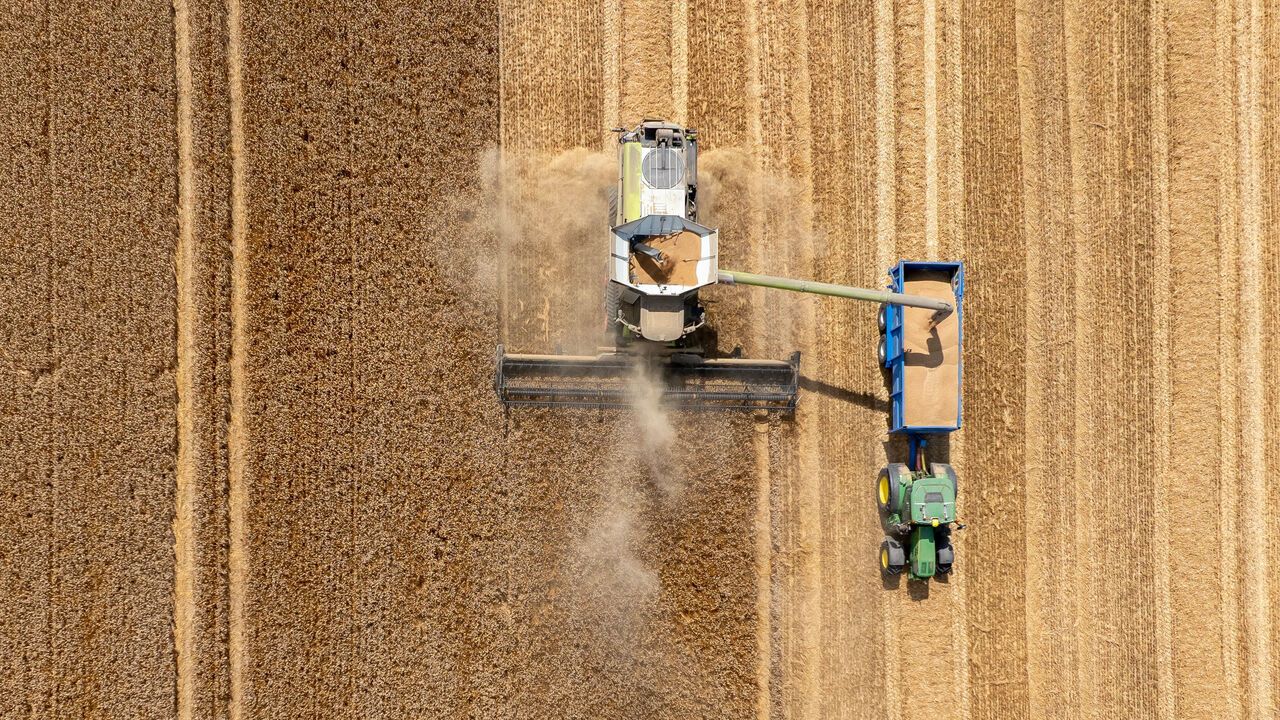
“I can’t remember ever finishing a harvest in July,” says Mark Weekes, a farmer who grows 700 acres of winter wheat, barley and oats near Exeter. Usually Mr Weekes cuts his crop about three weeks later. But hot, dry weather has ripened(使成熟) his grain faster and left it in a worse state. His fields have yielded a third less(产量减少三分之一) wheat and nearly two-fifths less barley than normal. “A lot has just shrivelled(枯萎,干枯),” he says.
“我记不起曾在七月完成过收割,”马克·威克斯说,他在埃克塞特附近种植700英亩冬小麦、大麦和燕麦。通常威克斯先生大约三周后收割作物。但炎热干燥的天气使谷物成熟更快,状态更差。他的田地小麦产量比正常少三分之一,大麦少近五分之二。“很多都枯萎了,”他说。
British crops have been bred(培育,繁殖) to grow in a moderately wet and mild climate. This year’s weather has been anything but(绝不是,根本不). A very wet winter sapped(耗尽,削弱) nutrients from soils. A very dry summer sapped moisture(水分,湿气). In July Britain had just 10% of the typical rainfall for the month. The Environment Agency(英国环境署) declared half of England in drought.
英国作物培育用于在适度湿润和温和的气候中生长。今年的天气绝非如此。一个非常潮湿的冬天耗尽了土壤中的养分。一个非常干燥的夏天耗尽了水分。七月,英国的降雨量仅为该月典型降雨量的10%。环境署宣布英格兰一半地区处于干旱状态。
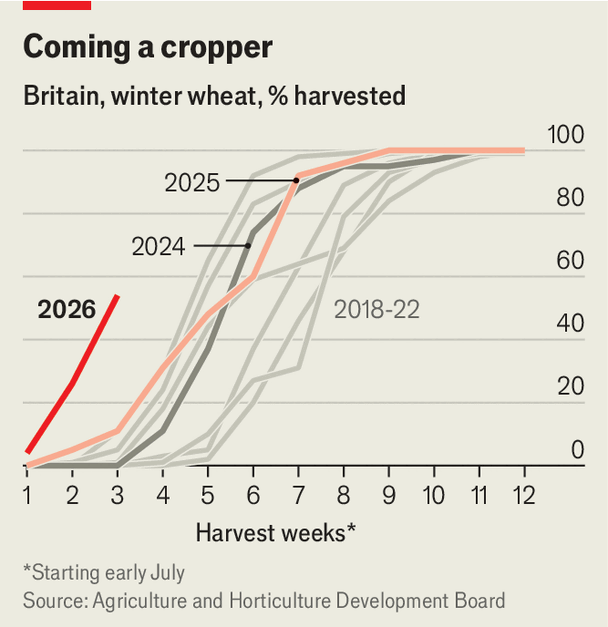
Across Britain winter wheat has been cut early—its earliest harvest since 1976. Over half had been harvested by July 26th, compared with 11% a year earlier, according to the Agriculture and Horticulture Development Board (see chart).(截至7月26日已收获过半,而去年同期仅为11%。) Wheat yields(产量) are down by nearly 16% on average, compared with the country’s ten-year mean(十年平均值). In the east of England, where soils are light(土壤疏松), farmers have reported yields down by half.
全英国冬小麦提前收割——这是自1976年以来最早的收获。根据农业与园艺发展局的数据,截至7月26日,已收获超过一半,而去年同期仅为11%(见图表)。与全国十年平均值相比,小麦产量平均下降近16%。在英格兰东部,土壤疏松,农民报告产量下降一半。