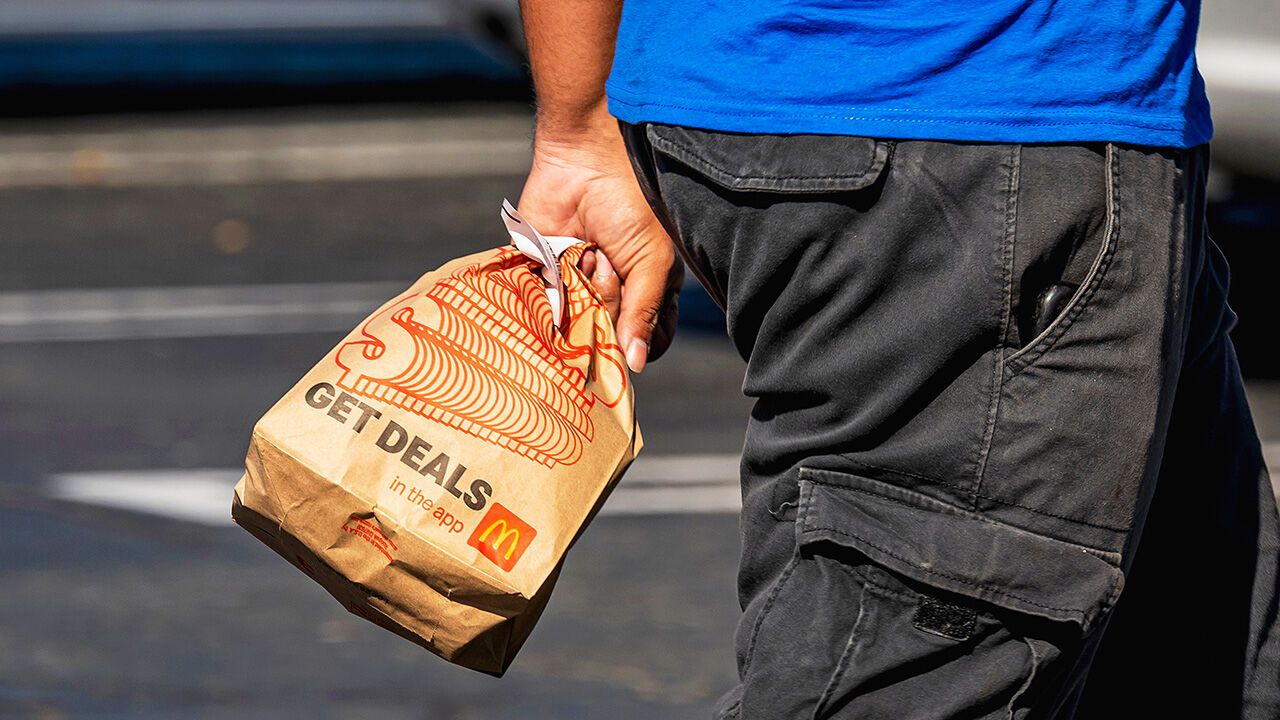
Is it more difficult to run the world’s most valuable fast-food chain or to eat a burger on camera?(经营最有价值的快餐连锁店和在镜头前吃汉堡,哪个更难?) Chris Kempczinski, the boss of McDonald’s, seems to struggle with both. A video earlier this year of him tentatively(试探性地,犹豫地) nibbling(小口咬,啃) at a new burger, called the “Big Arch”, drew widespread mockery. On August 4th he unveiled that sales in America, McDonald’s biggest market, were up by a soggy(湿软的,无精打采的) 0.8% in the second quarter, year on year(同比,与去年同期相比). The company’s share price has fallen by 12% this year.
经营世界上最有价值的快餐连锁店和在镜头前吃汉堡,哪个更难?麦当劳的老板克里斯·肯普钦斯基似乎两者都难以应付。今年早些时候,一段他试探性地啃食名为“巨无霸拱门”的新汉堡的视频,招致了广泛的嘲笑。8月4日,他透露,在麦当劳最大的市场美国,第二季度的销售额同比仅增长了0.8%,涨幅疲软。该公司股价今年已下跌12%。
In fairness to(平心而论,公平地说) Mr Kempczinski, his is not the only chain struggling. In the first seven months of 2026 traffic(客流量,交通量) to quick-service restaurants was down by 1.3% from the year before, notes Placer.ai, a data provider. Big price increases in recent years have caused consumers to turn to other options(转向其他选择). High petrol prices and a recall of parasite-infected(感染寄生虫的) lettuce used by chains such as Taco Bell have not helped lately, nor have shifting diets. To boost sales, chains have turned to value deals(优惠套餐,超值优惠) and viral(病毒式传播的) gimmicks(噱头,花招). Neither are working.
平心而论,肯普钦斯基先生的公司并不是唯一陷入困境的连锁店。数据提供商 Placer.ai 指出,2026年前七个月,快餐店的客流量同比下降了1.3%。近年来的大幅涨价导致消费者转向其他选择。高油价、塔可钟等连锁店使用的感染寄生虫的生菜被召回,以及不断变化的饮食习惯,近来都无助于改善局面。为了提振销售,连锁店转向了优惠套餐和病毒式传播的噱头。但这些都不起作用。
For years Americans have complained about the rising cost of groceries. Their ire(怒火,愤怒) might be better directed at fast-food restaurants, which have increased prices by a cumulative(累积的,累计的) 15-20 percentage points(百分点) more than grocery stores over the past decade, points out Gregory Francfort of Guggenheim Securities, an investment bank. Low-income Americans—the core customer(核心顾客,主要客群) for most chains—have adapted by eating more at home. Convenience stores and supermarkets have also expanded their ready-meal ranges, chomping at the market(蚕食市场,急切争夺市场). More trouble may be on the way as slimming drugs(减肥药) become cheaper.
多年来,美国人一直抱怨食品杂货价格上涨。他们的怒火或许更应该指向快餐店,投资银行古根海姆证券的格雷戈里·弗兰克福特指出,过去十年,快餐店的价格涨幅累计比杂货店高出15至20个百分点。低收入美国人——大多数连锁店的核心顾客——已经适应了更多在家吃饭。便利店和超市也扩大了即食餐的范围,蚕食着市场。随着减肥药变得更便宜,更多的麻烦可能即将到来。