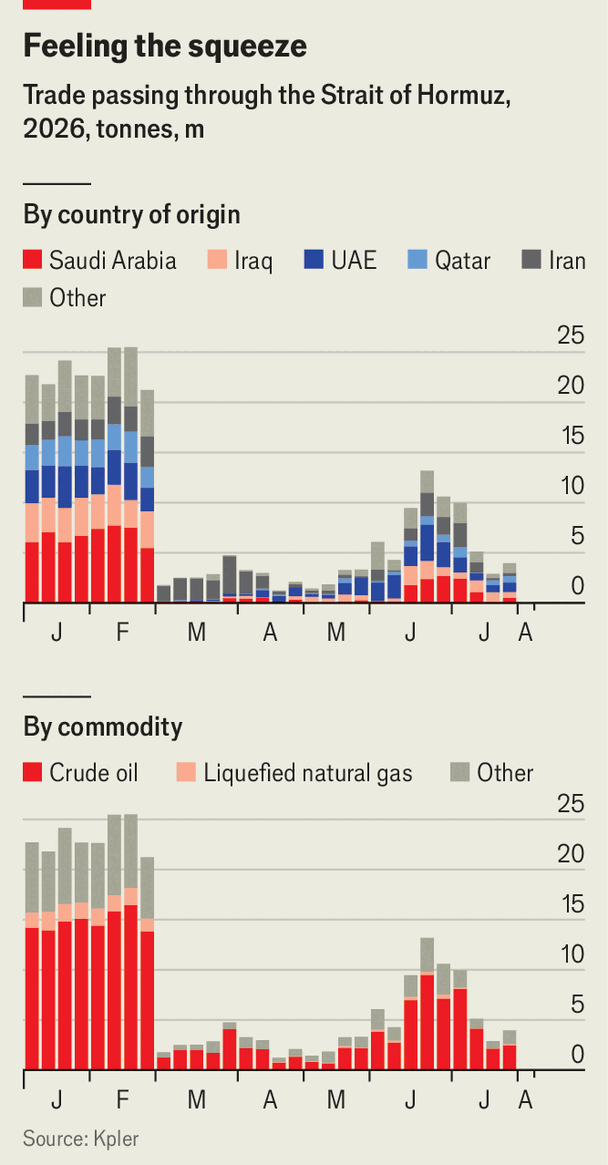
For years the world has feared that Iran has been pursuing nuclear arms. Five months of war have taught the country’s rulers they were already in possession of another formidable(强大的,令人敬畏的) weapon. Geography and firepower give them de facto command of the Strait of Hormuz, through which a fifth of the world’s oil and liquefied natural gas (lng) normally flows.(地理和火力赋予他们对霍尔木兹海峡的实际控制权,全球五分之一的石油和液化天然气通常经由该海峡流动。) Choking that artery gives Iran’s leaders immense leverage(影响力,杠杆作用) over their adversaries.
多年来,世界一直担心伊朗在追求核武器。五个月的战争让该国统治者认识到,他们早已拥有另一件强大的武器。地理和火力赋予他们对霍尔木兹海峡的实际控制权,全球五分之一的石油和液化天然气(LNG)通常经由该海峡运输。扼住这条动脉,让伊朗领导人对对手拥有巨大的影响力。
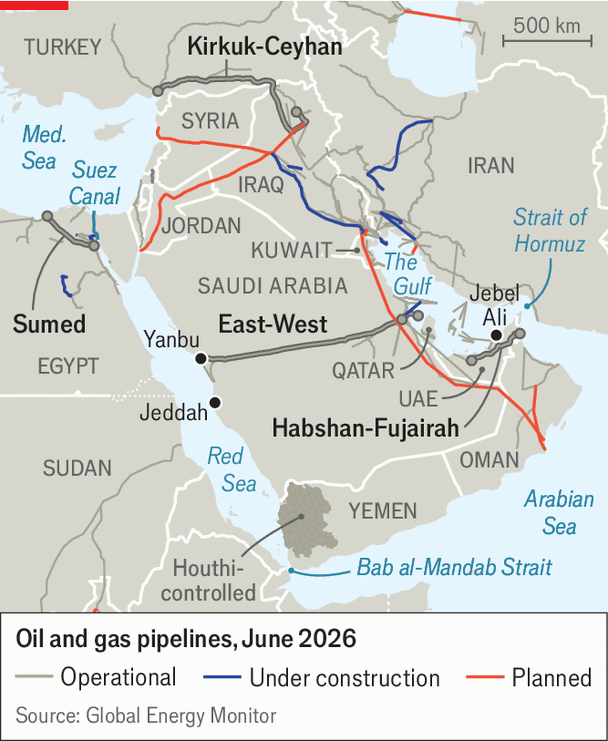
Iran’s foes hope Hormuz will prove to be a wasting asset(消耗性资产,价值递减的资产). Shutting Hormuz is “a card you can play once(只能打一次的牌),” said Chris Wright, America’s energy secretary, in May. Gulf states are busily seeking alternative export routes. Tom Barrack, Donald Trump’s envoy(特使,使节) to Iraq and Syria, reckons(认为,估计) the strait will be “an afterthought(事后想法,马后炮) in two years”.
伊朗的对手们希望霍尔木兹海峡最终会成为一种不断贬值的资产。美国能源部长克里斯·赖特在5月表示,关闭霍尔木兹海峡是“一张只能打一次的牌”。海湾国家正忙着寻找替代出口路线。唐纳德·特朗普派驻伊拉克和叙利亚的特使汤姆·巴拉克认为,这条海峡在两年内将“成为事后才想起的事”。
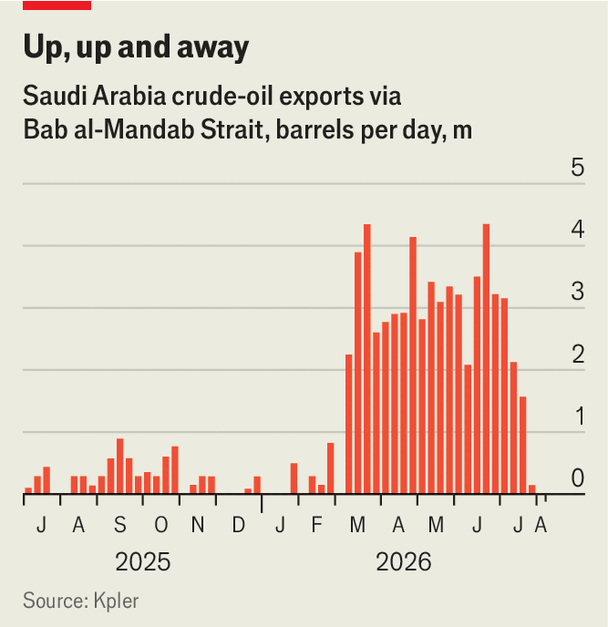
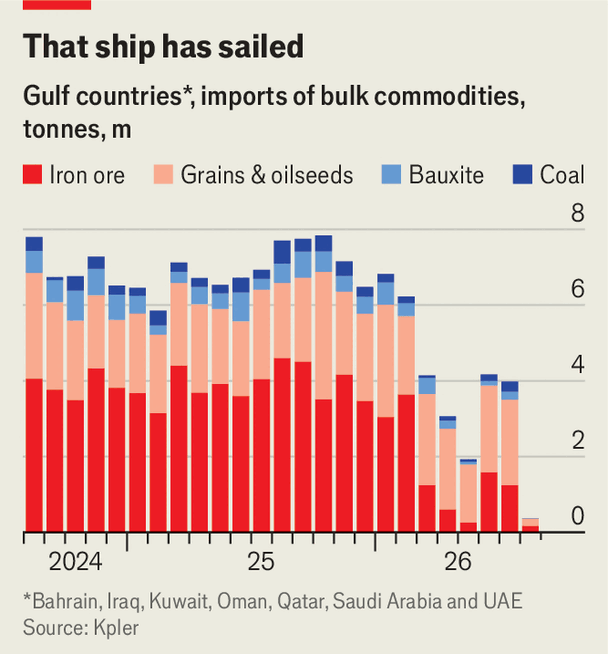
The Economist hasinterviewed experts and analysed data to build a “Hormuz dependency dashboard(仪表盘,数据面板)” to test these claims. It points to three conclusions. First, the staying power(持久力,耐力) of the Iranian threat varies by commodity and country. Second, Iran’s ability to cash in on(利用……获利,从中捞一把) the strait will diminish(减少,减弱) but may never vanish. Third, even if the fees Iran can charge fall over time, its strategic leverage will not necessarily fade in step(同步,一致). Indeed, it may deepen as the regime institutionalises(使制度化,使成为惯例) its regional influence.
《经济学人》采访了专家并分析了数据,构建了一个“霍尔木兹依赖度仪表盘”来检验这些说法。它指出了三个结论。第一,伊朗威胁的持久力因商品和国家而异。第二,伊朗利用海峡获利的能力将会减弱,但可能永远不会消失。第三,即使伊朗能收取的费用随时间下降,其战略影响力也不一定会同步减弱。事实上,随着该政权将其地区影响力制度化,这种影响力可能会加深。
Gimme, gimme, gimme
给我,给我,给我