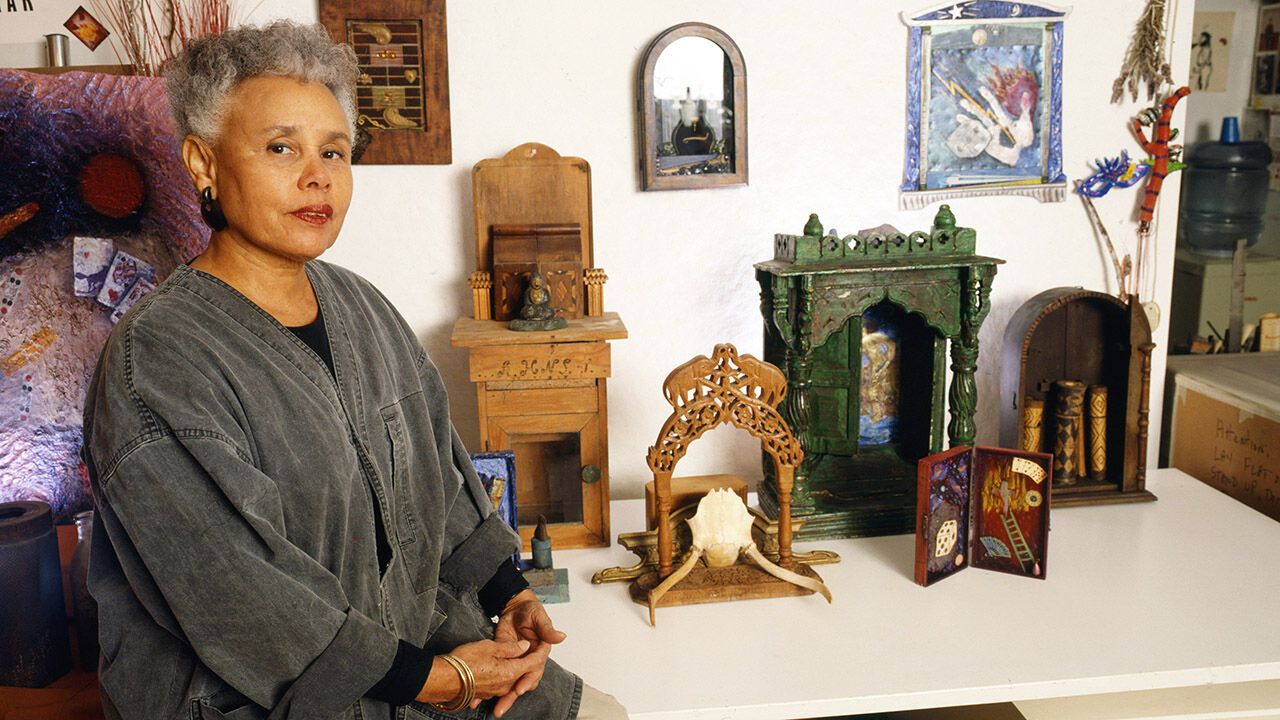
Objects spoke to(对……说话;与……交流) Betye Saar. As she browsed through yard sales and flea markets, something would catch her eye(吸引她的注意) and ask to be used. A broken necklace, say, or a rusty dagger. An off-cut(下脚料,边角料) of wood, a remnant(残余,剩余部分) of coloured cloth, even a circuit board. A chipped(有缺口的,破损的) ceramic of a cat, or a bundle of postcards. “Mother wit(天生的智慧,常识)” would lead her to them. These things were not simply dead and discarded(被丢弃的). They held the spirit of their previous owner, and had power.(它们承载着前主人的精神,拥有力量。) They would say, “You can make art with this.” So she did.
物品会与贝蒂耶·萨尔对话。当她在庭院旧货市场和跳蚤市场闲逛时,某样东西会吸引她的目光,并请求被使用。比如一条断掉的项链,或一把生锈的匕首。一块木料下脚料,一块彩色布料碎片,甚至一块电路板。一只破损的陶瓷猫,或一捆明信片。“母亲般的智慧”会引领她找到它们。这些东西并非简单地死去并被丢弃。它们承载着前主人的精神,拥有力量。它们会说:“你可以用这个做艺术。”于是她照做了。
She had always been that way. Growing up in Watts, then separate from Los Angeles, she liked to hunt in the yard to find coloured beads(珠子), paper scraps(碎片,废料) or toys left behind. If she kept them tidily(整齐地), her mother would not throw them away, so she preserved(保存,保留) them as treasures. The Watts Towers(瓦茨塔,洛杉矶的民间艺术地标) were then going up(正在建造;上升) in town, great spires(尖塔,尖顶) of fantastical(奇异的,幻想的) concrete and piping stuck all over with broken ceramics and glass. To her they were magic castles out of fairy tales. From so-called junk one man, Simon Rodia, had made something beautiful.(一个名叫西蒙·罗迪亚的人用所谓的垃圾做出了美丽的东西。) So could she.
她一直如此。在瓦茨长大(当时瓦茨与洛杉矶分开),她喜欢在院子里搜寻彩色珠子、纸屑或遗留的玩具。如果她把它们整齐地收好,母亲就不会扔掉它们,于是她把它们当作珍宝保存。当时瓦茨塔正在镇上建造,那些奇妙的混凝土和管道构成的巨大尖塔上贴满了碎陶瓷和玻璃。在她看来,它们是童话中的魔法城堡。一个名叫西蒙·罗迪亚的人用所谓的垃圾做出了美丽的东西。她也能做到。
Some objects, though, came to speak to her louder than others. Rusty bird cages, lengths of chain, pieces of rope, worn-out(破旧的,用坏的) alarm clocks. Model sailing boats of the old three-master(三桅帆船) kind and palmistry(手相术) hands held up, as if in despair(仿佛绝望地). All these shouted(呼喊,大声说出) slavery, and a weight of history(历史的重负) she could sense through her skin. Her "Dark Voyage" was a brick-like box that opened to show, on one side, a plan for the packing of men on a slave ship and, on the other, an African wood carving of an upright, sleeping man.(她的《黑暗航行》是一个砖块状的盒子,打开后,一面显示着奴隶船上装载人员的计划,另一面是一个非洲木雕,雕刻着一个直立、沉睡的男人。) His dreams, bright-coloured electrical wires, still played around his head.
然而,有些物品对她说话的声音比其他物品更大。生锈的鸟笼、一段段链条、一根根绳子、破旧的闹钟。老式三桅帆船模型和举起的看手相的手,仿佛在绝望中。所有这些都在呐喊奴隶制,以及她能通过皮肤感受到的历史重负。她的《黑暗航行》是一个砖块状的盒子,打开后,一面显示着奴隶船上装载人员的计划,另一面是一个非洲木雕,雕刻着一个直立、沉睡的男人。他的梦境,色彩鲜艳的电线,仍在他头部周围盘旋。