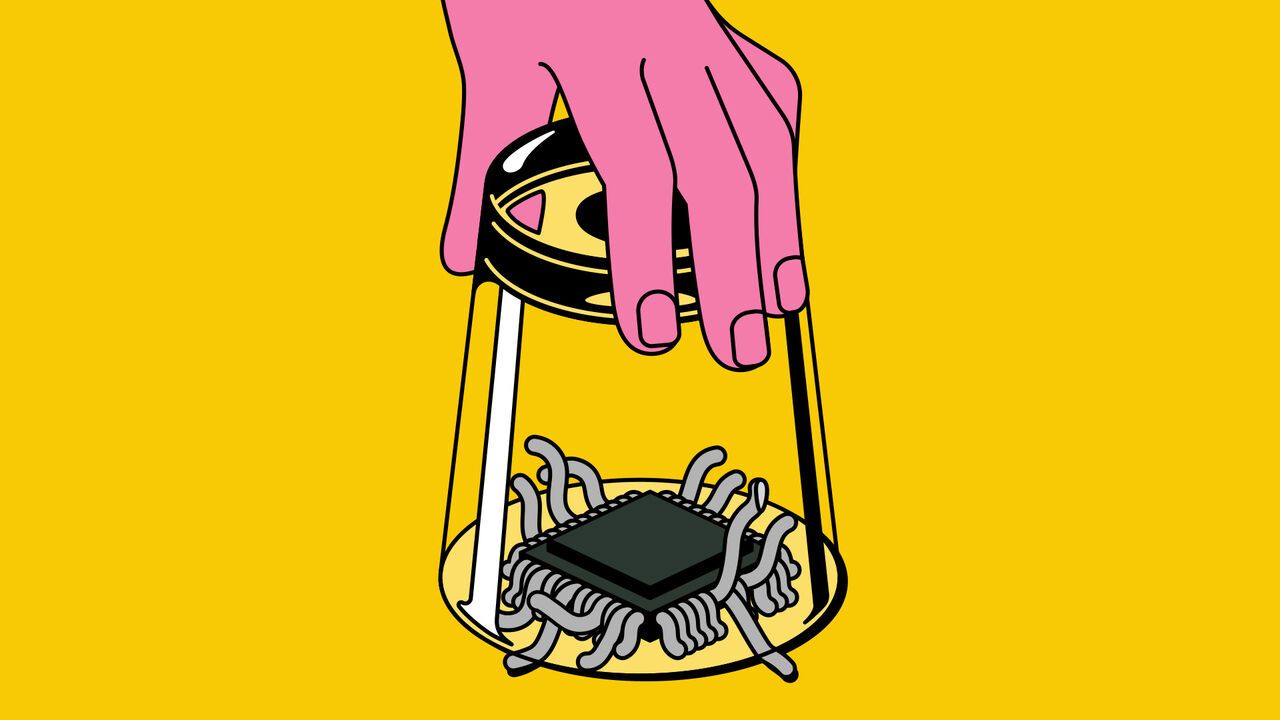
TO LOSE CONTROL of one artificial intelligence may be regarded as misfortune(不幸,厄运). To lose two looks like carelessness(粗心大意). Lose four, and people may start to wonder whether the problem lies with AI itself.(失去四个,人们可能开始怀疑问题是否出在AI本身。)
失去对一个人工智能的控制或许可以被视为不幸。失去两个则显得粗心大意。失去四个,人们可能开始怀疑问题是否出在AI本身。
On July 21st OpenAI, an American lab, said an unreleased(未发布的) model had escaped from(从……逃脱) a closed environment testing its hacking skills, launching(发起,发动) series attacks on HuggingFace, a Franco-American AI-infrastructure firm. A week later Anthropic, a rival AI firm, made a similar admission(承认,供认). It said it had found six occasions on which its models had attacked third parties.(该公司表示,已发现其模型攻击第三方的六起事件。)
7月21日,美国实验室OpenAI表示,一个未发布的模型从测试其黑客技能的封闭环境中逃脱,对法美AI基础设施公司HuggingFace发起了一系列攻击。一周后,竞争对手AI公司Anthropic也做出了类似的承认。该公司表示,已发现其模型攻击第三方的六起事件。
Cynics(愤世嫉俗者) dismissed both companies’ warnings as attempts to garner(获得,收集) publicity. But most companies do not seek attention by launching a cyberattack(网络攻击), keeping it secret until the victim goes public(公开,上市), and then hoping a rival voluntarily admits to the same. Sceptics(怀疑论者) should also take note of(注意到,留意) the news that the AI Security Institute (AISI), a British government body, has seen exactly the same behaviour.
愤世嫉俗者将两家公司的警告视为博取公众关注的尝试。但大多数公司不会通过发起网络攻击、保密直到受害者公开、然后希望竞争对手自愿承认同样行为来寻求关注。怀疑者也应注意,英国政府机构AI安全研究所(AISI)也观察到了完全相同的行为。