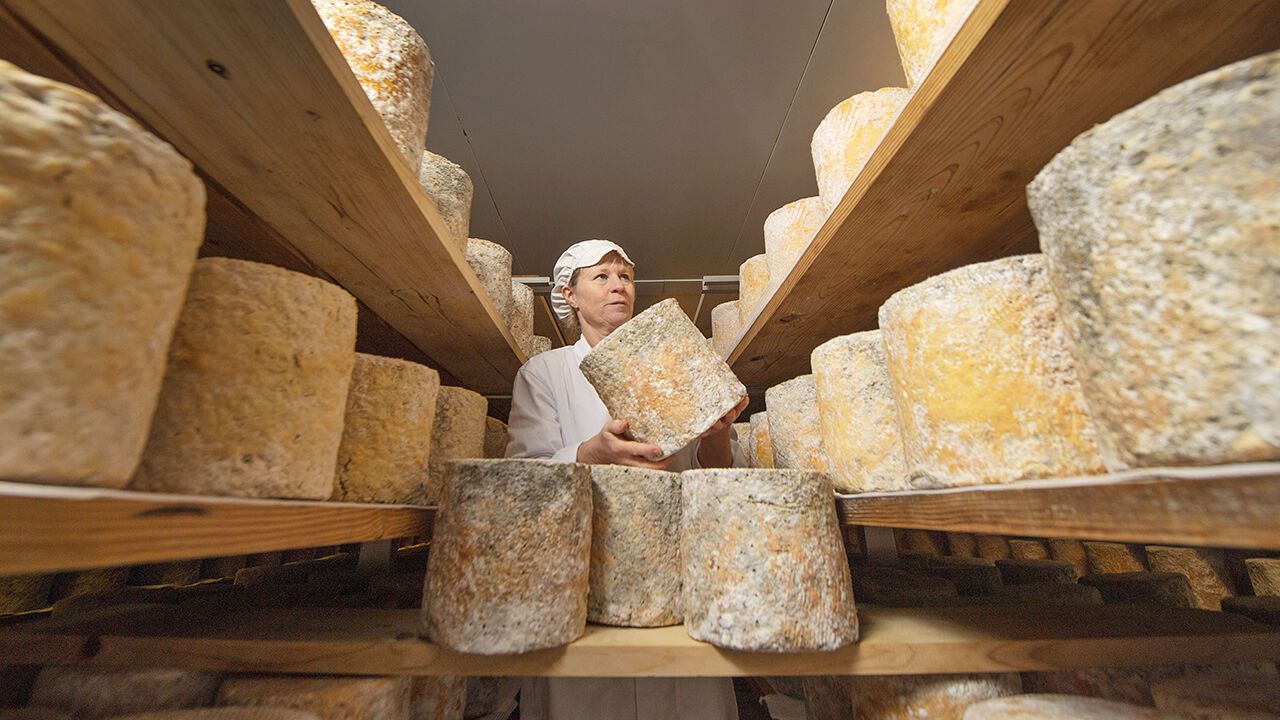
THE BLUE-MOULD crisis(危机) struck the Nettlebed Creamery days before Christmas in 2019. When Diane Honey came into the storeroom, the peachy rinds of the Highmoor cheeses were speckled(布满斑点的) with grey. Penicillium commune was greedily(贪婪地) consuming the whole production at the busiest time of year. Though harmless to eat, they could no longer be sold. “It wasn’t aesthetically(审美上地) pleasing,” says Ms Honey. The cheeses went to a food bank(食物银行).
2019年圣诞节前几天,蓝霉危机袭击了Nettlebed奶酪厂。当黛安·哈尼走进储藏室时,Highmoor奶酪蜜桃色的外皮上布满了灰色斑点。青霉菌在最繁忙的季节贪婪地吞噬着整批产品。虽然食用无害,但已无法出售。“外观上不太美观,”哈尼女士说。这些奶酪最终被送给了食物银行。
Such are the trials of the artisans bringing British cheesemaking back from the brink(从边缘). “We don’t have an institute of cheese, as in France, to learn our craft(技艺),” says Rose Grimond, the Nettlebed Creamery’s founder (who once worked for The Economist(《经济学人》)). “So we make our own mistakes—often expensive ones.”
这就是那些将英国奶酪制作从濒危边缘挽救回来的工匠们所经历的考验。“我们不像法国那样有奶酪学院来学习技艺,”Nettlebed奶酪厂的创始人罗斯·格里蒙德说(她曾为《经济学人》工作)。“所以我们只能自己犯错——而且往往是代价高昂的错误。”
For centuries British farmhouses turned leftover milk into nutritious, non-perishable(不易腐烂的) cheese. Each era left its mould(霉菌;印记). The Romans used dry cheeses as soldier-food. Monks perfected delicate washed-rind varieties. And generations of farmers honed(磨练) styles such as buttery Lancashires and crumbly(易碎的) Wensleydales.
几个世纪以来,英国农舍将剩余的牛奶转化为营养丰富、不易腐烂的奶酪。每个时代都留下了自己的印记。罗马人将干奶酪作为士兵的口粮。僧侣们完善了精致的洗皮奶酪品种。一代又一代的农民磨练出了诸如黄油般的兰开夏奶酪和易碎的温斯利代尔奶酪等风格。
Creaming it
大获成功