IN LATE JULY a court in China’s eastern Anhui province signed off on(批准,同意) an unusual restructuring proposal. It concerns Guohou Asset Management, a financial firm originally set up to defuse(拆除(炸弹);缓和) debt bombs by picking up bad loans from troubled lenders. Guohou is the first member of China’s large debt-bomb squad(小队,小组) to itself need defusing. It will not be the last.
7月下旬,中国东部安徽省的一家法院批准了一项不寻常的重组方案。该方案涉及国厚资产管理公司,这家金融机构最初成立的目的,是通过接手陷入困境的贷款机构的不良贷款来拆除债务炸弹。国厚是中国庞大的拆弹部队中第一个自身需要被拆除的成员。它不会是最后一个。
Chinese financial regulators have for years been enlisting(征募,招募) similar firms to clear a minefield of corporate debt. The first four dedicated “asset-management companies” (AMCs), as the bomb-disposal experts are known in China, were established in 1999 under the Ministry of Finance. Their task was to bail out(救助,纾困) the four biggest state-owned commercial banks. Each lender moved its most untenable(难以维持的,站不住脚的) loans (as well as its least competent staff) into its own AMC. The four “bad banks” were meant to gradually restructure and liquidate the bad loans, and then wind themselves down(逐步清盘,结束运营).
多年来,中国金融监管机构一直在招募类似的公司来清除企业债务的雷区。中国首批四家专门的“资产管理公司”(AMC)——即中国所称的拆弹专家——于1999年在财政部下设立。它们的任务是救助四大国有商业银行。每家银行都将自己最难以维持的贷款(以及最不称职的员工)转入各自的AMC。这四家“坏银行”本应逐步重组和清算不良贷款,然后自行清盘。
Boom!
爆炸!
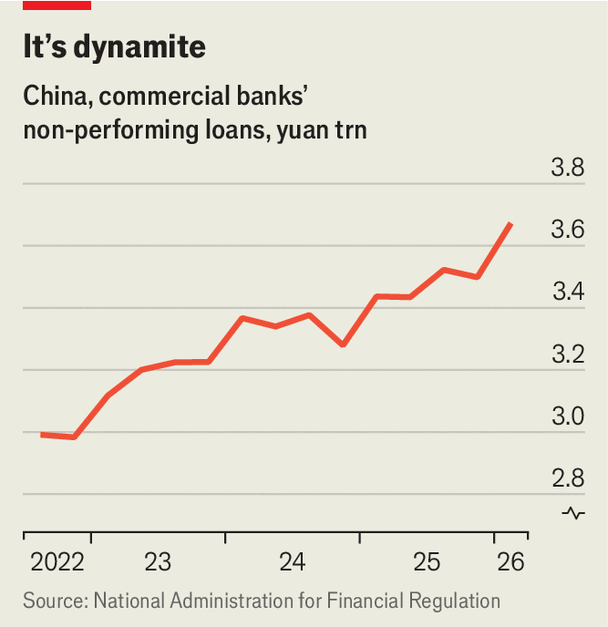
Instead they grew in size and number. By 2018 the combined balance-sheets of the four companies amounted to(总计,达到) some 5trn yuan ($755bn at the time), placing them among the largest financial institutions in China. As bad debts mounted(增加,上升) in the early 2010s, regulators also approved batches of “local AMCs”, usually limited to one province. More than 60 such local entities have been created so far. Most are owned by local governments and other state investors; a handful, including 12-year-old Guohou, are in private hands.
相反,它们却在规模和数量上不断增长。到2018年,这四家公司的合并资产负债表总计约5万亿元人民币(当时合7550亿美元),使它们跻身中国最大的金融机构之列。随着2010年代初不良债务不断累积,监管机构还批准了一批“地方AMC”,通常限于一个省份。迄今已设立60多家此类地方实体。大多数由地方政府和其他国有投资者所有;少数,包括成立12年的国厚,则掌握在私人手中。