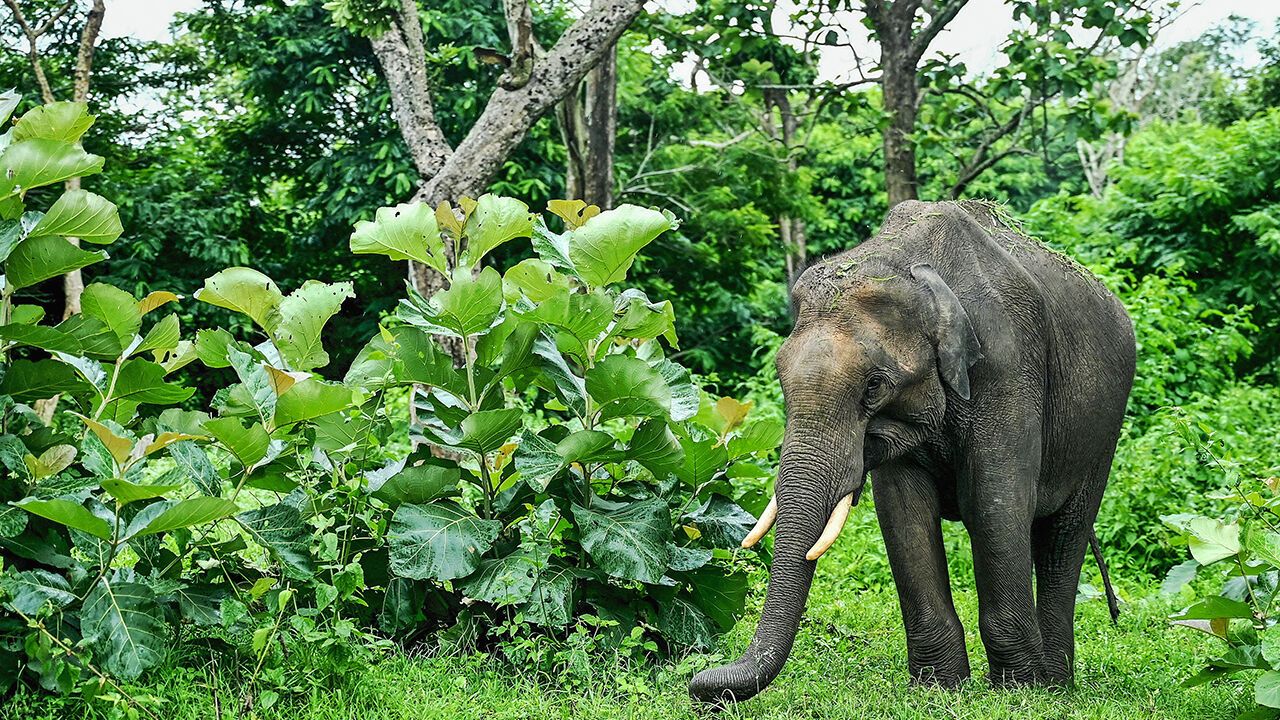
In “Arthashastra(古印度治国经典《政事论》)”, an ancient Indian manual on statecraft(治国之术), elephants were prized assets(珍贵的资产). Kings presented them to forge(缔结;伪造) alliances. Generals relied on them to destroy the gates of forts. Today Ganesha(象头神甘尼萨), the elephant-headed Hindu god, is still worshipped(被崇拜) as the remover of obstacles, and children, as elsewhere, learn “E for Elephant”.
在古印度治国方略典籍《政事论》中,大象被视为珍贵的资产。国王以大象为礼缔结联盟,将军依靠大象摧毁堡垒之门。如今,象头神甘尼萨仍被尊为消除障碍之神,而孩子们也像其他地方一样,学着“E for Elephant”。
But reverence(尊敬,敬畏) has not translated into(转化为) protection. A survey published last year by the Wildlife Institute of India counted(计数,统计) 22,446 elephants, 18% fewer than in 2017. The decline in some states was “a shocker(令人震惊的事)”, says Qamar Qureshi, the report’s lead author. Part of the problem is geography. Unlike in Africa, villages are scattered throughout the forests of densely populated India. Elephants are often confined(被限制的) to narrow corridors(走廊,通道) between patches of forest(森林斑块). Vivek Menon of the Wildlife Trust of India says that in 2010 his team identified(识别,确认) 88 such routes. Today there are about 150, reflecting shrinking habitats(反映出栖息地萎缩).
但敬畏并未转化为保护。印度野生动物研究所去年发布的一项调查统计到22,446头大象,比2017年减少了18%。该报告的主要作者卡马尔·库雷希表示,一些州的下降“令人震惊”。部分问题在于地理。与非洲不同,人口稠密的印度森林中散布着村庄。大象常常被限制在森林斑块之间的狭窄走廊中。印度野生动物信托基金的维韦克·梅农表示,2010年他的团队识别出88条这样的路线。如今约有150条,反映出栖息地正在萎缩。
As infrastructure cuts through forests, elephants stray(走失,偏离) into farms. Mining and blasting sites also get in their way(挡路,妨碍). In West Bengal hulla (“noise”) parties see mobs(人群,暴民) hurl(猛投,掷) fireballs and firecrackers to drive the animals away, despite a Supreme Court ban. Electric fences sometimes block the elephants’ path. But they are excellent physicists, says Raman Sukumar, an ecologist. They use their tusks(象牙), which are poor electrical conductors(导体), to break fences, or toss logs to short-circuit(使短路) them. Forest guards and workers steering elephants back to safety are “utterly under-equipped and woefully unprepared”, says Prerna Bindra, a conservationist.(森林警卫和工作人员装备不足,准备欠缺。) Most lack basic equipment such as torches.
随着基础设施穿越森林,大象会误入农田。采矿和爆破工地也挡了它们的路。在西孟加拉邦,尽管最高法院已下令禁止,但“喧闹”聚会仍会看到人群投掷火球和鞭炮驱赶大象。电网有时会阻挡大象的去路。但生态学家拉曼·苏库马尔说,它们是出色的物理学家。它们用导电性差的象牙破坏围栏,或扔木头使其短路。环保主义者普雷纳·宾德拉表示,引导大象返回安全地带的森林警卫和工作人员“装备极度不足,准备严重欠缺”。大多数人缺乏手电筒等基本设备。