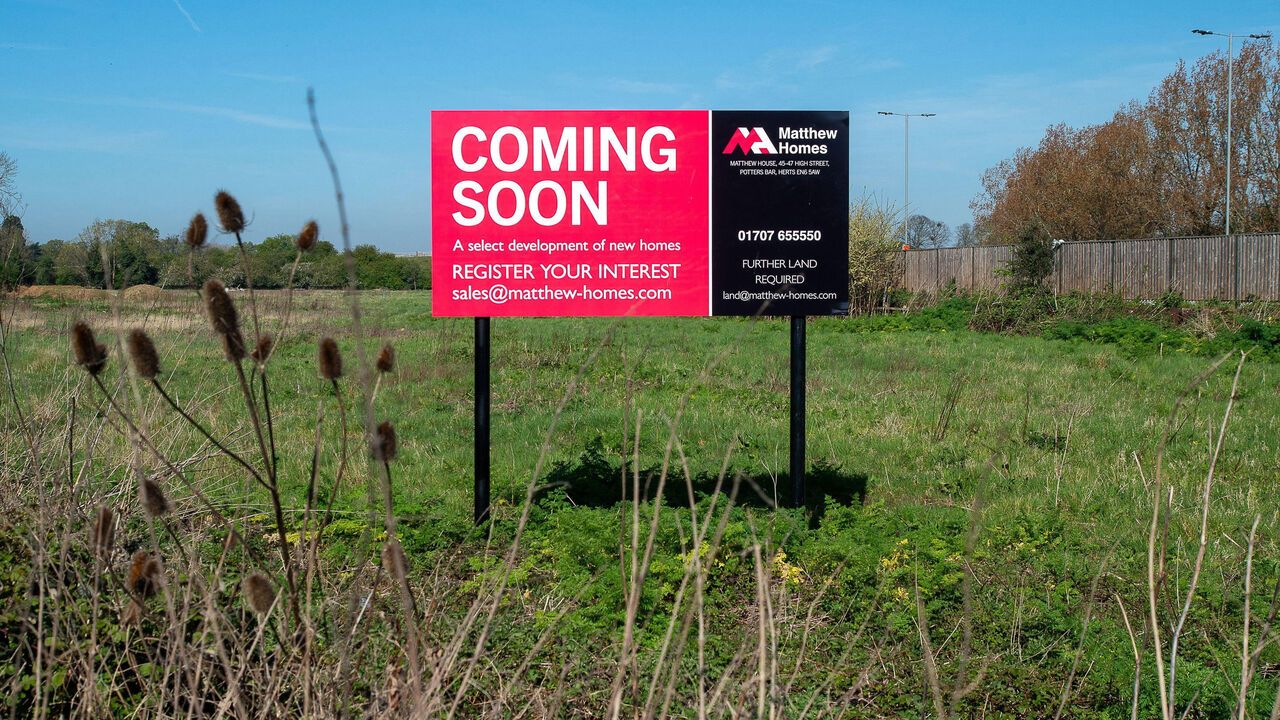
KNOCKHOLT is all that is right and wrong about the Home Counties. Board the train at Charing Cross in central London, and disembark(下船、下飞机、下车) 49 minutes later in the Kentish countryside. The station inspired Edith Nesbit to write “The Railway Children”, a pastoral(田园的,乡村生活的) novel, in 1905, and the landscape has hardly changed. To the north side is a golf course; to the south, an abandoned one on which proposals to build houses have been knocked back(拒绝,否决) for years. Squeeze past the brambles(荆棘,黑莓灌木丛) heavy with blackberries and nightshades(茄属植物(有毒)); the water hazards((高尔夫球场的)水障碍) are bone dry, and the grass on the old fairways is overgrown and coarse.
诺克霍尔特集中体现了英格兰东南部各郡的优点与问题。从伦敦市中心的查令十字车站上车,49分钟后便抵达肯特郡的乡村。这个车站曾启发伊迪丝·内斯比特于1905年创作田园小说《铁路少年》,而这里的风景几乎未曾改变。北侧是一个高尔夫球场;南侧则是一个废弃的球场,多年来在此建房的提案屡遭否决。挤过挂满黑莓和茄属植物的荆棘丛,水障已干涸见底,旧球道上的草长得又高又粗。
Perhaps not for long. A new planning framework, published by the government on August 17th and effective immediately, takes aim at(瞄准,针对) the Knockholts: stations on busy commuter(通勤者) routes found across England that are surrounded by fields or only half-developed land. They may be a fine place to walk the labrador before catching the 7.58 to the City; they are also a symptom(症状,征兆) of a restrictive planning regime(体制,制度) known around the world as a form of pigheaded(顽固的,执拗的) economic self-harm. Taken with other recent changes, it “adds up to(合计,相当于) the most powerful, coherent(连贯的,一致的) and quietly revolutionary national planning policy we’ve ever had,” says Zack Simons, a barrister(出庭律师).
也许不会持续太久。政府于8月17日发布并立即生效的新规划框架,瞄准了像诺克霍尔特这样的地方:遍布英格兰、位于繁忙通勤线路上的车站,周围是田野或仅部分开发的土地。这些地方或许是在赶7点58分进城火车前遛拉布拉多犬的好去处;但它们也是限制性规划体制的症候,这种体制在全世界被视为一种固执的经济自残。结合其他近期改革,这“构成了我们迄今所见最有力、最连贯且悄然革命性的国家规划政策”,大律师扎克·西蒙斯表示。
A sweeping(全面的,彻底的) supply-side reform might seem improbable from a government characterised by dithering(犹豫不决,踌躇) and interventionism(干预主义). And for years, planning reform was seen as untouchable(不可触碰的,碰不得的), given the backlash(强烈反对,反弹) of homeowners and conservationists. To its credit(值得称赞的是), Labour has grasped it, reckoning on(指望,依赖) the support of its young and urban coalition(联盟,联合体). “I did expect more of a political backlash than we have seen,” says Matthew Pennycook, the low-drama minister responsible. He succeeded by pitching(推销,宣传) the changes as “common sense”, he says. “It is very hard to dispute(质疑,反驳) that we should be building around train stations.”
对于一个以犹豫不决和干预主义为特征的政府来说,如此大规模的供给侧改革似乎不太可能。多年来,由于房主和环保人士的强烈反对,规划改革被视为碰不得的议题。值得称赞的是,工党抓住了这个机会,指望其年轻和城市选民联盟的支持。“我原本预期会遭遇比现在更大的政治反弹,”负责此事的低调大臣马修·彭尼库克说。他表示,自己通过将改革描述为“常识”而取得成功。“我们应当围绕火车站建房,这一点很难反驳。”