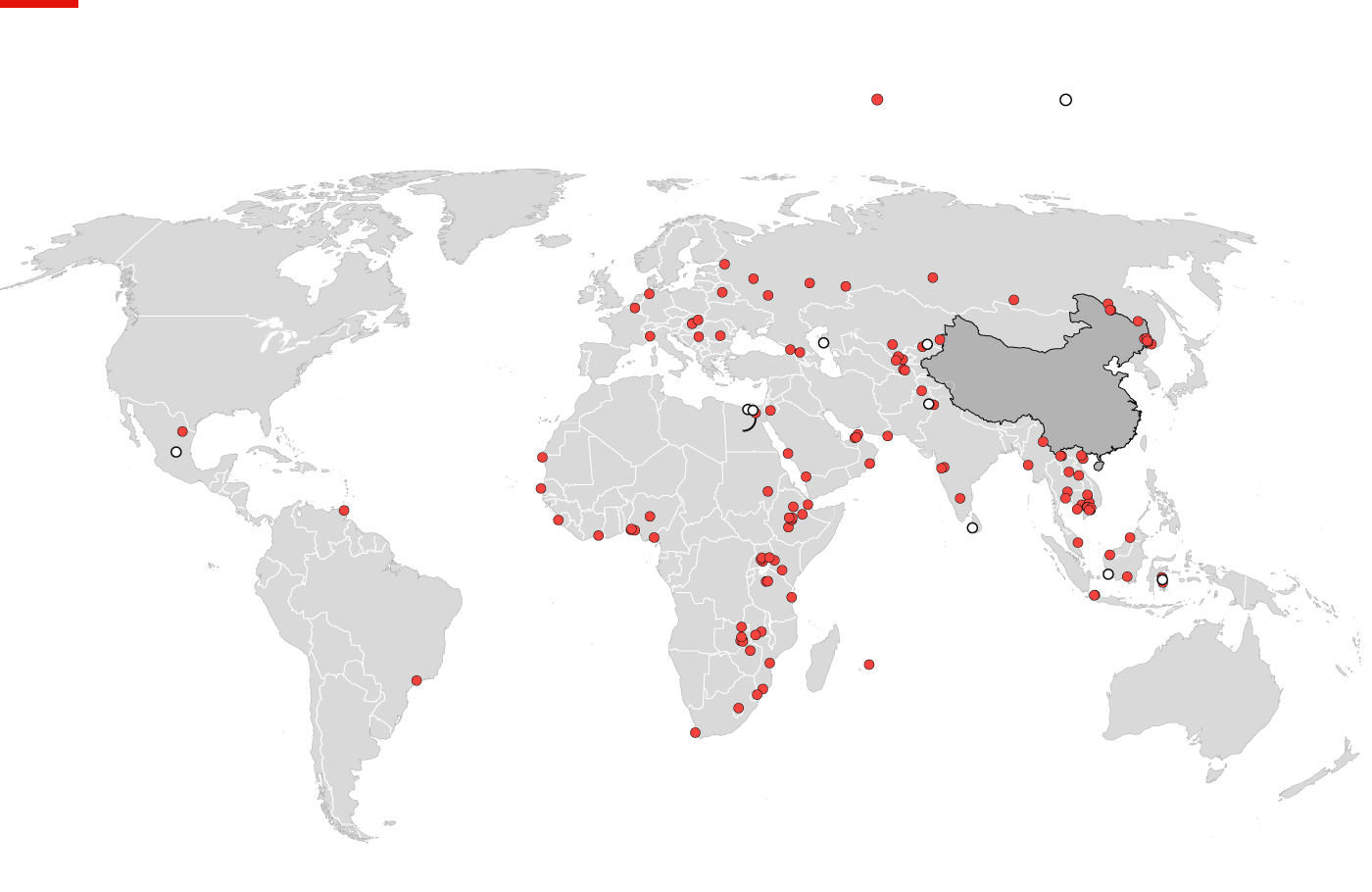
In the past three years alone Chinese companies have spent more than $200bn building factories abroad (see chart). The character(性质,特征) of their supply chains is also changing, in three ways. First, they are spread more widely, with large production nodes(节点,中心) in nearly every region of the globe (see map). Second, they have grown deeper, with many Chinese suppliers following manufacturers into new sites, replicating the tight-knit ecosystems(紧密联系的生态系统) back home. Third, they are increasingly dominated by strategic(战略性的) industries, from electric vehicles and clean energy to data-centre gear.
仅在过去三年,中国企业就在海外建厂上花费了超过2000亿美元(见图表)。其供应链的性质也在三个方面发生变化。首先,分布更加广泛,在全球几乎每个地区都有大型生产节点(见地图)。其次,产业链条更深,许多中国供应商跟随制造商进入新址,复制国内紧密的生态系统。第三,战略产业日益占据主导地位,从电动汽车、清洁能源到数据中心设备。

A number of reasons explain why Chinese firms are making their wares(商品,货物) in an expanding array of(越来越多的,不断扩大的) places. Weak consumer spending and fierce competition at home have encouraged them to venture(冒险,敢于去) into new markets. The tariffs introduced by the second Trump administration have also incentivised(激励,刺激) production in places that have been hit with less punitive(惩罚性的) levies(征税,税款) than historic Chinese outposts(前哨,据点) such as Vietnam.
许多原因解释了为什么中国企业正在越来越多的地方生产产品。国内消费支出疲软和激烈竞争促使它们开拓新市场。第二届特朗普政府征收的关税也激励了在那些比越南等中国历史据点所受惩罚性关税更低的地区进行生产。
Various countries in the global south have dangled added incentives(抛出额外激励措施). Egypt, for instance, offers a “golden licence(黄金许可证)” that slashes red tape(大幅削减繁文缛节) for big projects. Mohamed Eldib, a lawyer who helps Chinese firms set up operations in the country, says they are eager(渴望的,热切的) to “come in and make money” selling to Egypt’s 120m people while also using it as an export base.
全球南方的多个国家纷纷抛出额外激励措施。例如,埃及提供“黄金许可证”,为大项目大幅削减繁文缛节。帮助中国企业在埃及开展业务的律师穆罕默德·埃尔迪布表示,他们渴望“进来赚钱”,向埃及1.2亿人口销售产品,同时将其作为出口基地。
Chain reaction
连锁反应