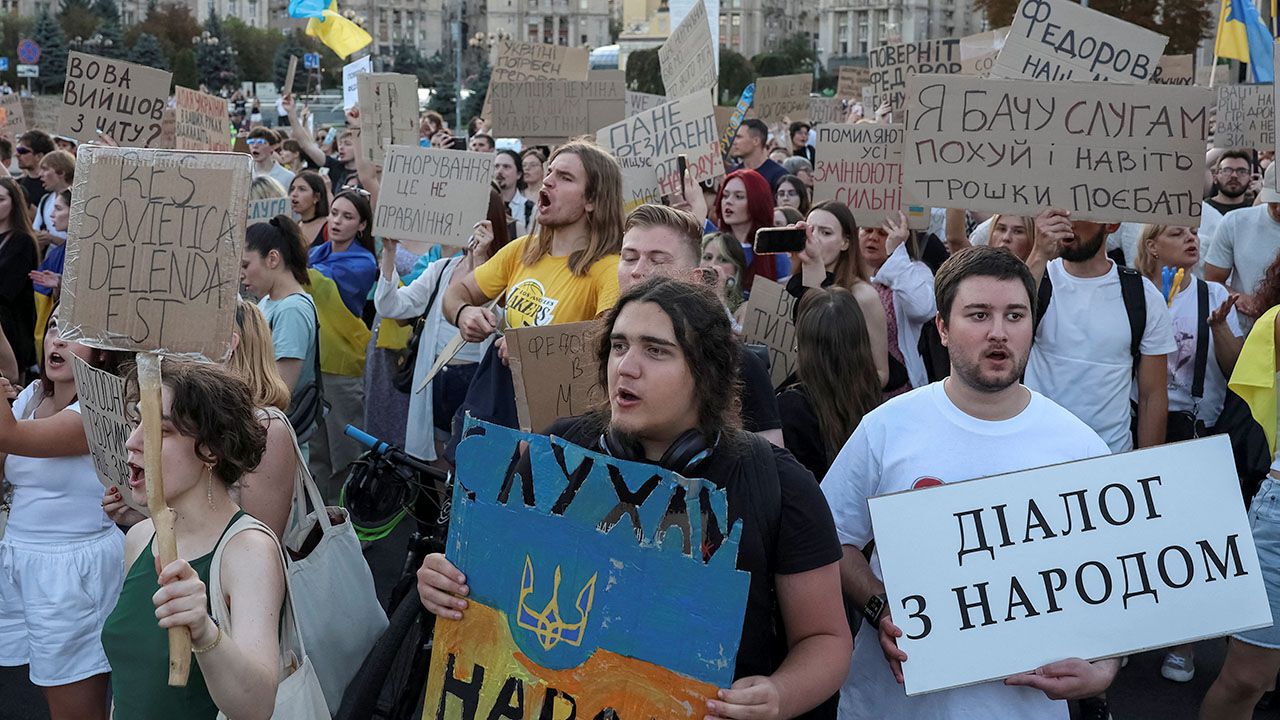
LATE IN the evening of August 18th, at a time when Ukrainians usually check their phones for warnings of incoming missiles, a video post seized(抓住,夺取) the public’s attention instead. The nine-minute address by Mykhailo Fedorov, who on July 15th was ousted as defence minister, was in part a final plea to be returned to his former post and in part a demand that Volodymyr Zelensky call elections.(费多罗夫的九分钟讲话部分请求复职,部分要求举行选举。)
8月18日深夜,在乌克兰人通常查看手机是否有导弹来袭警报的时候,一段视频帖子反而抓住了公众的注意力。7月15日被免去国防部长职务的米哈伊洛·费多罗夫发表了这段九分钟的讲话,部分内容是请求恢复原职的最后恳求,部分内容是要求泽连斯基举行选举。
“We must not let Putin decide when Ukrainians choose their government,” Mr Fedorov said. “Democracy cannot be held hostage(被扣为人质) by Russia.” The call for elections during wartime, which are explicitly prohibited under Ukraine’s martial law, amounted to a direct challenge to the president, whom Mr Fedorov had previously been careful not to cross.(战时呼吁选举被戒严法禁止,这构成对总统的直接挑战。)
“我们不能让普京决定乌克兰人何时选择自己的政府,”费多罗夫说。“民主不能被俄罗斯扣为人质。”在战时呼吁选举,而戒严法明确禁止选举,这相当于对总统的直接挑战,此前费多罗夫一直小心不越界。
The intervention(干预,介入) was a response to the announcement of a vote in parliament to confirm Mr Fedorov’s successor, General Yevhenii Khmara. There was never much doubt that Mr Khmara, a war hero held in high regard(备受尊敬), would be voted in. In the event, the vote was 312-2. An earlier motion demanding the reinstatement(恢复原职) of Mr Fedorov had garnered(获得,收集) just three signatures.
这一干预是对议会宣布投票确认费多罗夫继任者叶夫根尼·赫马拉将军的回应。人们从未怀疑过赫马拉将军——一位备受尊敬的战争英雄——会获得通过。结果,投票以312比2通过。早先要求恢复费多罗夫职务的动议仅获得三个签名。