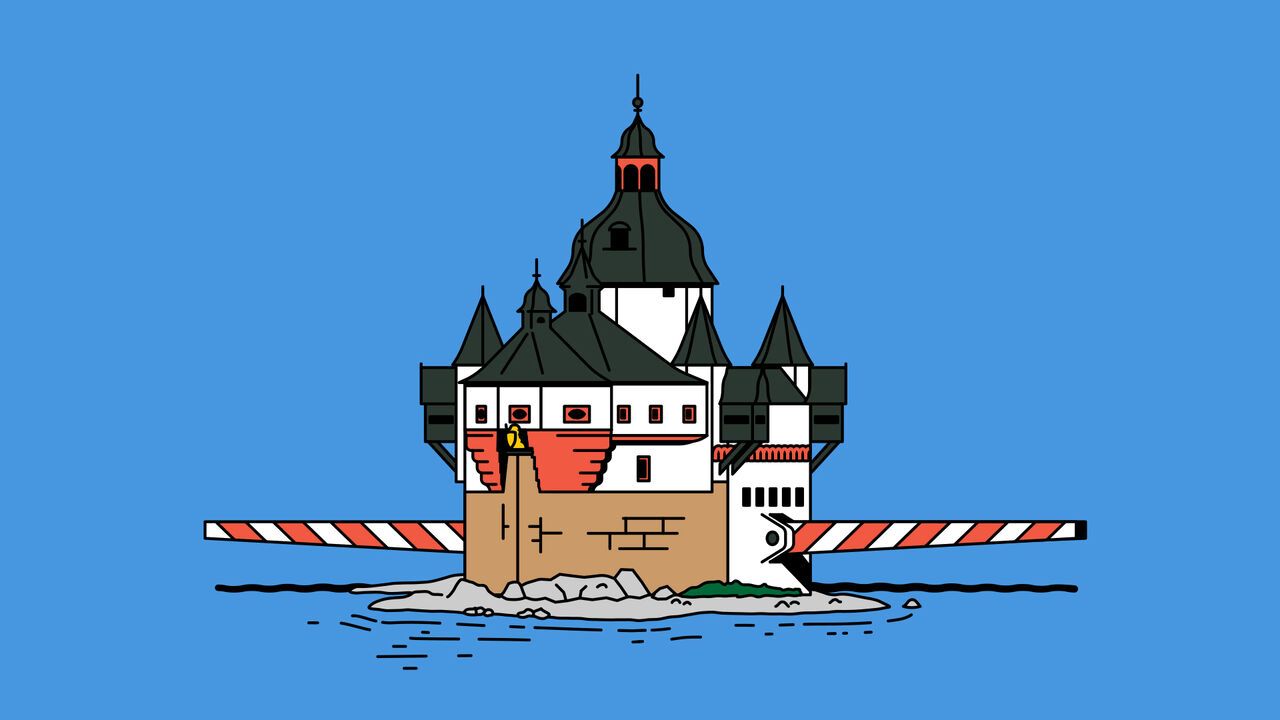
Pfalzgrafenstein castle, near the village of Kaub in Germany, had a lucrative(利润丰厚的) site. Situated on an island in the Rhine, the waterway that connects the most prosperous bits of western Europe, the redoubt(堡垒,防御工事) lies on one of the river’s shallowest stretches. The tightness of the route past it meant that chains could be lowered from the battlement to prevent passage and demand payment.(经过此处的河道狭窄,意味着可以从城垛放下铁链,阻止通行并索取费用。) Pfalzgrafenstein was a toll castle, one of many along the course of the river.
普法尔茨格拉芬施泰因城堡位于德国考布村附近,占据着一处利润丰厚的地段。它坐落在莱茵河中的一座小岛上,而莱茵河是连接西欧最繁荣地区的航道,这座堡垒恰好位于河流最浅的河段之一。由于经过此处的河道狭窄,守军可以从城垛放下铁链,阻止船只通行并索取费用。普法尔茨格拉芬施泰因是一座收费城堡,是莱茵河沿岸众多此类城堡之一。
Rhine tolls were a classic example of an economic rent(经济租金), a payment that some entity is able to extract(提取,获取) by making a cheap resource artificially scarce. The river cost the Electors Palatine who usually controlled the castle absolutely nothing, so the toll they earned from stopping others from making their way upriver was pure rent. In the aftermath of the latest Gulf war, there is a risk that tolls of this sort will come back. The Iranian government is considering levying a toll on ships traversing the Strait of Hormuz, through which around 20% of the world’s oil supply passed before the war began in February.(伊朗政府正考虑对穿越霍尔木兹海峡的船只征收通行费,在二月份战争爆发前,全球约20%的石油供应经过该海峡。) Oman, on the other side of the Strait, may join in. America, too, may want to get in on the act: President Donald Trump has said that his country should consider levy(征收(税、费))ing fees as “THE GUARDIAN OF THE HORMUZ STRAIT”.
莱茵河通行费是经济租金的典型例子,即某个实体通过人为制造廉价资源的稀缺性来获取的收益。对于通常控制城堡的普法尔茨选帝侯来说,河流本身毫无成本,因此他们通过阻止他人逆流而上所收取的通行费纯粹是租金。在最近一次海湾战争结束后,这类通行费有可能卷土重来。伊朗政府正考虑对穿越霍尔木兹海峡的船只征收通行费,在二月份战争爆发前,全球约20%的石油供应经过该海峡。海峡另一侧的阿曼也可能加入。美国或许也想参与其中:总统唐纳德·特朗普曾表示,美国应考虑以“霍尔木兹海峡守护者”的身份征收费用。
You might call this the political economy of the rent-seeking(寻租) sea, to paraphrase(套用,改写) the title of a paper by Anne Krueger(安妮·克鲁格,美国经济学家,提出寻租理论), an American economist, published in 1974. Restrictions on trade create rents and that creates a new type of competition, in which different groups compete to capture those rents rather than doing anything productive.(贸易限制创造了租金,进而引发了一种新型竞争,在这种竞争中,不同群体竞相争夺这些租金,而不是从事生产性活动。) The trade restrictions that Ms Krueger observed in the “rent-seeking society” typically meant lobbying, bribery or legal chicanery(诡计,欺骗). For charging tolls on passing maritime(海上的,航海的) traffic the rent-seeking activity could be far more deadly: piracy, drones and so on. During the age of sail territorial waters(领海) ended three nautical miles (5.6km) from the coast, roughly the range of a cannon shot. It was a recognition that sovereignty could stretch only so far.
你可以将这种现象称为“寻租之海的政治经济学”,套用美国经济学家安妮·克鲁格1974年发表的一篇论文的标题。贸易限制创造了租金,进而引发了一种新型竞争,在这种竞争中,不同群体竞相争夺这些租金,而不是从事生产性活动。克鲁格在“寻租社会”中观察到的贸易限制通常表现为游说、贿赂或法律诡计。而对于向过往海上交通收费而言,寻租活动可能致命得多:海盗、无人机等等。在帆船时代,领海止于距海岸三海里(5.6公里)处,大致相当于一门大炮的射程。这是对主权只能延伸至此的承认。
History doesn’t repeat itself but it does Rhine
历史不会重演,但会“莱茵”