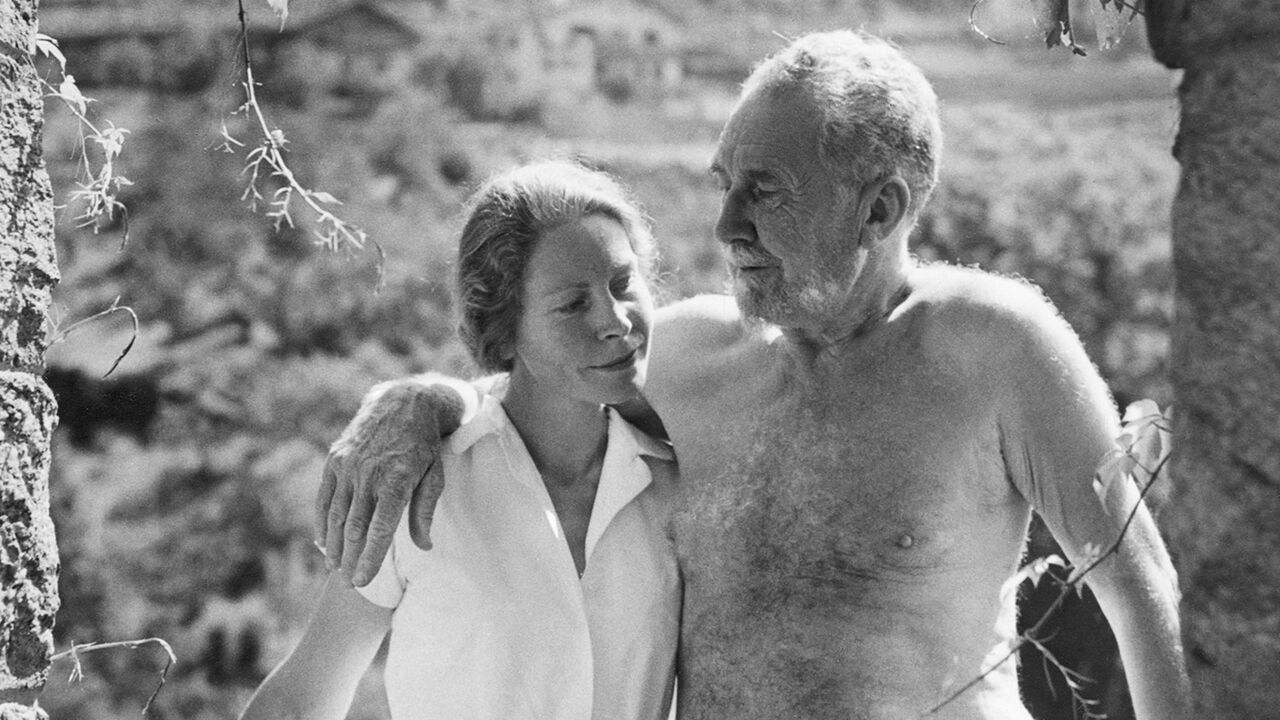
She was still awake when the tall bearded man came into her bedroom to say goodnight.(当那个高个子、留着胡子的男人走进她的卧室道晚安时,她还醒着。) She had hoped he would. Though she was nine, it was a rare treat(难得的享受) to get a visit from her father. By the light of the kerosene lamp, he looked at her hands. Her fingernails were filthy(肮脏的,污秽的). Then he started to rummage(翻找,乱翻) in his luggage, for sweets, she hoped. Instead he brought out scissors and, carefully, cleaned and cut her nails. He asked her then, where was her toothbrush? It was somewhere. The next day, he took her to buy one.
当那个高个子、留着胡子的男人走进她的卧室道晚安时,她还醒着。她一直盼着他来。虽然她只有九岁,但父亲来看她可是稀罕事。借着煤油灯的光,他看了看她的手。她的指甲很脏。然后他开始翻行李,她希望是找糖果。可他拿出的是剪刀,小心翼翼地给她清理并剪了指甲。接着他问她的牙刷在哪儿?在某处。第二天,他带她去买了牙刷。
This happened in Gais, in South Tyrol, in the house of two kind farm-folk(农民,乡下人), Mamme and Tatte, who cared for abandoned children. But she was not abandoned, quite.(但她并非完全被遗弃。) Her parents, the poet Ezra Pound and his mistress(情妇) Olga Rudge, a violinist (Tattile and Mamile to her then), lived in Venice and paid 200 lire a month for her keep(作为她的抚养费). She did not mind the arrangement at all. From birth she had grown into a Tyrolean peasant child, a shepherdess with blonde plaits who had her own flock and, in secret partnership with her father, ran a miniature bee business for a while.(从出生起,她就长成了一个蒂罗尔农家孩子,一个梳着金色发辫的牧羊女,有自己的羊群,还曾与父亲秘密合作,经营过一段时间的微型养蜂生意。) But then at fairly regular intervals(每隔相当规律的时间) she would go to her parents in Venice, to a villa full of books in many languages, to the Lido via vaporetto(汽船(威尼斯)) and to feasts of ice cream. Her cool, willowy(苗条的,柳条似的) mother made her speak no German there, and wear white gloves. It was a small price to pay.
这件事发生在南蒂罗尔的盖斯,在两位善良的农家夫妇玛梅和塔特的家里,他们照顾被遗弃的孩子。但她并非完全被遗弃。她的父母——诗人埃兹拉·庞德和他的情妇、小提琴家奥尔加·拉奇(当时她称他们为塔蒂勒和玛米勒)——住在威尼斯,每月支付200里拉作为她的抚养费。她一点也不介意这种安排。从出生起,她就长成了一个蒂罗尔农家孩子,一个梳着金色发辫的牧羊女,有自己的羊群,还曾与父亲秘密合作,经营过一段时间的微型养蜂生意。但每隔相当一段时间,她会去威尼斯看望父母,去一座藏有多种语言书籍的别墅,乘汽船去利多岛,享受冰淇淋盛宴。她那冷静、苗条的母亲让她在那里不说德语,还要戴白手套。这是小小的代价。
From the start, her two lives ran in counterpoint(形成对比,对位). She became skilled at defending one against the other. In a poem she wrote later she relish(享受,品味)ed the Pustertal dialect she spoke, words as weighty(沉重的,有分量的) as sausages and dumplings. Against city people she defended dung-heaps(粪堆), insisting that a good one smelled mostly of leaves and moss. Tyroleans hated Italians; but her father, arranger of all her Italian treats, was an American Italophile(亲意大利的人) and she adored him. “Babbo” taught her both Italian and English by making her translate “The Cantos”, the huge and obscure(晦涩的,难懂的) poem he spent his life working on, into Italian. For her, that was like being presented with a basket of exotic food she had no idea what to do with, but she tried.(对她来说,这就像被赠予一篮异国食物,她不知道该怎么处理,但她还是尝试了。) Each typed page she produced for him would come back entirely scribbled over(涂满,乱写), not only with corrections but with newly perplexing(令人困惑的) thoughts.
从一开始,她的两种生活就像对位法一样并行。她变得善于在两者之间进行辩护。在后来写的一首诗里,她回味自己说的普斯特塔尔方言,那些词像香肠和饺子一样沉重。面对城里人,她为粪堆辩护,坚持说好的粪堆闻起来主要是树叶和苔藓的味道。蒂罗尔人恨意大利人;但她的父亲,安排她所有意大利乐趣的人,是一个亲意大利的美国人,她崇拜他。“爸爸”教她意大利语和英语,方法是让她把《诗章》翻译成意大利语,那是他毕生创作的宏大而晦涩的诗。对她来说,这就像被赠予一篮异国食物,她不知道该怎么处理,但她还是尝试了。她为他打的每一页字都会回来,上面涂满了批改,不仅有修正,还有令人困惑的新想法。