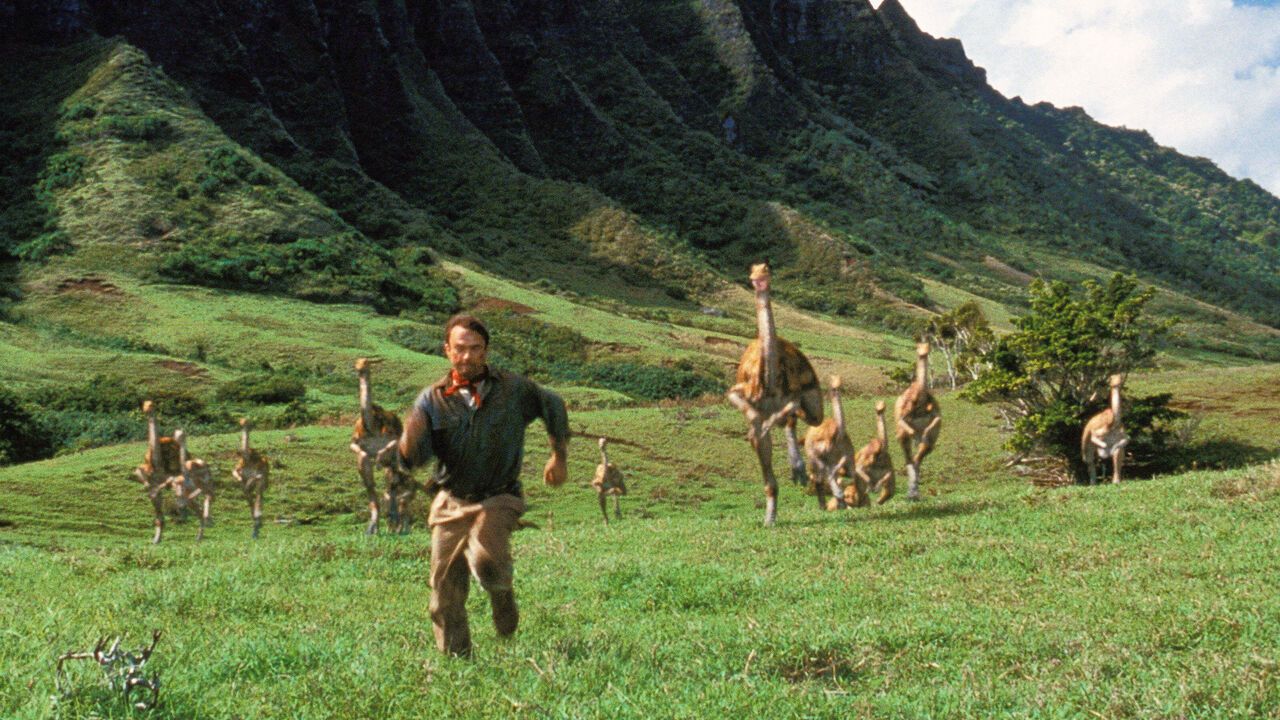
How do you know what a dinosaur ate? Guts rot away after death, so the details of dinosaur digestion remain obscure(模糊的,不清楚的). The best indicators are teeth. Sharp, pointed teeth probably ripped chunks of flesh off prey for swallowing whole. Robust grinding surfaces suggest lots of chewing was involved. Yet many dinosaurs belonging to a group called the theropods, which gave rise to birds, lost their teeth altogether and evolved beaks.(然而,许多属于兽脚类这一群体的恐龙——它们演化出了鸟类——完全失去了牙齿,并演化出了喙。) This has made it hard to work out what they ate and how they digested it.
你如何知道恐龙吃什么?内脏在死后腐烂,因此恐龙消化的细节仍然模糊不清。最好的指标是牙齿。锋利、尖锐的牙齿可能从猎物身上撕下大块肉以便整块吞咽。坚固的研磨表面表明涉及大量咀嚼。然而,许多属于兽脚类这一群体的恐龙——它们演化出了鸟类——完全失去了牙齿,并演化出了喙。这使得很难弄清楚它们吃什么以及如何消化。
There is, however, a second clue. Lots of dinosaurs had stones, known as gastroliths(胃石), in their stomachs. These are assumed to have assisted with digestion, and thus have their own tales to tell(有自己的故事要讲). And modern birds and crocodilians(鳄类动物) (which are both, like dinosaurs, members of a larger evolutionary group called the archosaurs(主龙类)) often have gastroliths, too.
然而,还有第二条线索。许多恐龙的胃里有石头,称为胃石。这些石头被认为有助于消化,因此它们有自己的故事要讲。现代鸟类和鳄类(它们和恐龙一样,都是更大的演化群体——主龙类——的成员)也常有胃石。
Takasaki Ryuji at Okayama University of Science, in Japan, decided to investigate(调查,研究). In a study published in Paleobiology, he and his colleagues examined the gastroliths of 46 modern archosaur species(物种) (42 birds and four crocodilians) and compared them with(将……与……比较) those from 16 species of dinosaur.
日本冈山理科大学的Takasaki Ryuji决定进行调查。在发表于《古生物学》的一项研究中,他和同事检查了46种现代主龙类(42种鸟类和4种鳄类)的胃石,并将其与16种恐龙的胃石进行了比较。