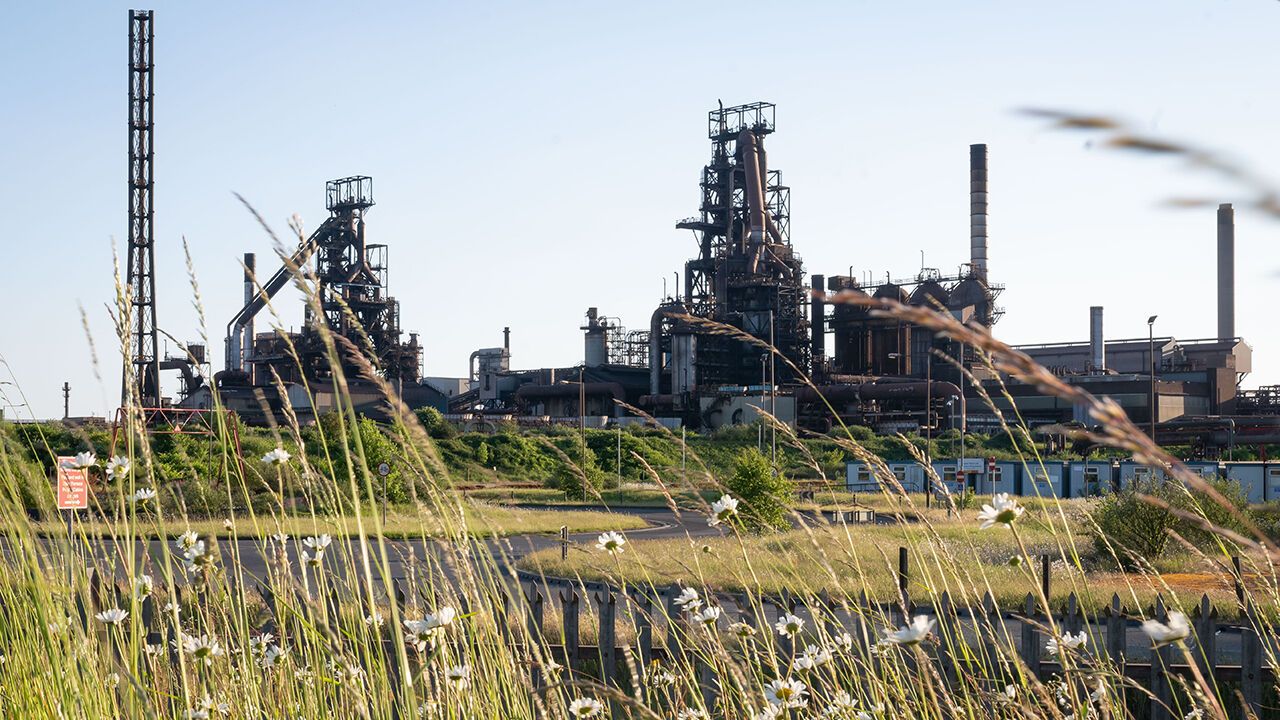
THERE CAN be few more romantic(浪漫的,富有传奇色彩的) examples of heavy manufacturing than Tata Steel’s hot rolled-strip mill at Port Talbot in south Wales. Red-hot bars pass through ancient machines in an almost mile-long 1950s factory, to be turned into steel coils that are loaded onto old rail wagons. Scattered around the huge site are rusting steel plants, amid which a state-of-the-art electric arc furnace (EAF) is being built to catch up with competitors.(巨大的厂区内散落着锈迹斑斑的钢厂,其中一座最先进的电弧炉正在建设中,以追赶竞争对手。) It is an evocative(唤起回忆的,引起联想的) spot to ponder the idea of reindustrialisation promoted by Andy Burnham, the newish prime minister.
在重工业中,很少有比南威尔士塔尔伯特港的塔塔钢铁热轧带钢厂更具浪漫色彩的例子了。炽热的钢条穿过一座近一英里长、建于20世纪50年代的工厂里的老旧机器,被加工成钢卷,再装上老旧的铁路货车。巨大的厂区内散落着锈迹斑斑的钢厂,其中一座最先进的电弧炉正在建设中,以追赶竞争对手。这是一个令人浮想联翩的地方,让人思考新任首相安迪·伯纳姆所倡导的再工业化理念。
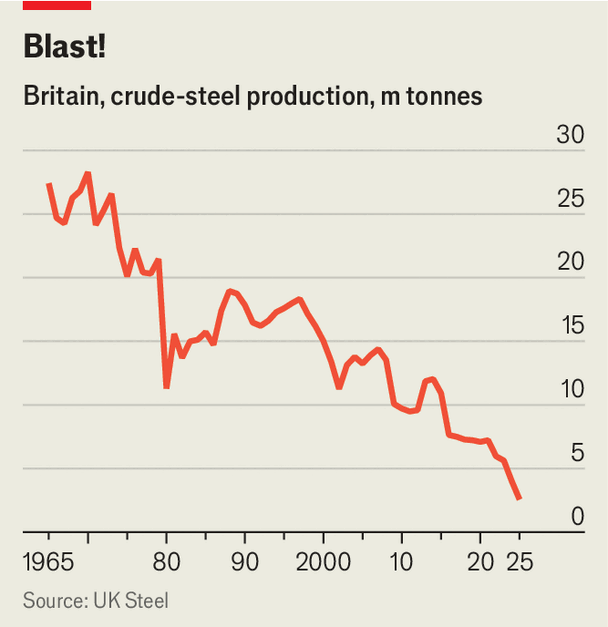
The steel industry in Britain has been declining for decades. Annual crude-steel output has fallen from almost 30m tonnes in the early 1970s to less than 3m tonnes today. Direct employment has shrunk from around 320,000 to barely 30,000 (see chart). Steel output and employment have fallen in America and Europe too, but more slowly. High energy costs are widely blamed. But the biggest culprit(罪魁祸首,肇事者) is China, which produces over 1bn tonnes of steel a year, more than half of total world output, much of it dumped(倾销,倾倒) on global markets at below cost(以低于成本的价格).
英国钢铁工业已衰落数十年。粗钢年产量从20世纪70年代初的近3000万吨降至如今的不足300万吨。直接就业人数从约32万人缩减至仅3万人(见图表)。美国和欧洲的钢铁产量和就业也有所下降,但速度较慢。高能源成本广受指责,但最大的罪魁祸首是中国,其年产钢量超过10亿吨,占世界总产量的一半以上,其中很大一部分以低于成本的价格倾销到全球市场。
Pursuing anti-dumping cases against China for breaking World Trade Organisation rules is tricky(棘手的,难对付的), so the more usual defence is counter-subsidies, tariffs and quotas. Donald Trump led the way(带头,率先) with tariffs on American steel imports in 2018. Now it is the turn of Britain and the European Union. In early July both halved(减半) their tariff-free quotas of steel imports and doubled tariffs to 50% above those levels.
以违反世界贸易组织规则为由对中国提起反倾销诉讼颇为棘手,因此更常见的防御手段是反补贴税、关税和配额。唐纳德·特朗普在2018年率先对美国进口钢材征收关税。如今轮到英国和欧盟了。7月初,双方都将钢材进口的免关税配额减半,并将关税提高至这些水平之上的50%。