China’s humanoid robots are sprinting(冲刺,全速奔跑) ahead of their rivals—literally. On August 17th one of their number, called Superman, clocked up(达到(速度),累计) a running speed of 12.66 metres per second, beating the previous record set by Usain Bolt, before crashing into a wall. The triumph only added to the buzz(兴奋,热议) over Unitree, Superman’s maker, which debuted(首次亮相,上市) its shares in Shanghai two days later. Their price leapt(猛涨,跳跃) by 460%.
中国的人形机器人正以字面意义上的“飞奔”超越对手。8月17日,其中一台名为“超人”的机器人跑出了每秒12.66米的速度,打破了尤塞恩·博尔特此前创下的纪录,随后撞上了墙。这一胜利进一步加剧了围绕“超人”制造商宇树科技的热潮,该公司两天后在上海上市,股价飙升460%。
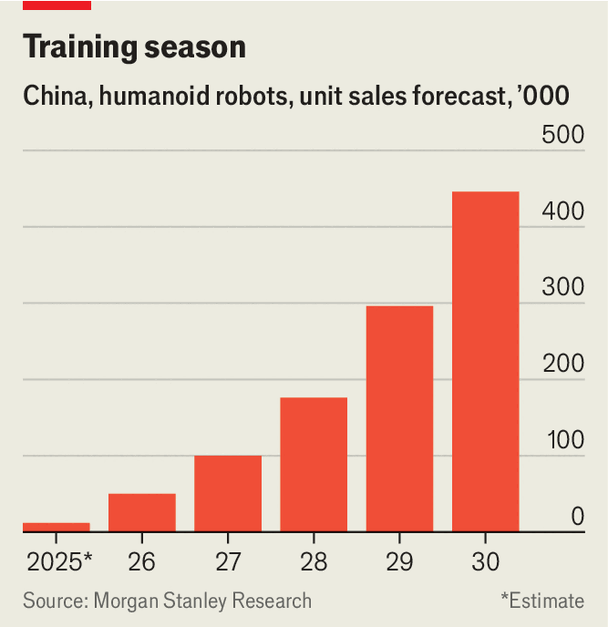
Yet as the ignominious(耻辱的,不光彩的) end of Superman’s running feat demonstrates, the technology still has a long way to go(还有很长的路要走). Chinese companies are expected to sell 50,000 humanoids this year, more than triple(三倍) last year’s figure. They have largely mastered the hardware behind the machines. The software, however, is another matter(另一回事).
然而,正如“超人”跑步壮举的耻辱结局所表明的那样,这项技术仍有很长的路要走。预计中国公司今年将销售5万台人形机器人,是去年数字的三倍多。它们已在很大程度上掌握了机器背后的硬件。然而,软件则是另一回事。
In order to create the foundation models that will allow robots to seamlessly(无缝地,流畅地) carry out a multitude of(大量的,众多的) useful tasks, enormous amounts of data must now be collected. The models powering the current generation of humanoids possess a few billion “parameters(参数)”; to replicate(复制,重现) the functioning of the human body, they will need hundreds of billions.
为了创建能让机器人无缝执行大量有用任务的基础模型,现在必须收集海量数据。驱动当前一代人形机器人的模型拥有数十亿个“参数”;而要复制人体的功能,它们将需要数千亿个。