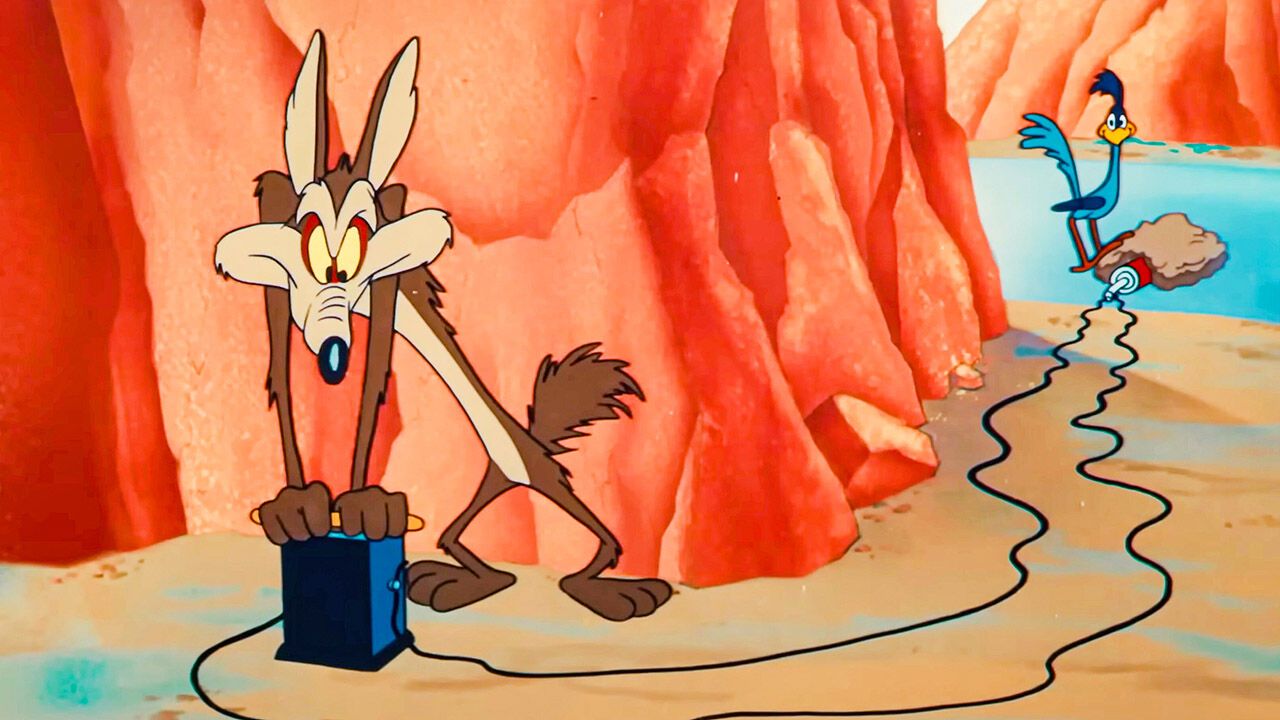
Wile E. Coyote, a cartoon character from Looney Tunes, is not as wily(狡猾的) as he sounds. Since his debut(首次亮相) in cinemas in 1949, he has tried but failed to catch the Road Runner. The calamitous(灾难性的) canine is based on Mark Twain’s description of the coyotes he observed in the American West: “always poor, out of luck and friendless” and “always hungry”. Across about 50 cartoons, he uses skateboards, slingshots and even snow machines in his attempts to catch the bird in the desert. He buys strange gadgets(小装置,小玩意儿), such as dehydrated boulders, from Acme, a comically bad corporation, which malfunction or explode(故障或爆炸). “Beep, beep!” the Road Runner always gloats(幸灾乐祸) before buzzing off.
歪心狼(Wile E. Coyote)是《乐一通》中的卡通角色,他并不像名字听起来那么狡猾。自1949年首次登上银幕以来,他一直试图抓住走鹃鸟(Road Runner),却从未成功。这只倒霉的犬科动物原型来自马克·吐温对美国西部郊狼的描写:“总是贫穷、倒霉、没有朋友”,“总是饥饿”。在约50部卡通片中,他用滑板、弹弓甚至造雪机试图在沙漠中抓住那只鸟。他从艾克米公司购买奇怪的装置,比如脱水巨石,这家滑稽的糟糕公司生产的产品总是故障或爆炸。“哔哔!”走鹃鸟总是得意地叫两声然后飞走。
Anyone who likes to root for the underdog(支持弱者) will be happy to see him back on screens in “Coyote v Acme”, which opens in cinemas on August 28th. In this wacky(古怪的,滑稽的), often amusing film, Coyote is not merely a hapless(倒霉的,不幸的) hunter. He is also a plucky(勇敢的,有胆量的) plaintiff(原告), suing Acme for its faulty products. With the help of his lawyers and a whistleblower(吹哨人,举报人) (Bugs Bunny), as well as other characters from Looney Tunes, Coyote raises awareness of cartoon injuries and is celebrated as a hero. (The screenwriters based the film on a humour piece in the New Yorker and took inspiration from legal dramas such as “Erin Brockovich(《永不妥协》电影)”.)
任何喜欢支持弱者的人都会高兴地看到他在8月28日上映的《歪心狼对决艾克米》中重返银幕。在这部古怪而有趣的电影中,歪心狼不仅仅是一个倒霉的猎人,他还是一位勇敢的原告,起诉艾克米公司产品有缺陷。在律师和吹哨人(兔八哥)以及《乐一通》其他角色的帮助下,歪心狼提高了人们对卡通伤害的认识,并被奉为英雄。(编剧们将电影基于《纽约客》上的一篇幽默文章,并从《永不妥协》等法律剧中汲取灵感。)
Though Coyote has never caught the Road Runner, he has captured(俘获,赢得) the hearts of viewers. That is perhaps surprising: Chuck Jones, his creator, insisted that Coyote should be a “fanatic(狂热者)” and fail because of his own “ineptitude(无能,笨拙)”. Jones thought he was a tragic figure, nearly naming him Don Coyote(唐·吉诃德式人物) after Miguel de Cervantes’s hapless knight. Yet Jones also wanted audiences to side with the canine. He saw Coyote as Sisyphus(西西弗斯,希腊神话人物): an absurd hero, showing joy and hope in the never-ending struggle of pushing a boulder uphill (or chasing a bird). “Coyote v Acme” offers plenty of nods to(致敬,暗示) the myth, with its central mystery dubbed(被称为,配音) “Project Sisyphus”.
尽管歪心狼从未抓住走鹃鸟,他却俘获了观众的心。这也许令人惊讶:他的创造者查克·琼斯坚持认为歪心狼应该是一个“狂热者”,并因自己的“无能”而失败。琼斯认为他是一个悲剧人物,几乎以米格尔·德·塞万提斯笔下倒霉的骑士命名他为“唐·歪心狼”。但琼斯也希望观众站在这只犬科动物一边。他将歪心狼视为西西弗斯:一个荒诞的英雄,在永无止境的推石上山(或追鸟)中展现欢乐与希望。《歪心狼对决艾克米》对这一神话致敬颇多,其核心谜团被称为“西西弗斯计划”。