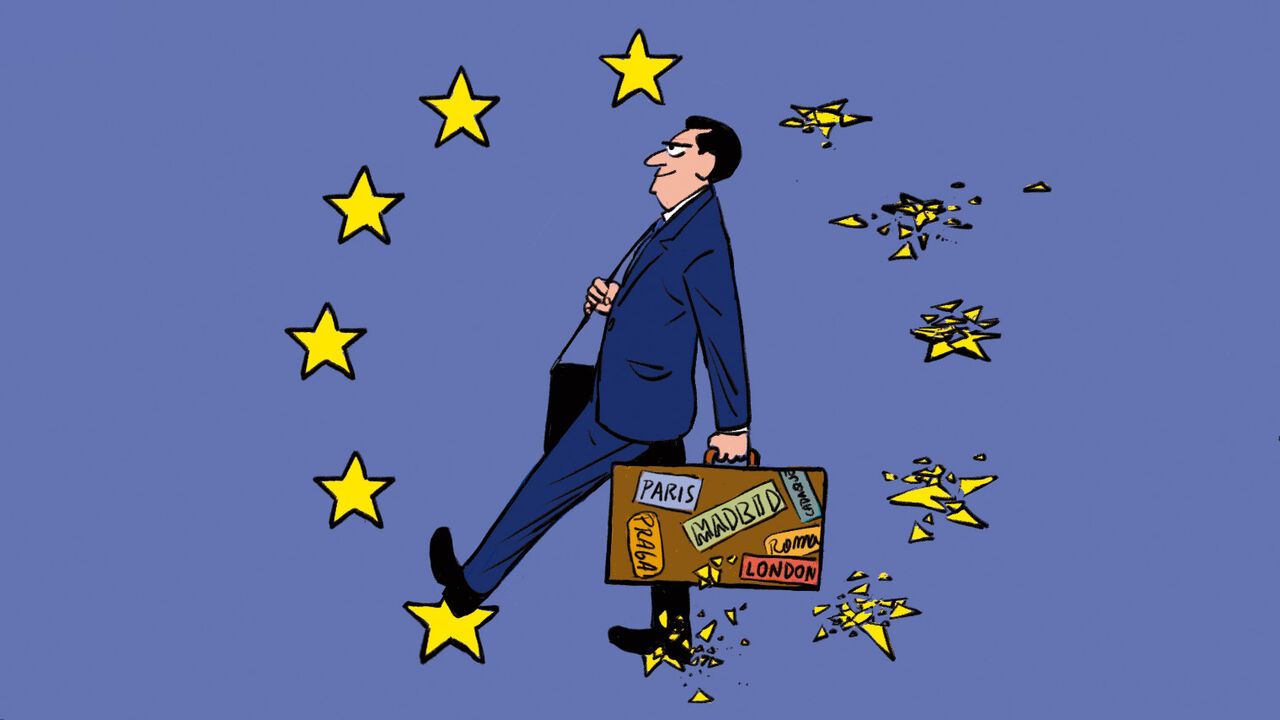
The proper way to complete a young British gentleman’s education, in centuries gone by, was to send him on a Grand Tour of the continent. A traipse(漫步,闲逛) through Europe taking in Parisian salons, Milanese opera houses and Roman ruins was just the thing to turn an unkempt(不整洁的,蓬乱的) youth into a cultivated(有教养的,文雅的) courtier. Over the months en route(在途中), he would pick up rudiments(基础,入门) of the continent’s languages alongside a few paintings, gambling debts and the odd bout(一阵,一场) of gonorrhea. The Grand Tour was expensive and time-consuming, which was rather the point: what mattered was not so much seeing Europe as being seen to have seen it.(大旅行既昂贵又耗时,而这正是其意义所在:重要的不是真正看到了欧洲,而是让别人看到自己已经看过了欧洲。) For the family that had everything, a youngster’s gap year on the continent broadened the mind even as it narrowed the inheritance.
在过去的几个世纪里,完成一位年轻英国绅士教育的正确方式是送他去欧洲大陆进行“大旅行”。穿越欧洲,流连于巴黎的沙龙、米兰的歌剧院和罗马的废墟,正是将一个粗野少年培养成有教养的朝臣的绝佳途径。在数月的旅途中,他会学到欧洲大陆语言的入门知识,同时也会带回几幅画作、赌债和偶尔染上的淋病。大旅行既昂贵又耗时,而这正是其意义所在:重要的不是真正看到了欧洲,而是让别人看到自己已经看过了欧洲。对于那些拥有一切的家庭来说,年轻人在欧洲大陆度过的间隔年开阔了视野,却也缩减了遗产。
The democratisation of travel and the French habit of chopping off aristocratic heads put paid to(终结,了结) the custom. But the Grand Tour has had a revival of sorts(某种程度上的), not among the idle rich but among the continent’s political class. For the modern grandee(显贵,大人物) serving the European Union, to be seen as out on the road is de rigueur(必不可少的,合乎礼节的). Nothing demonstrates commitment to ever-closer union so well as a circuit on the Grand Tour 2.0: a zip through the EU’s 27 national capitals, from mighty Berlin and Paris to humble Valletta and Luxembourg.(没有什么比完成一次“大旅行2.0”的巡游更能体现对日益紧密联盟的承诺了:快速穿梭于欧盟的27个成员国首都,从强大的柏林和巴黎,到不起眼的瓦莱塔和卢森堡。) Much like the jaunt(短途旅行,远足)s of yore(往昔的,很久以前的), such traipsing is expensive, time-consuming and undertaken largely for symbolic value. Then as now, the intent is less to learn anything than to prove one has made the effort. Been there, done that(去过,做过(表示见多识广)).
旅行的民主化和法国人砍掉贵族脑袋的习惯终结了这一习俗。但大旅行在某种程度上复兴了,不是发生在游手好闲的富人中间,而是在欧洲的政治阶层中。对于为欧盟服务的现代显贵来说,被人看到在路上奔波是必不可少的。没有什么比完成一次“大旅行2.0”的巡游更能体现对日益紧密联盟的承诺了:快速穿梭于欧盟的27个成员国首都,从强大的柏林和巴黎,到不起眼的瓦莱塔和卢森堡。与昔日的远足相似,这种奔波既昂贵又耗时,而且主要是为了象征价值。无论过去还是现在,其意图与其说是学习,不如说是证明自己付出了努力。去过,做过。
The latest politico(政客) to try his hand at(尝试做某事) frequent-flyer(飞行常客的) diplomacy is António Costa, who as president of the European Council chairs confab(会议,交谈)s of EU leaders. For the second year running the former Portuguese prime minister will schlep(费力地走,拖沓) to chancelleries across the bloc on a tour des capitales(首都巡游). In 2025 it took three weeks for Mr Costa to accumulate grip-and-grins(握手合影) from 23 EU members. This time 26 stops are planned (Sweden, in the midst of elections, will have to wait). For a man whose job is to herd(使成群,引导) two dozen leaders towards agreement, rushing through two or three capitals a day has a certain logic. But a slew of(大量的) lesser EU-wallah(人员,家伙)s have done their own travel box-ticking(走过场,打勾), in a revival of the Grand Tour genre. At least four European commissioners have visited all 27 countries since taking office in December 2024, with a handful of others aiming to notch up(赢得,达到) the remaining capitals soon. National politicians too are occasionally tempted by the challenge: Emmanuel Macron undertook a Grand Tour in his first five years as French president.
最新一位尝试“飞行常客外交”的政治人物是安东尼奥·科斯塔,他作为欧洲理事会主席主持欧盟领导人的会议。连续第二年,这位前葡萄牙总理将穿梭于欧盟各国的总理府,进行“首都巡游”。2025年,科斯塔花了三周时间与23个欧盟成员国领导人握手合影。这次计划了26站(瑞典因正值选举,将不得不等待)。对于一个职责是引导二十多位领导人达成一致的人来说,一天赶两三个首都有其逻辑。但许多次要的欧盟官员也完成了自己的旅行打卡,复兴了大旅行这一类型。自2024年12月上任以来,至少有四位欧盟委员访问了全部27个国家,还有几位目标是在不久后完成剩余首都的访问。国家政要也偶尔受到这一挑战的诱惑:埃马纽埃尔·马克龙在担任法国总统的头五年里进行了一次大旅行。
Capital punishment
首都惩罚