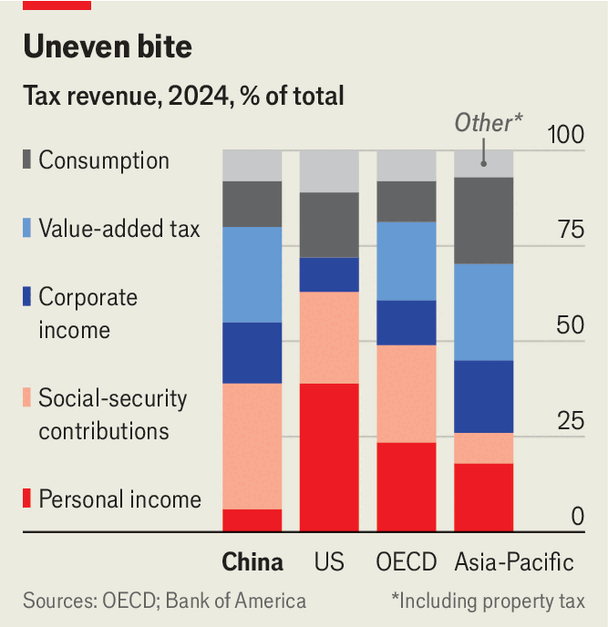
THE WORLD is full of governments that should tighten their belts but won’t.(世界上到处都是应该勒紧腰带却不愿这样做的政府。) China is an exception. Domestic spending is weak. Government-bond yields are falling. The curse of deflation(通货紧缩) could return. Under these conditions, its government should ease fiscal policy to stimulate demand. Even the IMF(国际货币基金组织) thinks so. Instead China is stumbling(跌跌撞撞地走,踉跄) into austerity(紧缩, austerity). According to figures released on August 21st, tax revenues rose by more than 13% in July, compared with a year earlier, the biggest jump in over three years. China’s budget deficit, broadly defined, also narrowed.
世界上到处都是应该勒紧腰带却不愿这样做的政府。中国是个例外。国内支出疲软。政府债券收益率正在下降。通缩的诅咒可能卷土重来。在这种情况下,中国政府应该放宽财政政策以刺激需求。就连国际货币基金组织也这么认为。然而,中国却正在跌跌撞撞地陷入紧缩。根据8月21日公布的数据,7月份税收收入同比增长超过13%,是三年多来的最大增幅。广义上,中国的预算赤字也有所收窄。
China is raising revenue not by increasing its tax rates but by repairing its tax net(税收网,征税范围). Earlier this month the cities of Beijing and Hangzhou told residents they must pay income tax on money earned from offshore(离岸的,境外的) insurance products bought in Hong Kong, according to Caixin, a Chinese magazine. The report rattled(使不安,扰乱) shares in insurers such as Prudential and AIA(保诚和友邦保险公司), which make a lot of their money in the semi-autonomous(半自治的) city.
中国增加财政收入不是通过提高税率,而是通过修补其税收网。本月早些时候,北京和杭州两座城市告诉居民,他们必须为在香港购买的离岸保险产品所赚的钱缴纳所得税,据中国杂志《财新》报道。这一报道震动了保诚和友邦等保险公司的股价,这些公司在香港这个半自治城市赚了很多钱。
This was only the latest instalment(部分,一集) in a lengthy saga(长篇故事,传奇). Last year China began sending tax notices(税务通知) to mainlanders(大陆居民) who may have made money trading stocks in Hong Kong or America. In July the authorities also issued new rules bringing offshore trusts more firmly into the tax net. These moves exploit a successful multilateral initiative (they still exist), called the Common Reporting Standard, which allows tax authorities in different jurisdictions to share information with each other.(这些举措利用了一项成功的多边倡议(它们仍然存在),称为“共同申报准则”,该准则允许不同司法管辖区的税务机关相互共享信息。)
这只是一场漫长传奇中的最新篇章。去年,中国开始向可能在香港或美国炒股赚钱的内地人发送税务通知。7月,当局还发布了新规,将离岸信托更牢固地纳入税收网。这些举措利用了一项成功的多边倡议(它们仍然存在),称为“共同申报准则”,该准则允许不同司法管辖区的税务机关相互共享信息。