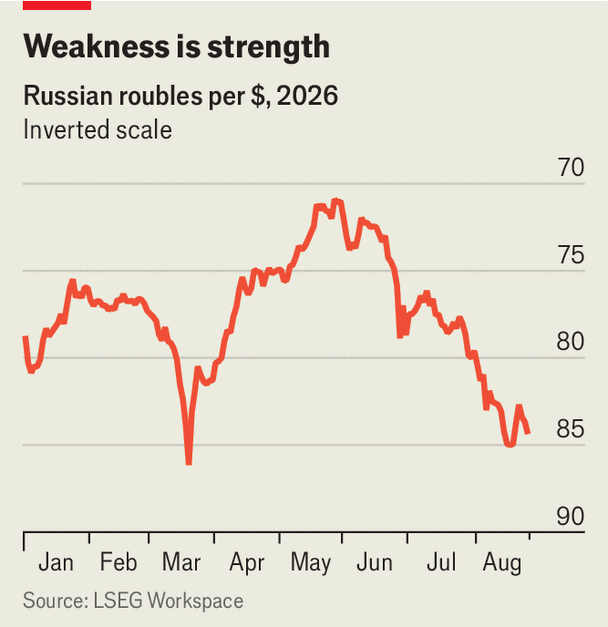
GOVERNMENTS AND central banks usually insist(坚称,坚持认为) that they want a strong currency. Not, just now, in Russia. On August 5th the Ministry of Finance declared that it would increase its daily purchases of foreign currencies and gold by around 20%, from 5.4bn roubles (then $69m) in July to 6.5bn roubles.(8月5日,俄罗斯财政部宣布将把每日外汇和黄金购买量提高约20%,从7月的54亿卢布增至65亿卢布。) The rouble duly slid(如期下跌,应声下跌), from around 80 to the dollar in early August to 85 by the middle of the month, its lowest level since March (see chart).
各国政府和央行通常坚称希望本币坚挺。但眼下俄罗斯并非如此。8月5日,俄罗斯财政部宣布将把每日外汇和黄金购买量提高约20%,从7月的54亿卢布(当时约合6900万美元)增至65亿卢布。卢布应声下跌,从8月初的约80卢布兑1美元跌至8月中旬的85卢布,创下3月以来的最低水平(见图表)。
A stronger currency means cheaper imports, lower inflation and less pressure on interest rates; a weaker one means the opposite. As Russians know well, a sudden slide can trigger(引发,触发) financial panic, as it did(正如它曾经那样) after their country invaded Ukraine in February 2022 and Western countries imposed sanctions. In just over a fortnight(两周,十四天) the rouble lost two-fifths of its value against the dollar. Russians rushed to buy foreign currency and pulled cash out of banks, much of which they splurged(挥霍,乱花钱) on consumer durables and other goods.
货币升值意味着进口更便宜、通胀更低、利率压力更小;货币贬值则相反。俄罗斯人深知,突然的贬值可能引发金融恐慌,就像2022年2月俄罗斯入侵乌克兰、西方国家实施制裁后那样。仅仅两周多的时间里,卢布对美元贬值了五分之二。俄罗斯人争相购买外币,从银行取出大量现金,其中大部分被挥霍在耐用消费品和其他商品上。
But lately a strong rouble has been a curse(诅咒,祸根)—notably(尤其,特别) for the federal budget. In the first half of the year it averaged 77 to the dollar; the budget had assumed(假定,假设) a rate of 92. Because Russian oil exporters (which are mostly state-owned or otherwise linked to the government) earn their revenue in dollars, their income translated into fewer roubles than expected.(由于俄罗斯石油出口商(大多为国有或与政府有关联)以美元赚取收入,他们的收入兑换成卢布后低于预期。) Oil and gas provide 20% of budget revenue.
但近来,强势卢布成了一种诅咒——尤其是对联邦预算而言。今年上半年,卢布兑美元平均汇率为77,而预算假设的汇率是92。由于俄罗斯石油出口商(大多为国有或与政府有关联)以美元赚取收入,他们的收入兑换成卢布后低于预期。石油和天然气提供了预算收入的20%。