Balloons were applied(应用,运用) to warfare in Europe shortly after their invention in France in 1783. (Chinese “sky lanterns” are far older, but are not known to have carried people.) They were used as observation posts and later, in the guise of(以…的外表/伪装) tethered “aerostats”, as anti-aircraft devices. Latterly(近来,最近), China has employed them to spy on Taiwan, and Israel to keep an eye on(监视,留意) Lebanon. America’s armed forces are taking an interest, too. But perhaps the most active practitioner(实践者,从业者) is Ukraine.
气球于1783年在法国发明后不久,便被应用于欧洲的战争。(中国的“天灯”历史更为悠久,但据知并未载人。)它们曾被用作观察哨,后来以系留“浮空器”的形式充当防空装置。近来,中国用它们监视台湾,以色列用它们紧盯黎巴嫩。美国武装部队也对此产生了兴趣。但或许最积极的实践者是乌克兰。
Ukraine has used balloons from the start of its war with Russia. In May it was reported that the country has launched over 1,000 of them into Russian territory since last autumn. They can drop bombs, distract air defences and act as radio relays, passing commands to drones that would otherwise be out of range.(它们能投弹、分散防空火力,并作为无线电中继,向原本超出射程的无人机传递指令。)
乌克兰自与俄罗斯开战之初就使用了气球。今年5月有报道称,自去年秋天以来,该国已向俄罗斯领土发射了1000多个气球。这些气球可以投掷炸弹、分散防空火力,并充当无线电中继,向原本超出射程的无人机传递指令。
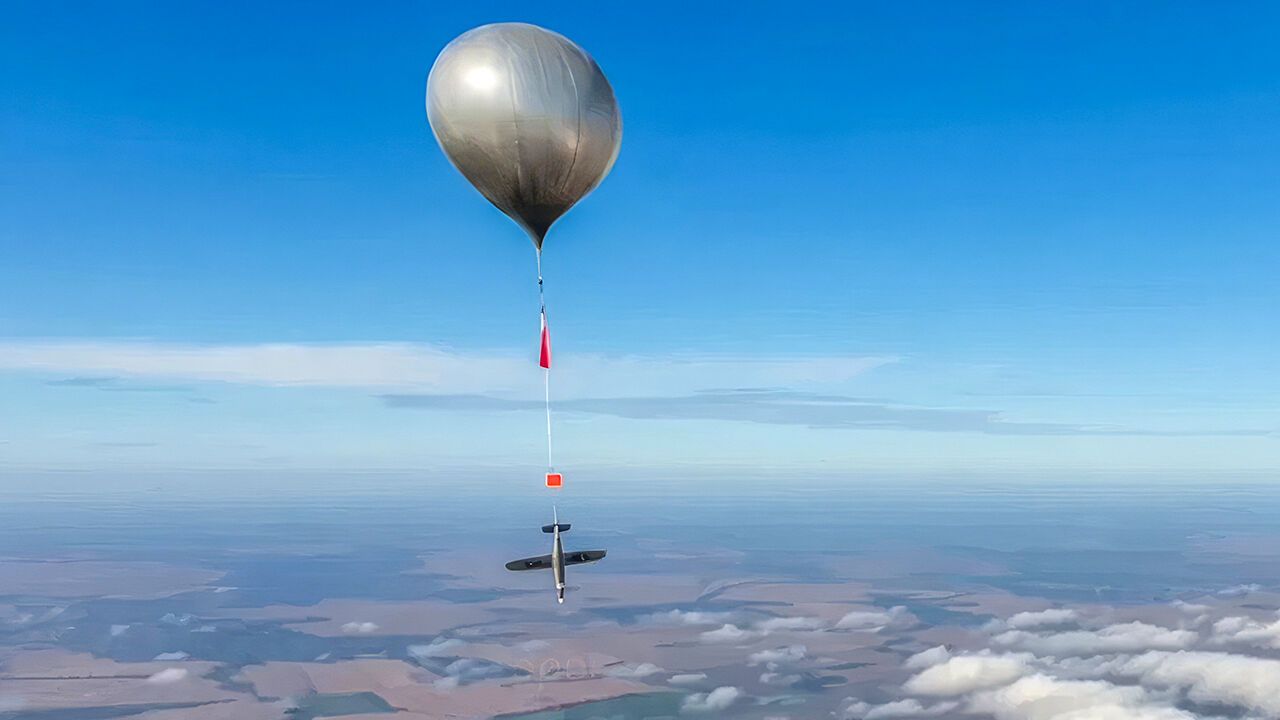
Recently, Ukraine has tested a twist(变通,新花样) on this last approach by using balloons actually to carry drones, and thus(从而,因此) extend the range of the drone strikes that are doing so much damage to Russian infrastructure(基础设施). If winds are favourable, a balloon can both lift a drone partway to its target and, that done, launch it from altitude (up to 18km high), allowing it to glide yet further before it needs to switch on its engines.(如果风向有利,气球既能将无人机提升至半途,然后从高空发射,使其在启动发动机前滑翔更远。)
最近,乌克兰对后一种方法进行了变通试验,利用气球实际搭载无人机,从而延长无人机打击的射程,这些打击正对俄罗斯基础设施造成巨大破坏。如果风向有利,气球既能将无人机提升至距目标一段距离处,然后从高空(高达18公里)发射,使其在需要启动发动机前能滑翔得更远。