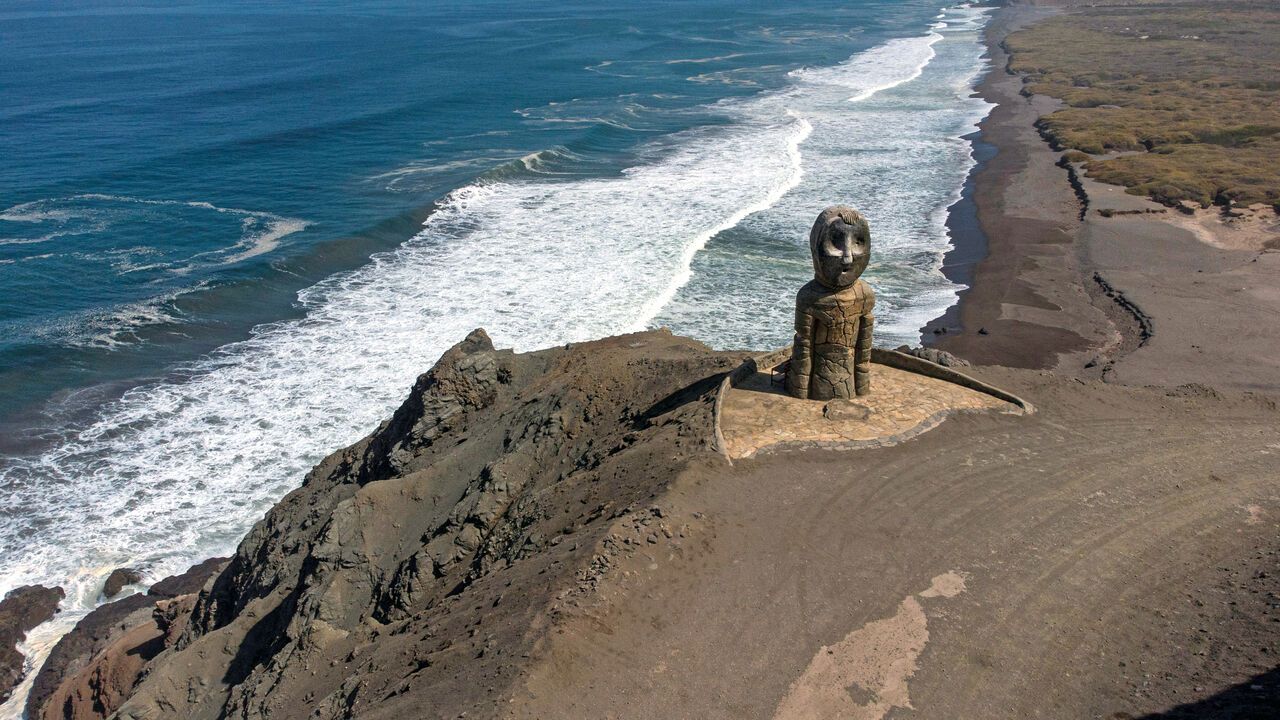
Running 600km along the coast of the Atacama desert, from southern Peru to northern Chile, is a mass-burial site(集体埋葬地) for the world’s oldest mummies. The Chinchorro, who lived on the strip of coast from 7000BC to 1000bc, and survived by hunting and fishing, weremeticulous(一丝不苟的) preservers of their dead. Almost everyone who died could be mummified, with no regard for(不顾及) social status. This, combined with the dry environment of the Atacama, has led to an odd situation: the world’s oldest deliberately preserved bodies are so numerous that they are creating problems.(这一点加上干燥环境导致了一种奇怪局面:木乃伊太多成了问题。)
沿阿塔卡马沙漠海岸绵延600公里,从秘鲁南部到智利北部,有一处世界上古老木乃伊的集体埋葬地。钦乔罗人生活在这片海岸地带,从公元前7000年到公元前1000年,以狩猎和捕鱼为生,他们精心保存死者。几乎所有去世的人都能被制成木乃伊,不论社会地位高低。这一点,加上阿塔卡马干燥的环境,导致了一种奇怪的局面:世界上最早被有意保存的尸体数量如此之多,以至于正在制造麻烦。
Lately, more bodies have been emerging(出现,浮现) from the earth. César Borie is an archaeologist with Chinchorro Marka, an agency that Chile’s government has charged with(受委托负责) the protection of the country’s Chinchorro archaeological sites. He studies a skeleton that he stumbled upon while walking around Caleta Camarones, a town near the city of Arica in northern Chile.(他研究一具在卡莱塔卡马罗内斯散步时偶然发现的骨架。) “We find new remains exposed every time we come here,” he says, gently reburying(重新掩埋) the bones with his hands. “Keeping them under the soil until the conditions are right is the best we can do.”(“在条件合适前把它们留在土里是我们能做的最好的事。”)
近来,越来越多的尸体从地下冒出。塞萨尔·博里是钦乔罗·马尔卡机构的考古学家,该机构受智利政府委托保护本国的钦乔罗考古遗址。他在智利北部阿里卡市附近的卡莱塔卡马罗内斯镇散步时偶然发现了一具骨架。“我们每次来这里都会发现新的遗骸暴露在外,”他边说边用手轻轻地将骨头重新掩埋。“在条件合适之前,把它们留在土里是我们能做的最好的事。”
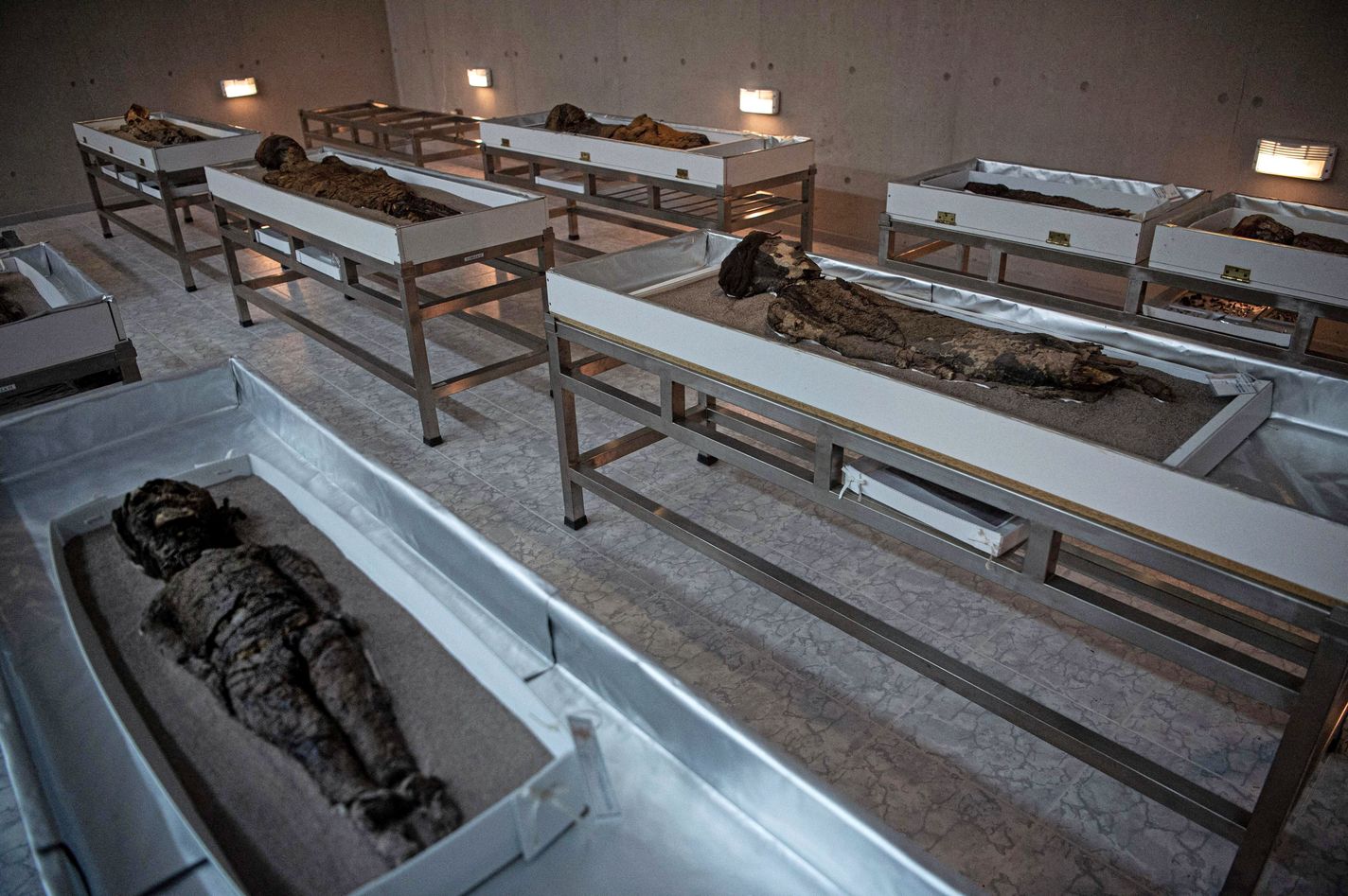
This is not a new phenomenon(现象). Chinchorro mummies have been issuing(冒出,流出) from the ground since at least the early 20th century. Initial expeditions(探险队,远征) in 1917 transported mummies to museums around Chile, where experts preserved them for study. Archeologists also ran excavations(发掘) until the 1990s.
这并不是新现象。至少从20世纪初起,钦乔罗木乃伊就一直从地下冒出。1917年的早期探险队将木乃伊运往智利各地的博物馆,专家们在那里保存它们以供研究。考古学家也一直进行发掘,直到20世纪90年代。
Back to the future
回到未来