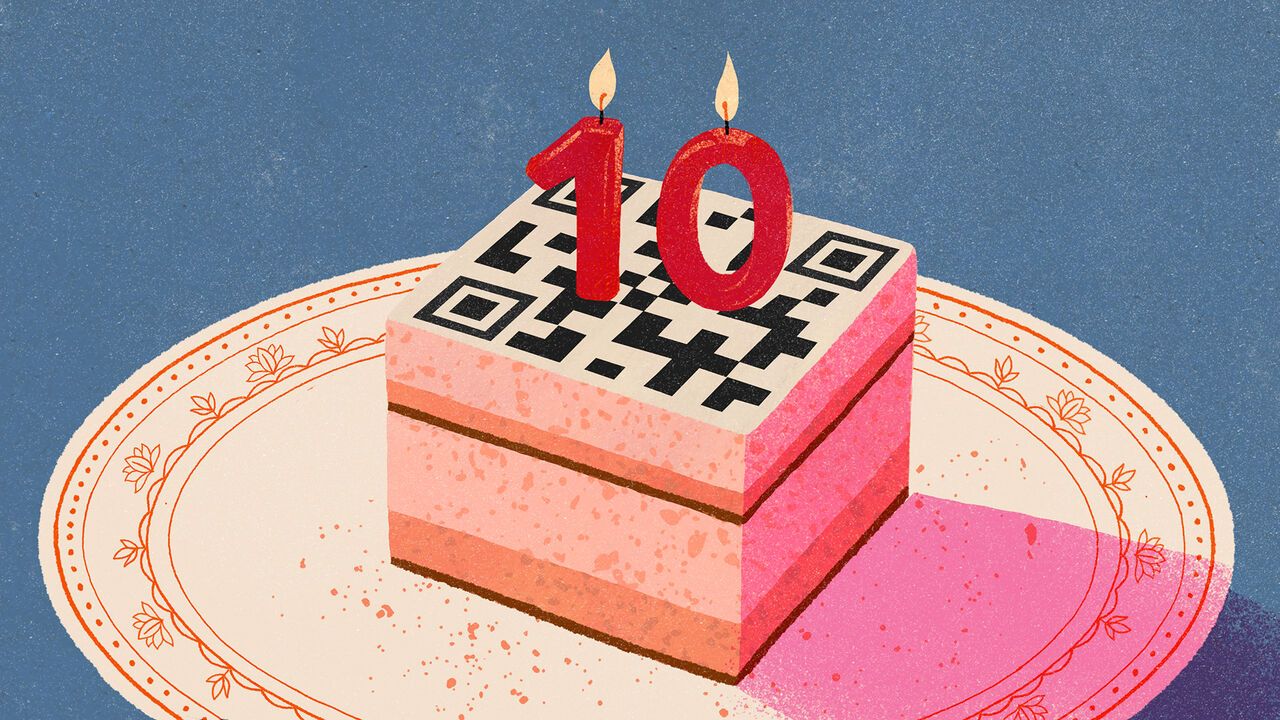
IT SITS ATOP coconuts on Mumbai beach carts, alongside samosas in Delhi snack shops and among Navy Cuts at Kolkata cigarette stalls. It is displayed on rickshaw-drivers’ seat backs, utility companies’ bills and Amazon’s checkout page. It can be scanned to buy ten rupees- (ten cents-) worth of peanuts or a 100,000-rupee iPhone. So ubiquitous has the QR code become—and so quotidian its use—that it is easy to forget just how recent an addition it is to the Indian landscape.(二维码变得如此无处不在,其使用如此日常,以至于人们很容易忘记它是多么新近才出现在印度风景中的。)
它出现在孟买海滩推车上的椰子堆顶,德里小吃店的萨莫萨旁边,以及加尔各答香烟摊的Navy Cuts香烟之间。它展示在人力车夫的座椅靠背上、公用事业公司的账单上以及亚马逊的结账页面。扫描它,可以购买价值十卢比(十美分)的花生,或是一部十万卢比的iPhone。二维码变得如此无处不在——其使用如此日常——以至于人们很容易忘记,它进入印度风景的时间其实并不长。
The QR code is the visual signature of Unified Payments Interface, or UPI, a platform that celebrated its tenth birthday on August 25th and which has revolutionise(彻底改变,革命性变革)d how money moves in India. In the paleolithic era(旧石器时代(比喻远古时期))—before 2016—cash was used for almost all transactions by number and two-thirds by value. Cheques accounted for the majority of non-cash dealings. And for some reason everybody pretended they had no small change, giving rise to an alt-currency(替代货币,非官方货币) of one-rupee boiled sweets(一卢比煮糖(印度小贩找零的替代品)).
二维码是统一支付接口(UPI)的视觉标志。UPI是一个在8月25日庆祝了十岁生日的平台,它彻底改变了印度的资金流动方式。在旧石器时代——即2016年之前——几乎所有的交易(按笔数计)都使用现金,按价值计则占三分之二。支票占非现金交易的大多数。而且出于某种原因,每个人都假装自己没有零钱,从而催生了一种由一卢比煮糖构成的非官方货币。
In the first 12 months after UPI’s launch, Indians used the platform to make 73m transactions worth 227bn rupees. This year, in the month of August alone, it was used 25bn times for transfers worth nearly 30trn(万亿(trillion的缩写)) rupees. More than 85% of non-cash transactions now go through UPI (cheques are down to just 0.2%). And there is still room for growth(增长空间). The network’s 550m-odd(约5.5亿(odd表示“多一点的”)) users make up just over half of India’s adults.
在UPI推出后的头12个月里,印度人通过该平台完成了7300万笔交易,价值2270亿卢比。而今年,仅8月一个月,它就完成了250亿次转账,价值近30万亿卢比。如今,超过85%的非现金交易通过UPI进行(支票交易降至仅0.2%)。而且仍有增长空间。该网络约5.5亿用户,占印度成年人口的一半以上。