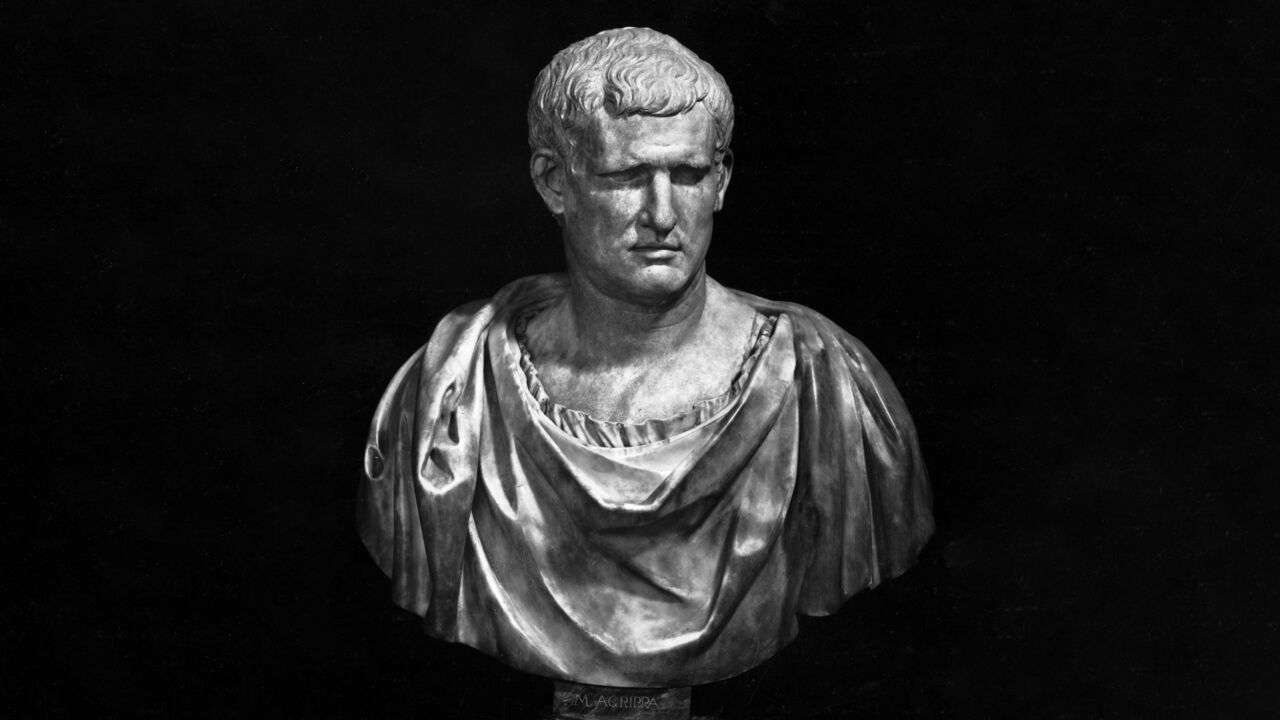
Agrippa(阿格里帕,罗马将军). By Robert Harris. Doubleday(美国出版社名); 384 pages; $32. Hutchinson Heinemann; £22
《阿格里帕》。罗伯特·哈里斯著。Doubleday出版社;384页;32美元。Hutchinson Heinemann出版社;22英镑。
HOW OFTEN, runs a popular meme, do men think about the Roman Empire? For the British novelist Robert Harris, the answer would seem to be: every few years. Mr Harris’s first foray into the Roman period, with “Pompeii” (2003), came about because he wanted to write a dystopian novel about America.(哈里斯首次涉足罗马题材是因为想写美国反乌托邦小说。) After stumbling upon a newspaper article about excavation(发掘,挖掘)s at Pompeii, he decided that the Roman period offered a better way to satirise(讽刺,讥讽) the complacency(自满,自鸣得意) of a decadent(颓废的,腐朽的) superpower. He later wrote a bestselling trilogy(三部曲) of novels based on the life of Cicero, the last of which was published in 2015, charting the erosion(记录侵蚀过程) of democratic norms in the dying days of the Roman Republic.
一个流行的梗问:男人多久会想起罗马帝国?对于英国小说家罗伯特·哈里斯来说,答案似乎是:每隔几年。哈里斯首次涉足罗马题材,是凭借《庞贝》(2003年),起因是他想写一部关于美国的反乌托邦小说。偶然读到一篇关于庞贝古城发掘的新闻报道后,他认定罗马时期能更好地讽刺一个腐朽超级大国的自满。后来,他创作了以西塞罗生平为蓝本的畅销三部曲,最后一部于2015年出版,描绘了罗马共和国末期民主规范的侵蚀。
His historical thriller(惊悚小说)s consider past eras that mirror(反映,映射) present-day concerns. “Act of Oblivion” (2022), about the national self-harm(自残,自我伤害) of the English civil war, has strong Brexit overtone(弦外之音,暗示)s; “An Officer and a Spy” (2013), about the Dreyfus affair(德雷福斯事件,法国冤案), has parallels with internet-era surveillance(监控,监视), paranoia(偏执,多疑) and whistleblowing(告密,揭发). His thrillers set in the present day have led to popular screen adaptation(改编)s, notably(尤其,特别) “The Ghost Writer” (2010) and “Conclave” (2024).
他的历史惊悚小说审视那些映照当代关切的过往时代。《遗忘法案》(2022年)讲述英国内战时期的民族自伤,带有强烈的脱欧色彩;《间谍与军官》(2013年)围绕德雷福斯事件,与互联网时代的监控、偏执和告密有相似之处。他那些以当代为背景的惊悚小说也被改编为广受欢迎的影视作品,尤其是《影子写手》(2010年)和《秘密会议》(2024年)。