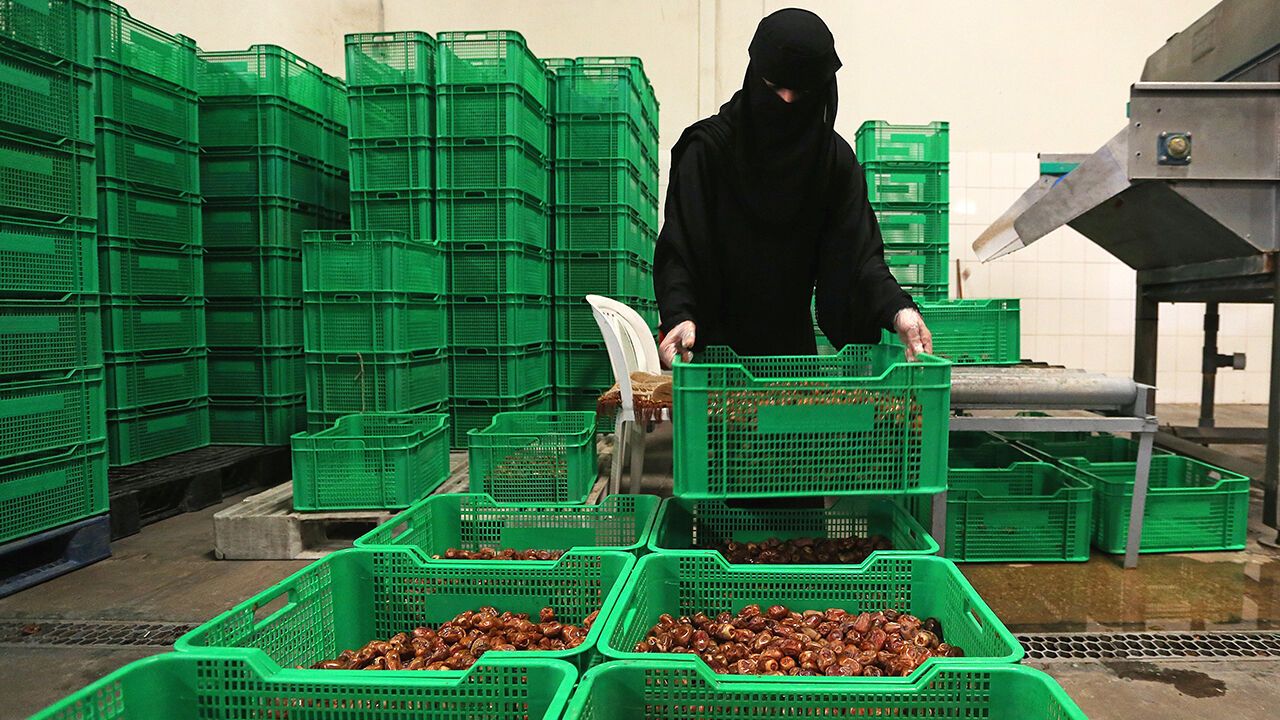
A decade ago Saudi women were barred(被禁止,被阻止) from all but a few jobs. Then Saudi Arabia’s de facto(事实上的,实际上的) ruler, Crown Prince Muhammad bin Salman, ended most restrictions—and even allowed Saudi women to drive. His aim was for the kingdom to rely less on oil and more on toil(辛苦劳作,苦工). Letting a previously housebound(困在家中的,不能外出的) half of the population work was an obvious place to start.
十年前,沙特女性除了少数工作外几乎被禁止就业。随后,沙特阿拉伯的实际统治者王储穆罕默德·本·萨勒曼取消了大部分限制,甚至允许沙特女性开车。他的目标是让王国减少对石油的依赖,更多地依靠劳动。让此前被禁锢在家中的一半人口参加工作,显然是一个起点。
This had dramatic consequences. Hamda, a young woman in Riyadh, heard the news with joy and told her husband she wanted to get a job. He forbade(禁止(forbid的过去式)) it. If she worked outside the home, she might talk to a man and bring shame on(给……带来耻辱) the family.
这带来了戏剧性的后果。利雅得的年轻女子哈姆达听到这个消息非常高兴,告诉丈夫她想找份工作。丈夫禁止她工作,理由是如果她外出工作,可能会和男人说话,给家庭带来耻辱。
She argued with him for a year. Eventually, she won, for two reasons. First, extra money comes in handy(派得上用场). “I told him, we need to pay our bills,” she recalls. Second, her husband’s sisters all got jobs. Suddenly it became harder for him to claim, at the family dinner table, that only immoral(不道德的,道德败坏的) women worked. So Hamda found a job in a mall, where she sells pyjamas(睡衣(英式拼写)). Her life is much better, she says. One day, she wants to buy a car and start her own business.
她与丈夫争论了一年。最终,她赢了,原因有二。第一,额外的钱很实用。“我告诉他,我们需要付账单,”她回忆道。第二,丈夫的姐妹们都找到了工作。突然,他很难再在家庭餐桌上声称只有不道德的女人才工作。于是哈姆达在商场找到一份卖睡衣的工作。她说,她的生活好多了。有一天,她想买辆车,自己创业。
Defying convention
挑战传统
Slipping surly bonds
挣脱束缚