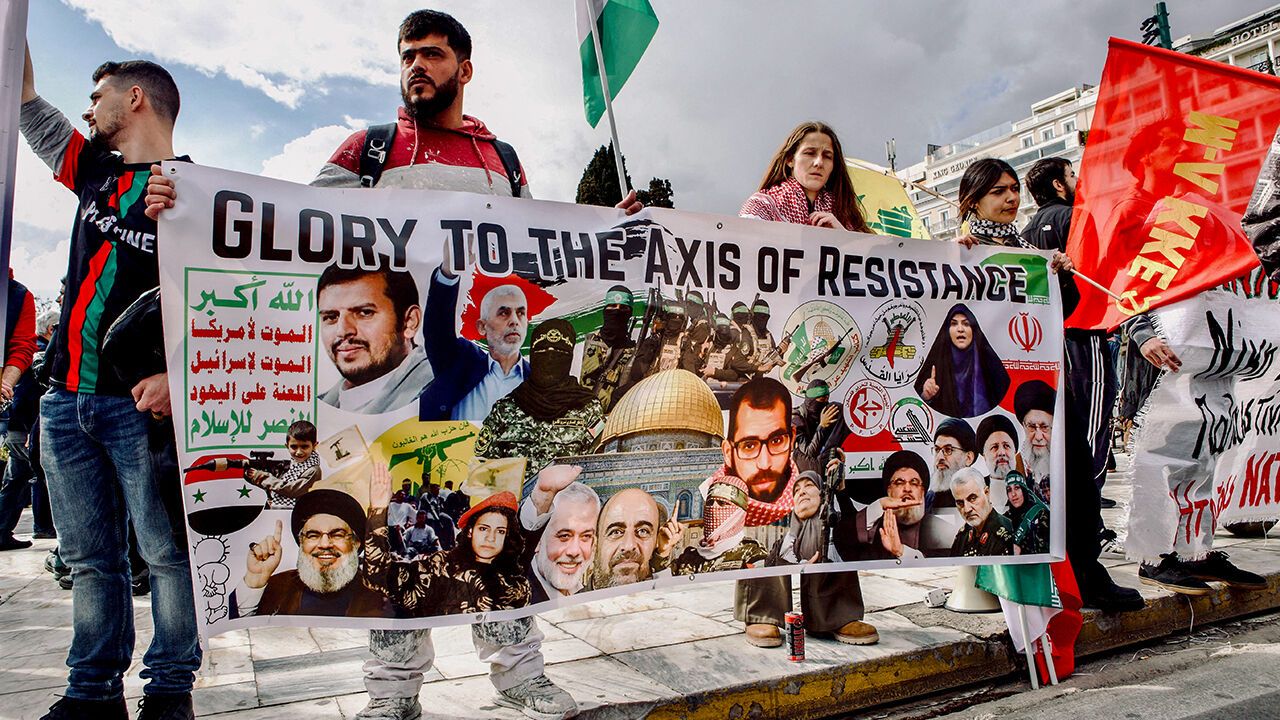
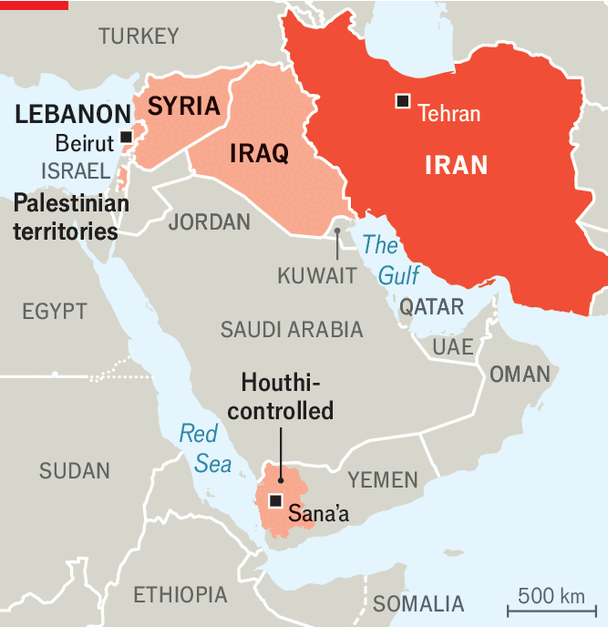
For years Iranian officials spoke of an “axis of resistance(抵抗轴心,伊朗领导的联盟)”, allies from Beirut to Sana’a who would stand together against common foes(敌人(复数)) (see map). Yet when Iran was attacked twice in the past 15 months, each made a different decision about whether to join the fray.(然而,当伊朗在过去15个月中两次遭到攻击时,每个盟友对于是否参战都做出了不同的决定。) The axis may not be dead—but the brand has outlived the business(比实质更持久).
多年来,伊朗官员一直谈论“抵抗轴心”,即从贝鲁特到萨那的盟友,他们会共同对抗共同的敌人(见图)。然而,在过去15个月里,伊朗两次遭到攻击,每个盟友对于是否参战都做出了不同的决定。轴心可能尚未消亡——但品牌已超越了其实质。
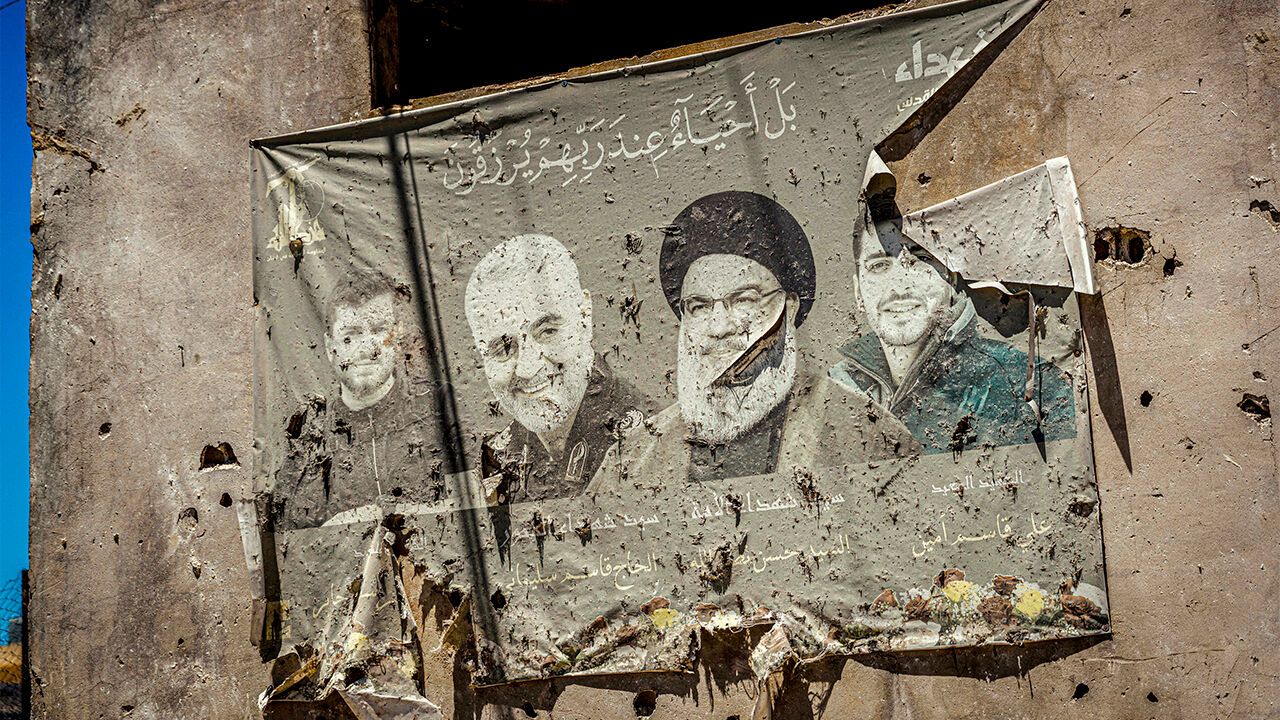
The strategy of backing(支持,资助) Arab militias dates to(追溯到) the 1980s, when Iran sent its Islamic Revolutionary Guard Corps (IRGC)(伊斯兰革命卫队,伊朗精锐军事力量) to train Hizbullah fighters in Lebanon. It saw such groups as a substitute(替代品) for its weak conventional army: they would serve as forward defence(前沿防御), projecting power(投射力量) while keeping conflict away from Iran.
支持阿拉伯民兵的战略可以追溯到20世纪80年代,当时伊朗派遣伊斯兰革命卫队(IRGC)到黎巴嫩训练真主党战士。伊朗将这些组织视为其薄弱常规军队的替代品:它们将充当前沿防御,在投射力量的同时将冲突挡在伊朗境外。
The defence clearly failed. The Hamas-led massacre on October 7th 2023 started a cascade of wars that ended with Iran itself being attacked.(2023年10月7日哈马斯领导的大屠杀引发了一系列战争,最终导致伊朗自身遭到攻击。) Hizbullah and Hamas are badly weakened(被削弱的). Bashar al-Assad’s regime(政权) in Syria has gone. The Iraqi government has ordered militias to disarm(解除武装) by October.
这一防御显然失败了。2023年10月7日哈马斯领导的大屠杀引发了一系列战争,最终导致伊朗自身遭到攻击。真主党和哈马斯已严重削弱。叙利亚的巴沙尔·阿萨德政权已经倒台。伊拉克政府已下令民兵在10月前解除武装。