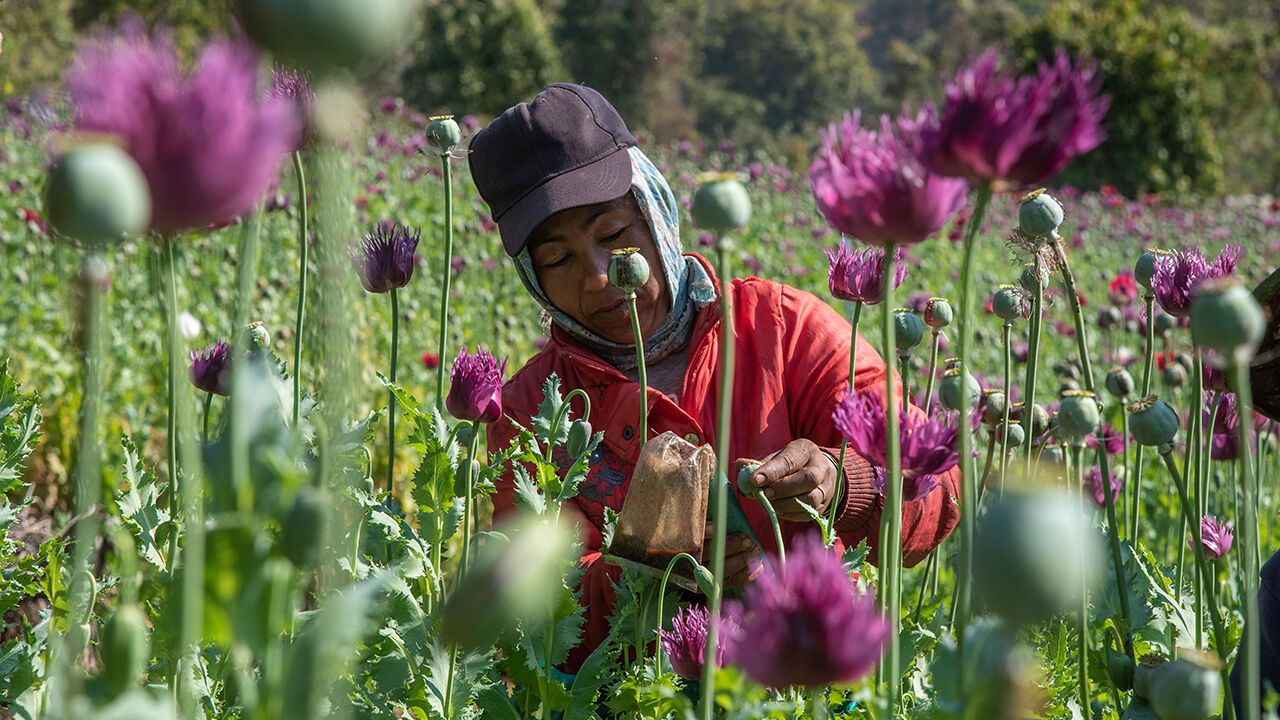
The Golden Triangle(金三角:东南亚著名毒品产区)—a mountainous forestland where Laos, Myanmar and Thailand meet—was once the centre of global opium production. Drug lords called the narcotic(麻醉的;毒品) juice of the opium poppy their black gold. Refined, it is flog(贩卖;鞭打)ged as heroin. In the 1990s two-thirds of the world’s opium poppy plants were found in the region. Then came government crackdowns, among other shifts.(随后政府打击等因素改变了局面。) By 2006 the region accounted for only about 5% of all illegal opium produced.
金三角——老挝、缅甸和泰国交界处的多山森林地带——曾是全球鸦片生产的中心。毒枭们把罂粟的麻醉汁液称为他们的“黑金”。经过提炼,它被当作海洛因贩卖。20世纪90年代,全球三分之二的罂粟种植于此。后来政府打击等因素改变了局面。到2006年,该地区的非法鸦片产量仅占全球的约5%。
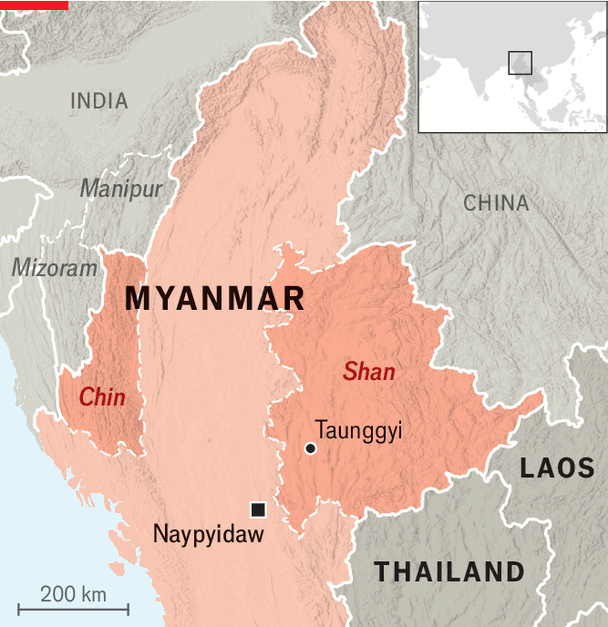
But in Myanmar, at least, the black gold has returned. The country is again the world’s main known source of illicit(非法的) opium, according to the United Nations Office on Drugs and Crime (UNODC(联合国毒品和犯罪问题办公室)). Many of the poppies are grown in Shan state(掸邦:缅甸最大的邦,鸦片主产区) in the east.
但至少在缅甸,“黑金”已经回归。据联合国毒品和犯罪问题办公室(UNODC)称,该国再次成为全球已知的主要非法鸦片来源地。许多罂粟种植在缅甸东部的掸邦。
Myanmar’s opium trade has bounced back(反弹;恢复) in part because of goings-on(发生的事情;动向) elsewhere in the world. Take Afghanistan, another producer. Its ruling Taliban(塔利班:阿富汗执政的伊斯兰组织) has since the 1990s taken various approaches to poppy farmers—including for some periods formalising(使正规化;合法化) the industry. But since regaining full control of the country in 2021 the Taliban has reverted(恢复;回到) to prohibition. The prices farmers in Myanmar can get for their poppies have risen as a result.
缅甸鸦片贸易的反弹,部分原因在于世界其他地方的动向。以另一个生产国阿富汗为例。自20世纪90年代以来,其执政的塔利班对罂粟种植者采取过各种策略——包括在某些时期将该产业正规化。但自2021年重新全面控制国家以来,塔利班又恢复了禁令。结果,缅甸农民能拿到的罂粟价格随之上涨。