FOR MILLENnIA Indians resisted(抵制,抗拒) cheese. Cow-worshipping Hindus(崇拜牛的印度教徒) consider milk to be sacred(神圣的). Souring cow’s milk to make yogurt was OK, but ageing it into cheese using an enzyme(酶) from a slaughtered calf’s stomach in the style of uncivilised Europeans was a bit much(有点过分), and cheeses made from yak, goat or sheep milk never really caught on(流行起来). Cheese can also upset Indian palates(味觉,口味). Give a grey-haired Indian something punchier(更强烈的,更冲的) than the bland paneer(印度传统奶酪) used in curries, and even today they may recoil(退缩,畏缩).
几千年来,印度人一直对奶酪敬而远之。崇拜牛的印度教徒视牛奶为圣物。把牛奶变酸制成酸奶尚可接受,但按照“未开化”欧洲人的方式,用屠宰小牛胃中提取的酶将牛奶发酵成奶酪,就有点过分了;而用牦牛奶、羊奶或绵羊奶制成的奶酪也从未真正流行起来。奶酪还可能让印度人的味蕾感到不适。给一位头发花白的印度人尝尝比咖喱中淡而无味的印度奶酪(paneer)更刺激的东西,即便在今天,他们也可能退缩。
Yet change is under whey(在乳清之下(双关)). India is the world’s bovine superpower, churning out almost 250m tonnes of milk a year, a quarter of global supply.(印度是世界乳业超级大国,每年生产近2.5亿吨牛奶,占全球供应量的四分之一。) Its middle class is growing keen on foreign foods. And the diets of less well-off(富裕的) Indians are being reshaped by fast food. In short, the time is ripe(时机成熟) for a subcontinental(次大陆的) cheese boom. India’s $1.5bn cheese market is growing at almost 20% a year.
然而,变化正在乳清之下悄然发生。印度是世界乳业超级大国,每年生产近2.5亿吨牛奶,占全球供应量的四分之一。其中产阶级越来越热衷于外国食品。而快餐正在重塑较不富裕印度人的饮食结构。简而言之,次大陆奶酪繁荣的时机已经成熟。印度15亿美元的奶酪市场正以每年近20%的速度增长。
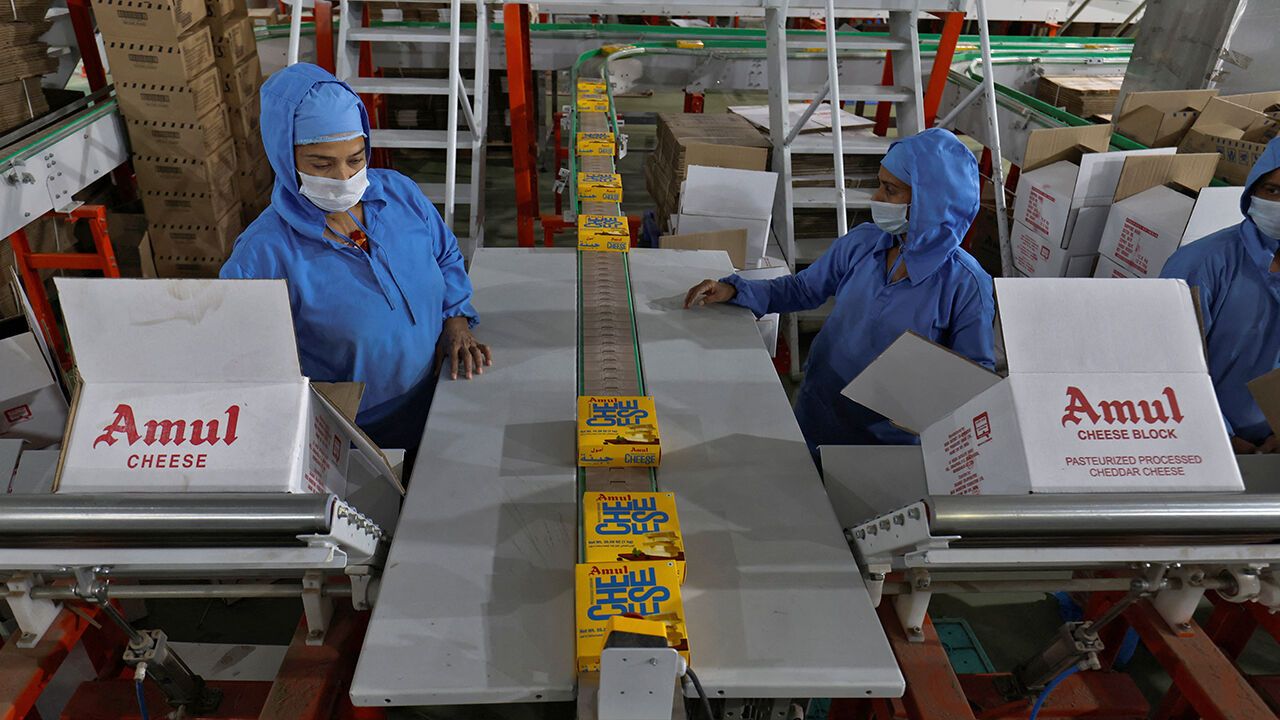
On a typical supermarket shelf in Delhi you may now find five or six cheeses, including Indian-made mozzarella(莫扎里拉奶酪), cheddar(切达奶酪) and feta(菲达奶酪) (these days mass-market cheeses can be made with enzymes derived from vegetables). Many are branded, humbly, as “melting cheese”. Amul(印度乳业巨头), a dairy behemoth(巨头,庞然大物), leads the market. Its 500g “cheese block”—available for 300 rupees ($3.14) on Blinkit(印度快速配送平台), a quick-delivery platform—is rubbery(像橡胶的) but not bad under the grill.
在德里一家普通超市的货架上,你现在可能找到五六种奶酪,包括印度制造的莫扎里拉、切达和菲达(如今大众市场奶酪可以用从植物中提取的酶制作)。许多奶酪被谦逊地标为“融化奶酪”。乳业巨头 Amul 引领市场。其500克“奶酪块”——在快速配送平台 Blinkit 上售价300卢比(3.14美元)——虽然口感像橡胶,但烤过之后还不错。