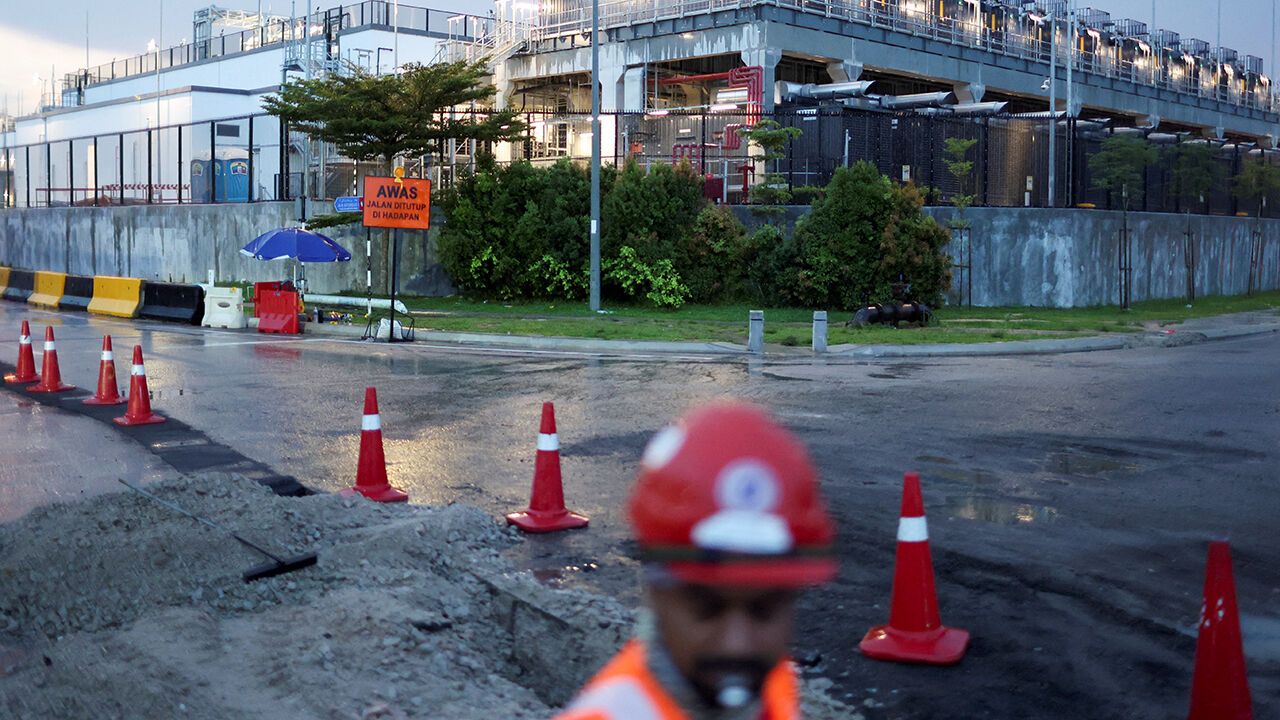
How do you placate(安抚,平息) locals worried about a data-centre build-out(大规模兴建,扩建)? One way, perhaps, is to have construction companies declare their love for their hosts. That seems to be the plan in the southern Malaysian state of Johor, which is undergoing one of the world’s most frenetic(疯狂的,狂热的) data-centre expansions. The barricades of construction sites are emblazoned(印有,饰有) with the slogan “I love Johor” (the “love” is a cutesy(卖萌的,故作可爱的) heart symbol).
怎样才能安抚那些担心数据中心大举兴建的当地居民?一个办法或许是让建筑公司向他们的“东道主”公开示爱。这似乎正是马来西亚南部柔佛州的策略——该州正经历全球最疯狂的数据中心扩张之一。建筑工地的围挡上刷着“我爱柔佛”的标语(其中“爱”字被画成一个卖萌的心形符号)。
Firms have been drawn to Johor by cheap land, reliable energy and welcoming policy. Five years ago the state had 10MW of data-centre capacity(容量,产能). Now it has 110 times more. And the boom extends beyond that state’s borders: Malaysia as a whole may have around 7.7GW of capacity by 2030. Data-centre investment amounts to 18% of the country’s GDP, the highest share in the world, according to HSBC, a bank.
廉价土地、可靠能源和友好政策吸引了众多企业来到柔佛。五年前,该州的数据中心容量仅为10兆瓦,如今已增长110倍。这股热潮还越出了州界:到2030年,整个马来西亚的数据中心容量可能达到约7.7吉瓦。据汇丰银行统计,数据中心投资占该国GDP的18%,为全球最高比例。
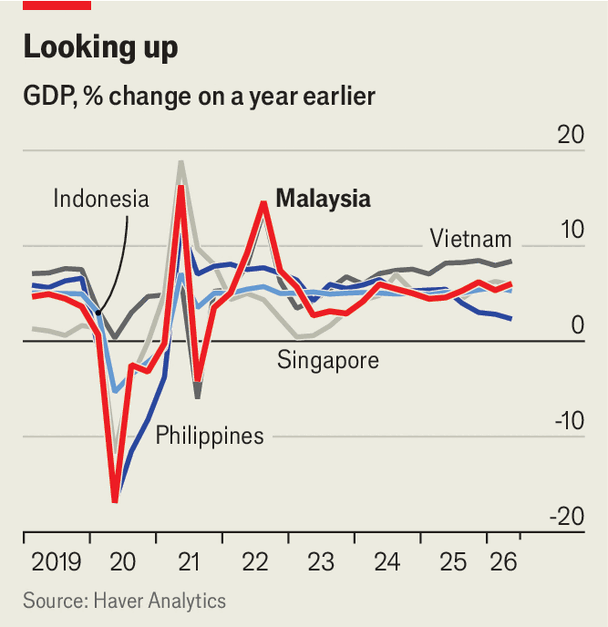
All of this is helping charge up(为……充电,提振) Malaysia’s economy. It grew 6% year on year(同比,与去年同期相比) in the second quarter, up from 5.4% in the first quarter (see chart). Growth was driven by manufacturing and construction, both tied to data-centre building. Exports have surge(激增,飙升)d too. Malaysia has long assembled basic semiconductors; that has now given it a foothold(立足点,据点) in the artificial-intelligence supply chain.
这一切都在为马来西亚经济充电。第二季度该国经济同比增长6%,高于第一季度的5.4%(见图表)。增长由制造业和建筑业推动,二者都与数据中心建设相关。出口也大幅飙升。马来西亚长期从事基础半导体组装,这如今让它在人工智能供应链中站稳了脚跟。