IN 1999 a little-known second-term parliamentarian(议员) contributed an essay brimming with ambition(充满雄心) to a volume about Japan’s future. Takaichi Sanae imagined that in October 2010 she would be elected prime minister and create a regular Sunday morning TV programme to reach the public directly.(高市早苗设想自己将在2010年10月当选首相,并创办一档每周日早间的电视节目,直接与公众沟通。) Ms Takaichi was off only on the timing and the medium(媒介): she became prime minister in October 2025; instead of TV, she posts on X. The essay collection gathered graduates of the Matsushita Institute of Government and Management(松下政经塾,日本政治家的摇篮), where Ms Takaichi learned from Panasonic’s well-regarded(备受敬重的) founder to see politics as the art of “national management”.
1999年,一位鲜为人知的连任两届的议员为一本关于日本未来的文集撰写了一篇雄心勃勃的文章。高市早苗设想自己将在2010年10月当选首相,并创办一档每周日早间的电视节目,直接与公众沟通。高市只在时间和媒介上判断有误:她于2025年10月成为首相;她没有上电视,而是在X上发帖。这本论文集收录了松下政经塾毕业生的文章,高市在那里师从备受敬重的松下创始人,将政治视为“国家经营”的艺术。
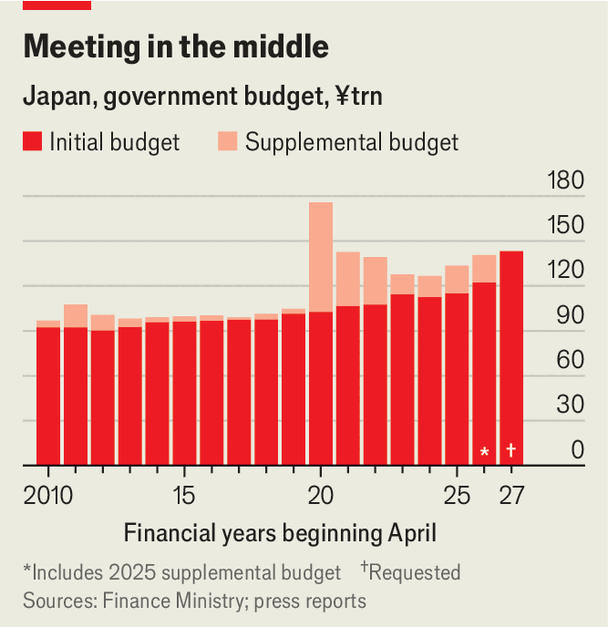
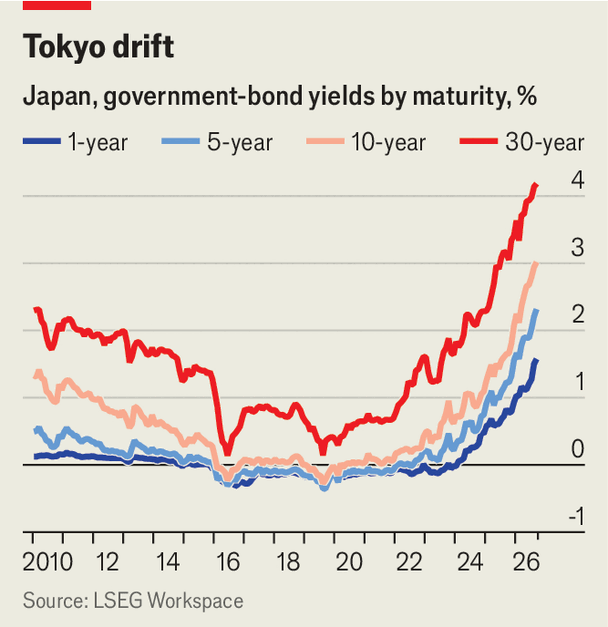
Ms Takaichi has applied that lesson as prime minister. “She thinks like the CEO of Japan,” says Wakatabe Masazumi, a former Bank of Japan (BoJ) deputy governor and now one of her closest economic advisers. And the CEO believes it is time for big investments. As Ms Takaichi’s first full budget comes together, the scope of her turnaround(转型,扭转) plan is becoming clear. Her growth strategy foresee(预见,预计)s ¥370trn ($2.3trn, or 55% of GDP) in public and private investment across 17 sectors between next year and early 2041. To facilitate(促进,使便利) this, she has changed the budgeting process to allow all ministries to make multi-year requests. The initial asks for next year’s budget, announced on September 4th, add up to(总计达) a record ¥143 trillion, up from ¥122.5 trillion. Markets are antsy: fiscal concerns briefly sent yields on ten-year Japanese bonds over 3% for the first time in three decades (see chart).(市场感到不安:财政担忧一度将十年期日本国债收益率推高至3%以上,为三十年来首次。)
高市早苗在担任首相后践行了这一理念。“她像日本的首席执行官一样思考,”前日本央行副行长、现为高市最亲密的经济顾问之一若田部昌澄说。这位CEO认为,现在是大举投资的时候了。随着高市首个完整预算的成形,其转型计划的规模逐渐清晰。她的增长战略预计,从明年到2041年初,将在17个领域进行370万亿日元(约2.3万亿美元,占GDP的55%)的公共和私人投资。为促成此事,她改革了预算编制流程,允许所有部门提出跨年度请求。9月4日公布的明年预算初步申请总额达到创纪录的143万亿日元,高于122.5万亿日元。市场感到不安:财政担忧一度将十年期日本国债收益率推高至3%以上,为三十年来首次(见图表)。
For years Ms Takaichi presented her economic policy as an extension of Abenomics(安倍经济学), the market-friendly programme of one of her mentors, the late Abe Shinzo. As prime minister from 2012-20, Abe unleash(释放,发动)ed monetary stimulus to fight deflation(通货紧缩); he used corporate-governance reform to discipline the torpid(懒散的,迟钝的) leaders of Japan Inc(日本株式会社). At the end of his premiership Morgan Stanley, an investment bank, compared his legacy to that of Margaret Thatcher(撒切尔夫人,英国铁娘子).
多年来,高市早苗一直将自己的经济政策标榜为安倍经济学的延伸。安倍经济学是她导师之一、已故首相安倍晋三提出的亲市场计划。安倍在2012至2020年担任首相期间,释放货币刺激以对抗通缩;他利用公司治理改革来约束日本企业界那些懒散的高管。在他任期结束时,投资银行摩根士丹利将他的政治遗产与玛格丽特·撒切尔相提并论。