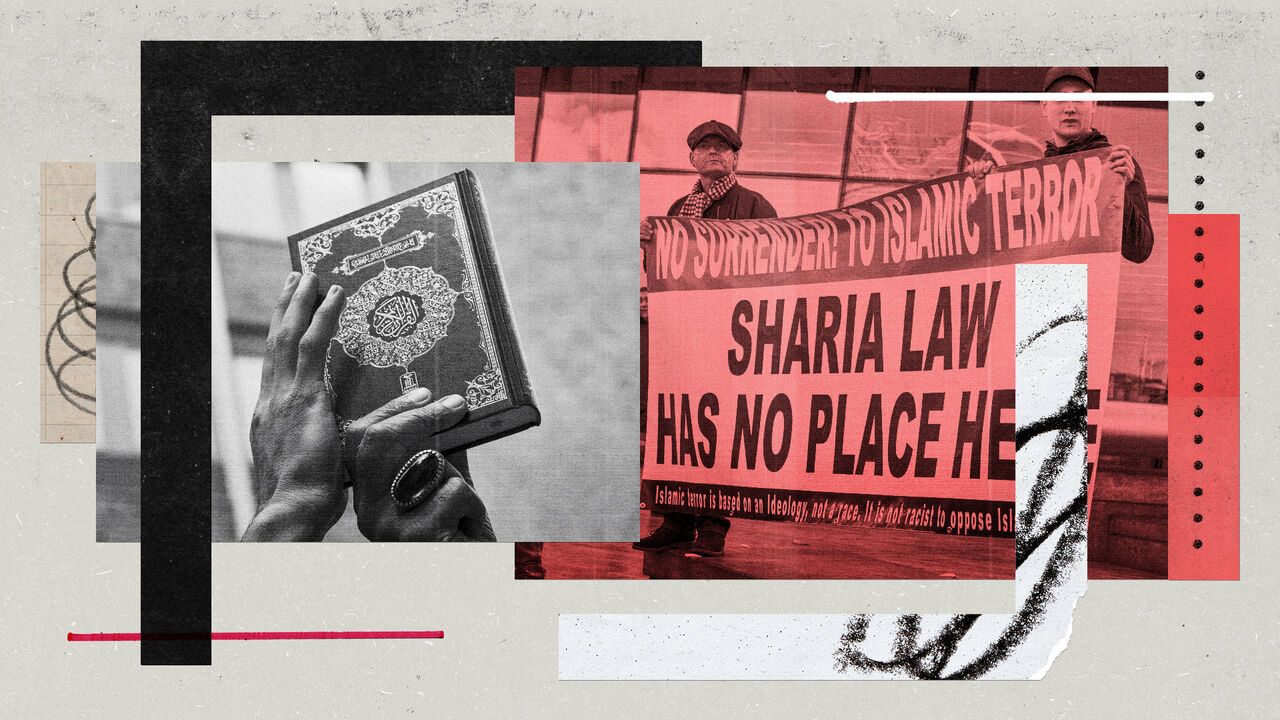
Mohamed Louizi was first approached by representatives of the Muslim Brotherhood, in Casablanca, Morocco at the age of 13. By 18 he had pledged allegiance(宣誓效忠) to the movement, which works to institute(建立,实行) Islamic rule around the world. In 1999, as a student in France, he became its representative at two mosques and head of the local branch of the Muslim Students of France in the city of Lille. His task, he says, was “to spread Islamism”—the idea that Islam should be the organising principle(组织原则) of government and society.
穆罕默德·卢伊齐13岁时在摩洛哥卡萨布兰卡首次被穆斯林兄弟会的代表接触。到18岁时,他已宣誓效忠该运动——该组织致力于在全球建立伊斯兰统治。1999年,他在法国留学期间,成为该组织在两座清真寺的代表,并担任法国穆斯林学生会在里尔市的分支负责人。他说,自己的任务是“传播伊斯兰主义”——即伊斯兰教应成为政府和社会组织原则的理念。
But by 2006, alarmed by what he had begun to see as a “totalitarian(极权主义的) project”, Mr Louizi quit the Brotherhood. He considers the movement a “real danger” for France and for Muslims: “We need to help the Muslim community get rid of(摆脱,除掉) Islamism.”
但到2006年,卢伊齐开始将穆斯林兄弟会视为一个“极权主义计划”,并因此感到警觉,于是退出了该组织。他认为该运动对法国和穆斯林都是“真正的危险”:“我们需要帮助穆斯林社区摆脱伊斯兰主义。”
The French authorities, too, are worried about the Brotherhood’s activities. A report published by the interior ministry in 2025, entitled “The Muslim Brotherhood and Political Islam in France”, concluded that it could, in time, threaten the country’s secular(世俗的) rules and women’s rights. Measuring the threat is tricky because the Brotherhood “practises entryism(渗透主义)”, the report said, using a “double language, by which it hides its real intentions while claiming to share the rules and principles regulating western societies”.(使用“双重语言,隐藏其真实意图,同时声称认同规范西方社会的规则和原则”。)
法国当局也对穆斯林兄弟会的活动感到担忧。内政部2025年发布的一份题为《法国的穆斯林兄弟会与政治伊斯兰》的报告得出结论,该组织可能迟早会威胁法国的世俗规则和妇女权利。报告称,衡量这一威胁并非易事,因为兄弟会“奉行渗透主义”,使用“双重语言,隐藏其真实意图,同时声称认同规范西方社会的规则和原则”。
Green light
绿灯