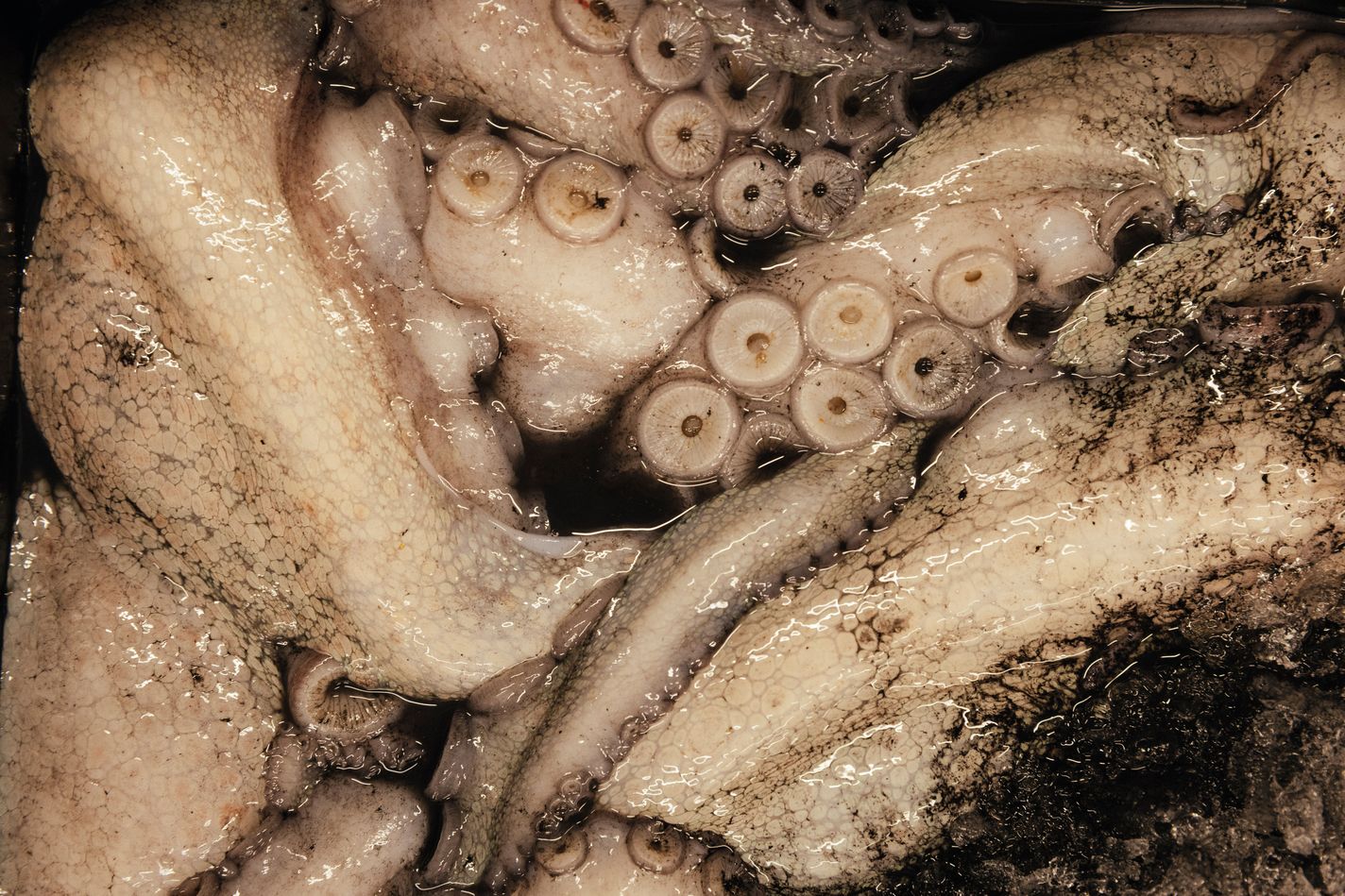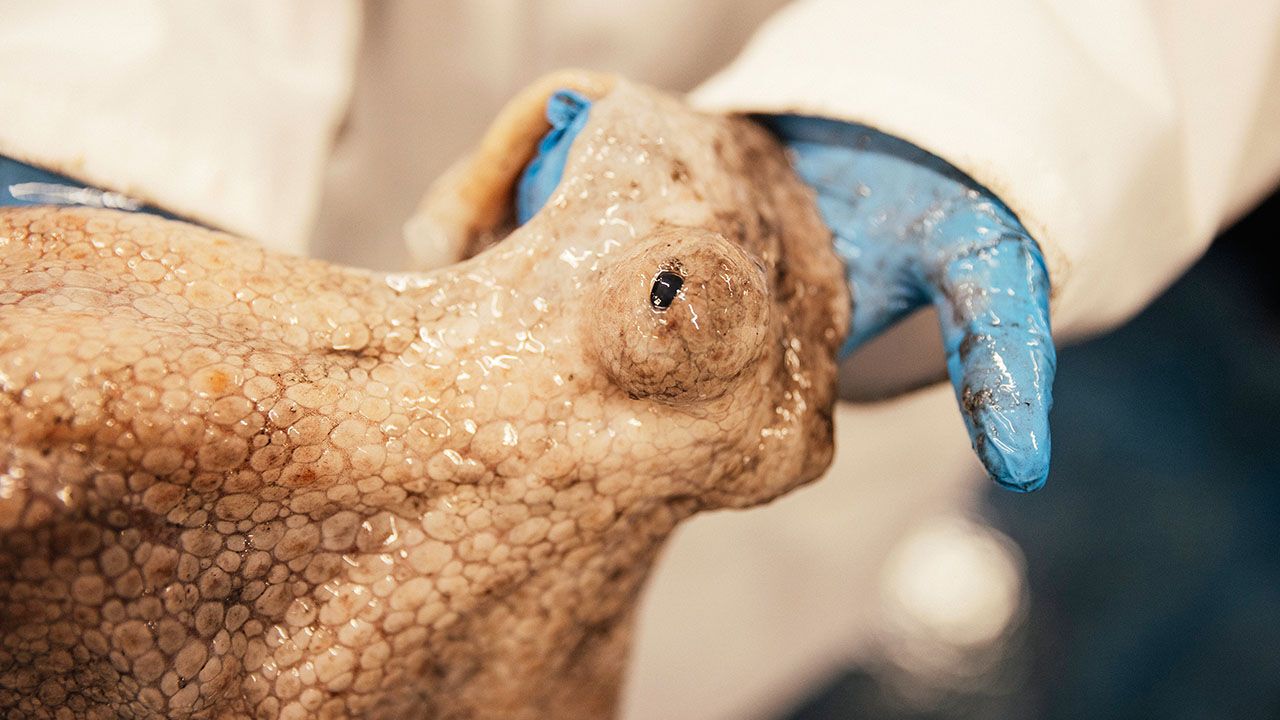
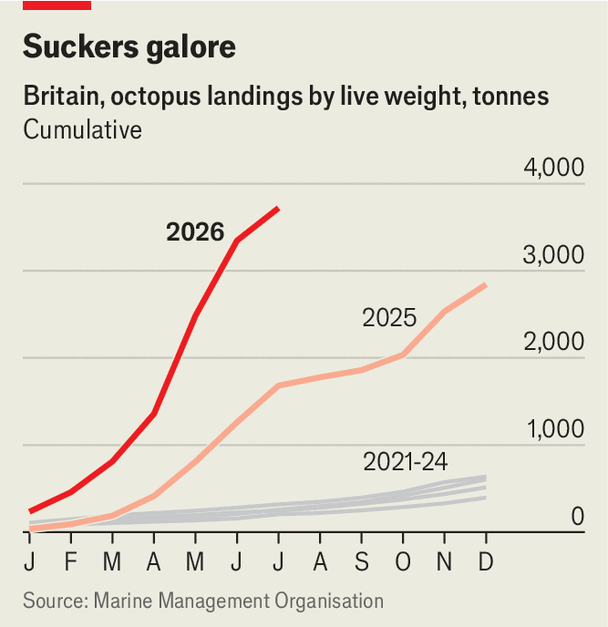
In Brixham's fish market, burly(魁梧的,壮实的) men in yellow overalls(工装裤,背带裤) lug around big white boxes. Each crate contains a different offering; some crab, perhaps, or hake(狗鳕,无须鳕). Yet one infamous species is absent. The number of octopuses off England's south coast has ballooned(激增,暴涨) in the past two years (see chart). Over 700 tonnes were landed in Brixham, a big fishing port, in the first seven months of 2026 alone, more than six times the annual average between 2021 and 2024.(仅2026年前七个月,大型渔港布里克瑟姆就卸下超过700吨章鱼,是2021至2024年年均水平的六倍多。) But this catch is sequestered(被隔离,被单独存放) in black boxes in its own special room.
在布里克瑟姆的鱼市场里,身穿黄色工装裤的壮汉们搬运着一个个白色大箱子。每个板条箱里装的货色各不相同:也许是螃蟹,也许是狗鳕。然而,有一种声名狼藉的物种却不见踪影。过去两年,英格兰南海岸的章鱼数量急剧膨胀(见图表)。仅2026年前七个月,大型渔港布里克瑟姆就卸下超过700吨章鱼,是2021至2024年年均水平的六倍多。但这批渔获被单独存放在一个专用房间里,装进黑色箱子,与外界隔绝。
Octopuses are the bad boys of(……里的坏小子) British fishing. Their segregation(隔离,分开存放) is officially a matter of hygiene(卫生): they are inky(墨黑的,沾满墨汁的) and messy to handle. But fishermen have plenty of reasons to dislike them. The new arrivals have been ravaging(肆虐,严重破坏) the local shellfish population. Lobster fishermen haul up pots only to find that an octopus had got there first.(龙虾渔民拉起捕虾笼,却发现章鱼早已捷足先登。) Fishermen caught 50% fewer brown crabs and king scallops(扇贝) in south-western Britain in the first nine months of 2025 compared with the year before.
章鱼是英国渔业里的“坏小子”。官方将章鱼隔离存放,理由是卫生问题:它们墨汁多,处理起来又脏又乱。但渔民讨厌它们,理由远不止于此。这些新来的家伙一直在肆虐当地的贝类种群。龙虾渔民拉起捕虾笼,却发现章鱼早已捷足先登。2025年前九个月,英国西南部渔民捕获的褐蟹和国王扇贝比上一年减少了50%。
The octopus bloom(大量涌现,激增) is the most prominent(突出的,显著的) example of how climate change is shifting which creatures choose to reside in(栖息于,居住于) British waters. The oceans are warming. The mean(平均的) sea-surface temperature around England today is about 2.2°C warmer than average conditions over the previous 40 years. This has meant that species that used to spend their time in hotter places are finding it easier to survive farther north.(这意味着,过去生活在更热海域的物种发现,在更靠北的地方也更容易存活了。) Octopuses were historically more commonly found farther south. But when winds blew their young across the English Channel, they thrived(繁盛,兴旺) in the newly warm waters. The heat has helped to lure back bluefin tuna, which were once abundant off the British coast before overfishing drove them away.(海水升温还帮助引回了蓝鳍金枪鱼——它们曾在英国海岸附近数量丰富,后来因过度捕捞而消失。)
章鱼大量涌现,是气候变化如何改变哪些生物选择栖居英国海域的最突出例子。海洋正在变暖。如今英格兰周边海表平均温度比过去40年的平均状况高出约2.2°C。这意味着,过去生活在更热海域的物种发现,在更靠北的地方也更容易存活了。章鱼历史上更常见于更南边的海域。但当风把它们的幼体吹过英吉利海峡,它们便在刚刚变暖的水域里繁盛起来。海水升温还帮助引回了蓝鳍金枪鱼——它们曾在英国海岸附近数量丰富,后来因过度捕捞而消失。