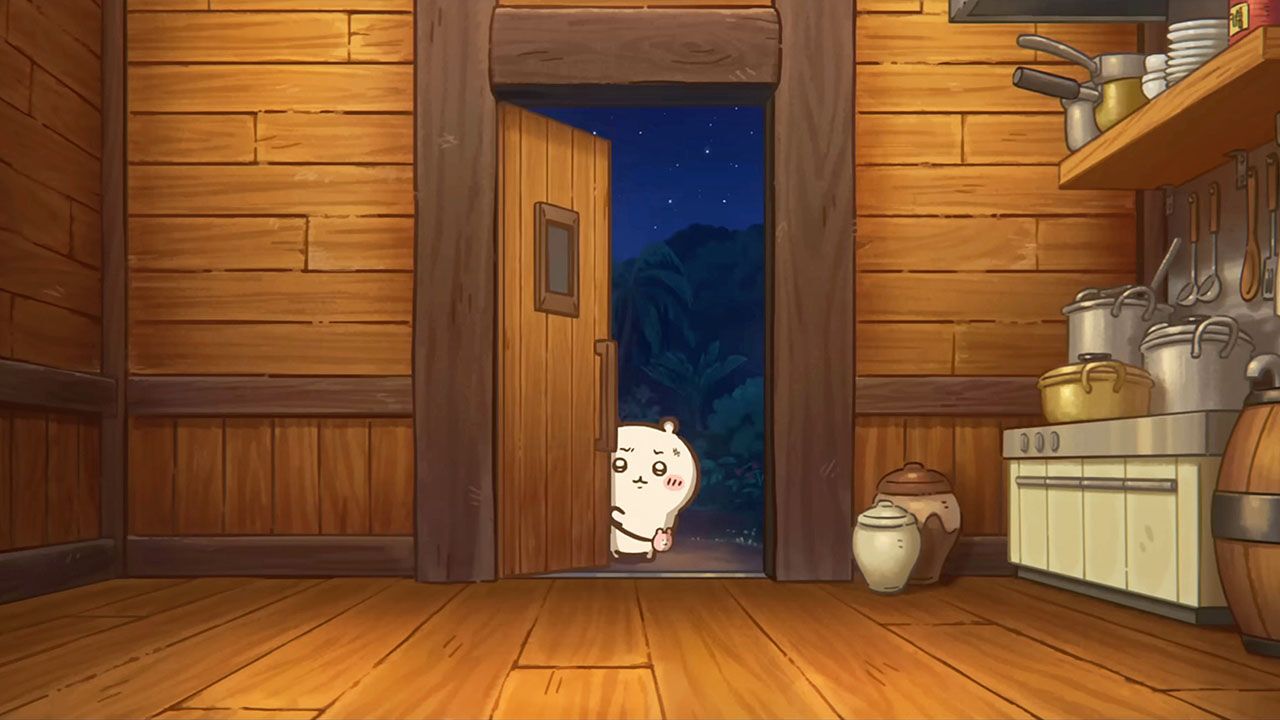
For a film that looks as if it was made for five-year-olds, the plot is surprisingly grim(阴暗的,严酷的). Two islanders have eaten a mermaid and gained eternal life. A sea monster wants revenge. She inflict(使遭受,施加(痛苦))s terror on the island, devour(吞食,狼吞虎咽)ing innocents and attacking visitors. Three big-eyed creatures armed with(配备着,带着) spear-like weapons are brought in to stop her. The smallest, Chiikawa—a white, hamster-like puffball—finds the task overwhelming(压倒性的,难以承受的) and cries a lot.
一部看上去像是给五岁孩子拍的动画电影,情节却出人意料地阴暗。两名岛民吃了人鱼肉,获得永生。一只海怪想要复仇,她在岛上制造恐怖,吞食无辜者,袭击来客。三只大眼睛、手持长矛状武器的小生物被请来阻止她。其中最小的那只——吉伊卡哇,一个白色、仓鼠般的毛球——觉得任务太过艰巨,哭个不停。
“Chiikawa the Movie: The Secret of the Mermaid Island” is currently Japan’s hottest film. Ticket sales top(超过,突破(数量))ped ¥10bn ($63m) in the month after its release on July 24th. But the craze(狂热,风潮) is not confined to the cinema, nor to Japan. Fans buy Chiikawa toys; they binge(狂吃,狂看) on Chiikawa snacks, anime and manga. The character, whose full name translates to “something kind of small and cute”, is the latest Japanese kawaii (cute) creation to conquer East Asia.
《吉伊卡哇:人鱼岛的秘密》目前是日本最火的电影。自7月24日上映后的一个月内,票房突破100亿日元(约合6300万美元)。但这股热潮并不局限于电影院,也不局限于日本。粉丝们购买吉伊卡哇玩具,狂刷吉伊卡哇零食、动画和漫画。这个角色的全名意为“又小又可爱的东西”,是最新一个征服东亚的日本“卡哇伊”形象。
Chiikawa emerge(出现,崭露头角)d in a comic strip posted by Nagano, an illustrator, on social media in 2020. The strip went viral as it “filled the void(空虚,空白) in people’s hearts” during the pandemic, reckon(认为,估计)s Nakayama Atsuo, a sociologist. An anime series followed, as did a partnership with Miniso, a Chinese retail giant, which produced huge sales. In the past two years trains and metro stations in Hong Kong have been decorated with Chiikawa art. (As commuters passed through ticket barriers, they could even hear the character’s squeal(尖叫,吱吱叫)s.)
吉伊卡哇最初出现在插画家Nagano于2020年发布在社交媒体上的连环漫画中。社会学家中山淳雄认为,这部漫画在疫情期间“填补了人们内心的空虚”,因而迅速走红。随后动画剧集问世,与名创优品——一家中国零售巨头——的合作也带来了巨大销量。过去两年,香港的列车和地铁站都装饰着吉伊卡哇的艺术形象。(通勤者穿过检票闸机时,甚至能听到这个角色的尖叫声。)