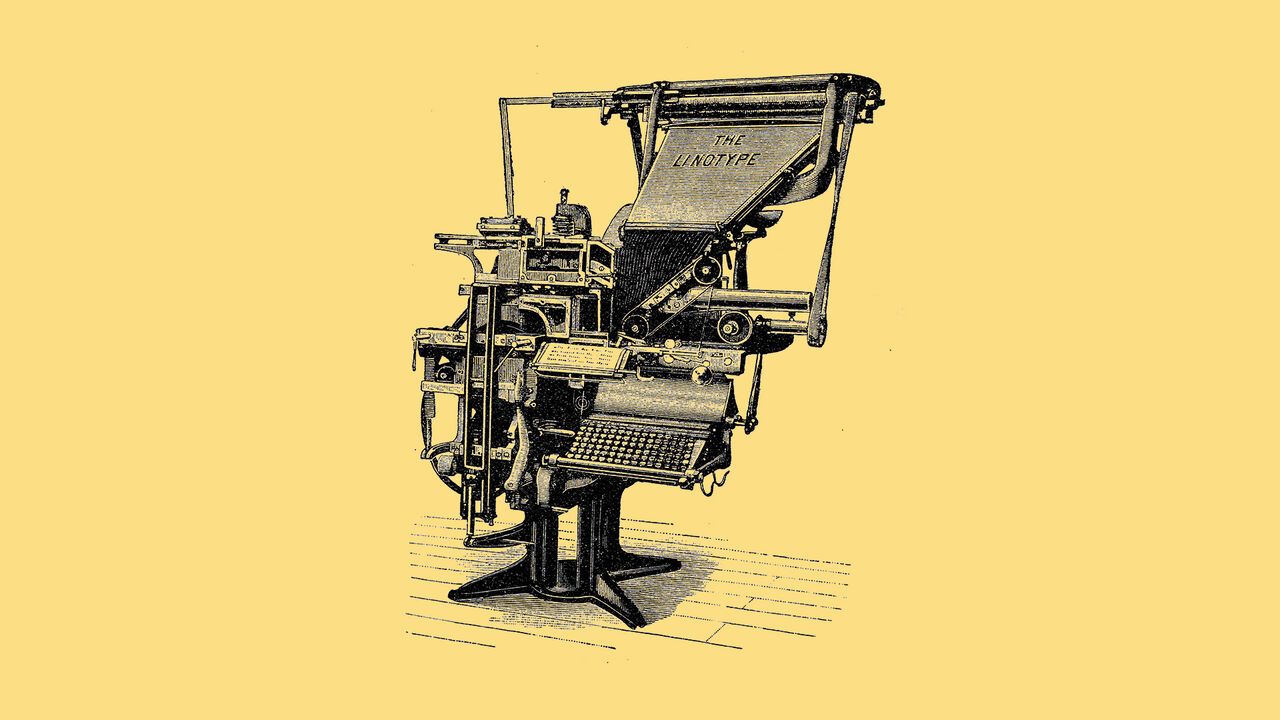
Hot Type(热金属排版). By Jeff Jarvis. Bloomsbury Academic(布卢姆斯伯里学术出版社); 384 pages; $25 and £17.99
《热金属》。杰夫·贾维斯著。布卢姆斯伯里学术出版社;384页;25美元/17.99英镑。
A century-and-a-half ago, a news revolution was under way(正在进行中). Information travelled at the speed of electricity, via telegraph. Steam-powered presses churned out(大量产出) books and newspapers. Railways distributed them farther and faster. Paper made of wood pulp was much cheaper than the old type made of rags (once so in demand that several European countries classed used bloomers as a strategic asset, banning their export).(木浆纸比旧式破布纸便宜得多(破布曾供不应求,以至于几个欧洲国家把旧灯笼裤列为战略物资,禁止出口)。)
一个半世纪前,一场新闻革命正在展开。信息借助电报,以电的速度传播。蒸汽驱动的印刷机大量产出书籍和报纸。铁路将它们更远、更快地送达各地。木浆造纸比旧式的破布造纸便宜得多——破布曾一度供不应求,以至于好几个欧洲国家把旧灯笼裤列为战略物资,禁止出口。
One piece of the mass-media puzzle was missing. Almost every part of publishing was mechanised, but typesetting was as slow and expensive as ever(一如既往地缓慢昂贵). Each lead(铅) letter had to be manually(手工地) placed, little differently from when Gutenberg(古腾堡与活字印刷术) invented the press four centuries earlier. Laying out a single page of a book took two hours; spectators(观众) paid to watch speed-typesetting tournaments(锦标赛), with stars such as a New York Times man known as the Velocipede(绰号“快速自行车”的排字工).
大众传媒拼图中还缺一块。出版业几乎每个环节都已机械化,但排字却一如既往地缓慢而昂贵。每个铅字都必须手工摆放,与四个世纪前古腾堡发明印刷机时几乎无异。排一页书要花两个小时;观众甚至花钱观看快速排字比赛,明星选手包括《纽约时报》一位绰号“ velocipede(快速自行车)”的排字工。