WHO REMEMBERS the “soft landing(软着陆)”? In 2022-23 central bankers dreamed of bringing high inflation down without triggering a recession. Some countries came awfully close to success. Now central banks are recalibrating(重新校准) their instruments as price pressure builds(价格压力积聚). The world is a long way from the pain of four years ago, but the flight path is newly perilous.(世界已远离四年前的那种痛苦,但飞行轨迹却再度变得险象环生。)
谁还记得“软着陆”?2022至2023年间,各国央行行长曾梦想在不引发经济衰退的前提下把高通胀降下来。一些国家几乎就要成功了。如今,随着价格压力不断积聚,各国央行正在重新校准政策工具。世界已远离四年前的那种痛苦,但飞行轨迹却再度变得险象环生。
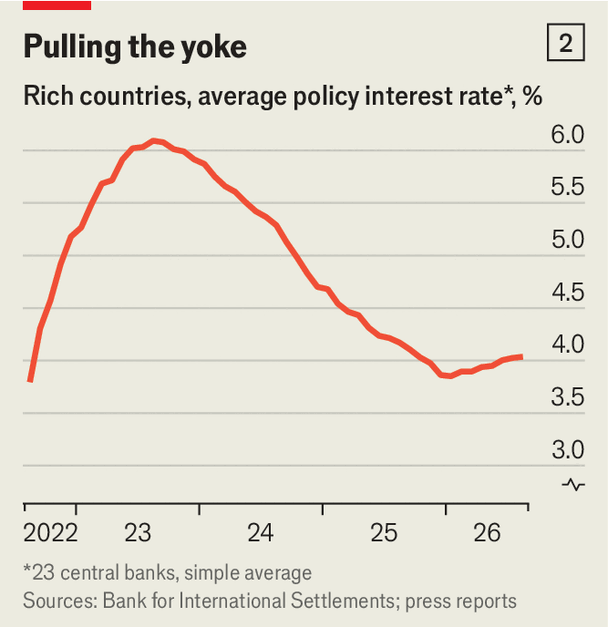
On September 2nd New Zealand’s central bank raised rates. Rate-setters across the Tasman Sea(塔斯曼海,澳大利亚与新西兰之间的海域) have done so three times this year. The Bank of Japan did it in June and the Bank of Korea in July and August. As we published this on September 10th, the European Central Bank (ECB) was expected to raise its deposit rate to 2.5%. Many traders reckon(认为,估计) the Federal Reserve(美联储,美国中央银行) will follow suit(跟进,效仿) on September 16th.
9月2日,新西兰央行宣布加息。塔斯曼海对岸的澳大利亚今年已加息三次。日本央行在6月加息,韩国央行则在7月和8月连续行动。截至9月10日本文付印时,欧洲央行(ECB)预计将把存款利率上调至2.5%。许多交易员认为,美联储将在9月16日跟进。
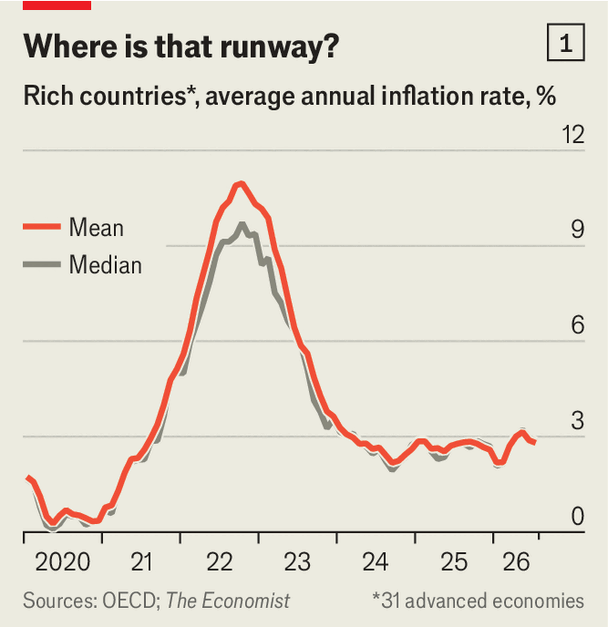
Policymakers are responding to data (see chart 1). Average annual inflation across rich countries has stopped falling towards 2%, the target in most of them, and has instead edged up(小幅上升) in recent months. In August it reached 3.3% in the euro zone(欧元区,使用欧元的20个欧盟成员国), the highest in three years. Switzerland has inflation of just 0.8% a year, reflecting economic policy that is a wonder of the modern world. But that is a two-year high. And some places are reliving(重新经历) the “cost-of-living crisis(生活成本危机)”. Inflation is close to 6% in Lithuania(立陶宛,波罗的海国家,通胀率接近6%), up from 3.1% in January.
决策者正在根据数据作出反应(见图1)。富裕国家的平均年通胀率已停止向2%的目标回落——2%是大多数国家的目标——近几个月反而小幅上升。8月,欧元区通胀率达到3.3%,创三年新高。瑞士的年通胀率仅为0.8%,其经济政策堪称现代世界的奇迹。但这一数字已是两年来的高点。一些地方正在重演“生活成本危机”。立陶宛的通胀率接近6%,而1月时仅为3.1%。