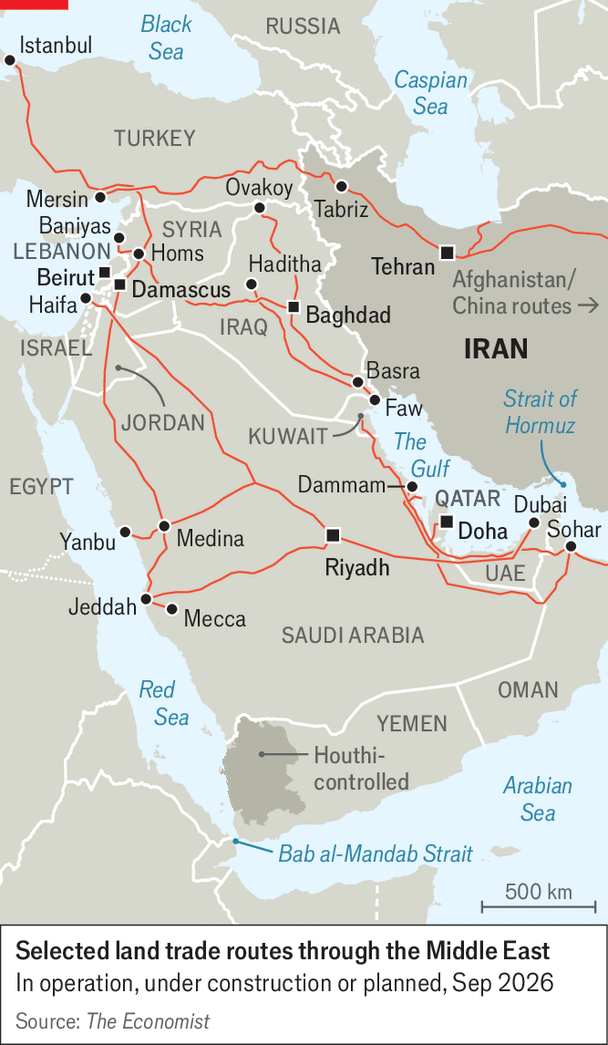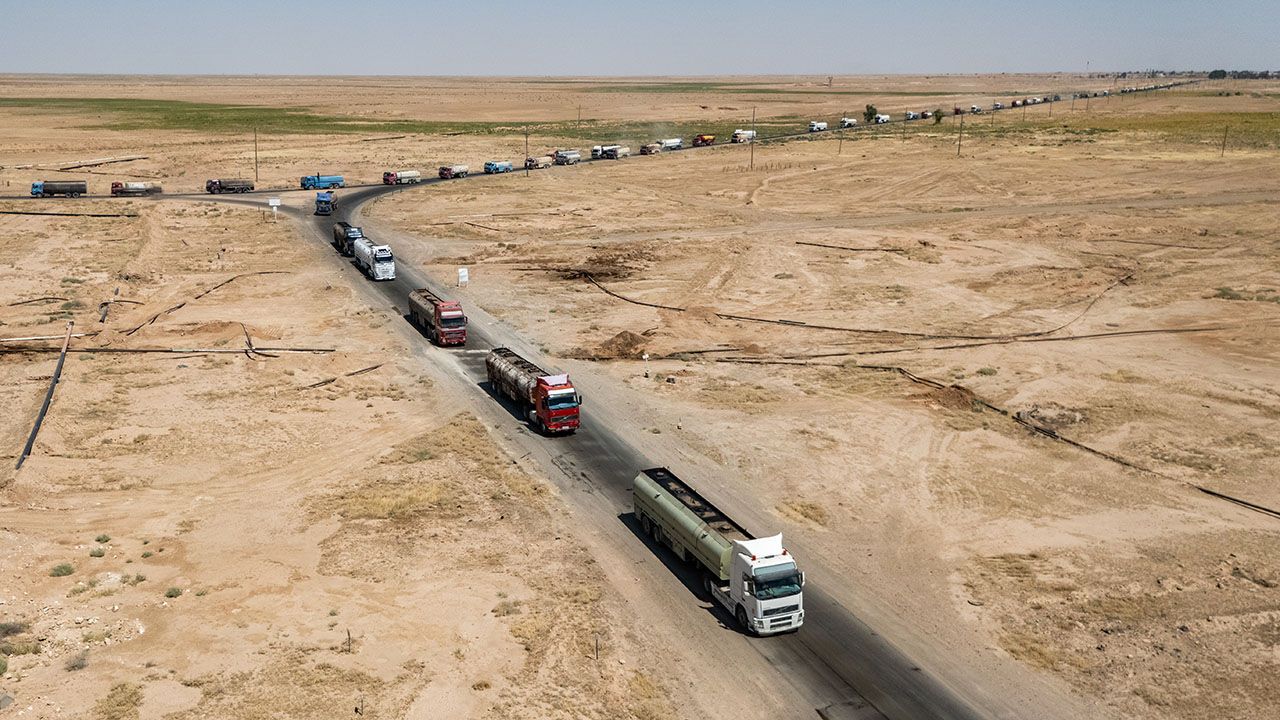
It takes ten days to drive from the oilfield(油田)s of southern Iraq to Syria’s Mediterranean port of Baniyas and back. The journey, across flat desert in temperatures topping 50°C, is hardly pleasant. Yet after six months of on-off closure of the Strait of Hormuz, Iraq needs an outlet badly enough for 1,300 lorries, travelling in huge convoys, to make the trip daily, according to Yarob Badr, Syria’s transport minister.(然而,霍尔木兹海峡时开时闭已有半年,伊拉克急需一个出口通道,以至于每天有1300辆卡车组成庞大的车队往返于这条线路——据叙利亚交通部长亚鲁布·巴德尔介绍。)
从伊拉克南部的油田驱车前往叙利亚地中海沿岸的巴尼亚斯港,再折返回来,需要十天。一路穿越平坦的沙漠,气温超过50摄氏度,旅途实在谈不上舒适。然而,霍尔木兹海峡时开时闭已有半年,伊拉克急需一个出口通道,以至于每天有1300辆卡车组成庞大的车队往返于这条线路——据叙利亚交通部长亚鲁布·巴德尔介绍。
For now, these journeys account for(占(比例)) perhaps 5% of Iraq’s pre-war oil exports. But it may be the start of something bigger(更大变化的开端). Since the Iran war began, attacks on shipping along with the periodic closure of airports, have forced countries in the Middle East to seek new ways to connect.(自伊朗战争爆发以来,针对航运的袭击加上机场的周期性关闭,迫使中东各国寻找新的联通方式。)
目前,这些运输量大约只占伊拉克战前石油出口的5%。但这或许是一个更大变化的开端。自伊朗战争爆发以来,针对航运的袭击加上机场的周期性关闭,迫使中东各国寻找新的联通方式。
Ever since a Portuguese general sailed into the Strait of Hormuz in 1507, sea lanes progressively displace(取代,取代……的位置)d land routes. First galleon(大型帆船)s, then merchant vessels, then supertankers carried ever larger cargoes as camel trains falter(衰落,动摇)ed. And after colonial powers carved the region into competing states, nationalism turned borders into barriers. On the eve of its independence, Israel blew up the railway bridges connecting it to its neighbours. Gulf rulers sold their oil by sea to faraway countries rather than across their immediate borders, and looked to global powers for protection.(海湾统治者把石油经海路卖给遥远的国家,而不是卖给近邻,并指望全球大国提供保护。)
自1507年一位葡萄牙将军驶入霍尔木兹海峡以来,海上航线逐步取代了陆路。先是大型帆船,然后是商船,再后来是超级油轮,运载的货物越来越大,而骆驼商队则日渐衰落。殖民列强把这一地区瓜分成相互竞争的国家之后,民族主义又把边界变成了壁垒。以色列在独立前夕炸毁了连接邻国的铁路桥。海湾统治者把石油经海路卖给遥远的国家,而不是卖给近邻,并指望全球大国提供保护。